6 Best Alternatives to the Intel Core i7 20-Core Desktop (2026)
As an Amazon Associate we earn from qualifying purchases. Links on this page are affiliate links.
The Intel Core i7 20-Core Desktop Processor delivers strong multi-threaded performance for multitasking and productivity workloads. If you are searching for intel core i7 14700 desktop processor alternatives, you may want a different specification or brand. This original model offers 20 cores, 28 threads, and up to 5.4 GHz boost speed. It includes integrated graphics and a thermal solution, fitting builders who value core count over overclocking flexibility.
You might choose another option for several reasons. Some users prioritize raw speed for gaming, while others need specific socket compatibility for older platforms. The alternatives listed here were chosen because their specs overlap with the original. This includes similar core counts or compatible memory types. You can find options for high-performance gaming, budget builds, or workstation tasks. Each alternative matches specific needs that the base model may not address, such as unlocked multipliers or legacy support.
How each alternative compares
Intel Core i7 20-Core Desktop Processor
This is the Intel Core i7-14700 itself, the baseline for this comparison. It features 20 cores and 28 threads with a max boost clock of 5.4 GHz. It includes integrated Intel UHD Graphics 770 and comes with the Intel Laminar RM1 cooler. This model is designed for users who want robust multi-threaded performance without the need for separate graphics or high-end cooling solutions. It supports both DDR4 and DDR5 memory and works with Intel 600-series and 700-series chipsets. If you are looking for the standard 20-core experience with included accessories, this is the reference point.
Intel Core i7 20-Core Desktop Processor
The Intel Core i7-14700K offers the same 20-core and 28-thread configuration as the standard 14700, but it is an unlocked processor. This allows for manual overclocking, which the standard 14700 does not support. It retains the 33MB cache and up to 5.4 GHz boost clock. However, it lacks the integrated UHD Graphics 770 found in the standard model, meaning you need a dedicated graphics card. It is best for builders using Z690 or Z790 motherboards who prioritize raw speed and tuning flexibility over integrated graphics and included coolers.
Micro Center Core i7-14700KF MSI Z790 Combo
This Micro Center combo bundles the i7-14700KF with an MSI Z790 motherboard. The KF variant removes the integrated UHD Graphics 770 found in the standard 14700, requiring a discrete GPU. It keeps the 20 cores and 28 threads for strong multi-threading. The inclusion of the Z790 board provides modern connectivity and PCIe 5.0 support. This option suits users who want a ready-to-assemble platform with a high-end chipset. It is ideal for gaming and productivity builds where you need the motherboard and CPU together, rather than buying them separately.
Intel Core i7-6850K 6-Core Processor
The Intel Core i7-6850K is a six-core HEDT processor from a much older generation. It uses the LGA 2011-v3 socket, which is incompatible with the LGA 1700 socket of the 14700. It offers less core count but provides four memory channels and extensive PCIe lanes for expansion. This makes it suitable for workstation tasks needing high memory bandwidth rather than raw gaming speed. You would need a different motherboard and likely older DDR4 memory. It is a specialized choice for those maintaining legacy platforms who prioritize PCIe expansion over modern core counts.
Intel Core i7-6700K Quad-Core Processor
The Intel Core i7-6700K is a quad-core processor for the LGA 1151 socket. It has significantly fewer cores and threads than the 20-core 14700. It is designed for upgrading older desktops rather than building new high-performance systems. The socket compatibility is completely different, requiring a 100 or 200-series motherboard. It lacks modern features like PCIe 5.0 and DDR5 support. This processor fits users who need to maintain an older LGA 1151 system and value stability over raw multi-threading power or current-generation performance capabilities.
Intel Core i7 2.8GHz Tray Processor
The Intel Core i7-6700T is a low-power quad-core processor for the LGA 1151 socket. It has a much lower core count than the 14700 and is designed for power efficiency. It lacks integrated graphics in some tray versions and does not support modern memory standards. It is intended for users who already have an LGA 1151 motherboard and need a stable, low-heat CPU. It is not suitable for those seeking high-clock gaming performance or multi-threaded productivity. You would need to replace your motherboard to use the 14700, making this a legacy upgrade path only.
Intel Core i7-6950X 10-Core Processor
The Intel Core i7-6950X is a ten-core processor for the LGA 2011-v3 socket. It has half the core count of the 14700 but offers four memory channels for professional workstation tasks. It is an older HEDT chip that requires a different motherboard and likely older DDR4 memory. It is not ideal for gaming, as it lacks the single-core speed of modern CPUs. This processor suits users who need 10 cores for specific professional workloads on a legacy platform. It gives up modern connectivity and efficiency for specialized multi-channel memory bandwidth.
Quick picks
Our 7 picks

Intel Core i7 20-Core Desktop Processor
Best for: multitasking and productivity workloads
- Core Count
- 20 cores
- Thread Count
- 28 threads
- Max Boost Clock
- Up to 5.4 GHz
- Cache Size
- 33MB
- Integrated Graphics
- Intel UHD Graphics 770
- Series
- Core i7
View on Amazon: Intel Core i7 20-Core Desktop Processor Affiliate link
The Intel Core i7-14700 offers 20 cores and 28 threads for high multitasking performance. It reaches up to 5.4 GHz with 33MB of cache. Integrated Intel UHD Graphics 770 allows operation without a discrete GPU. It supports both DDR4 and DDR5 memory on 600-series and 700-series motherboards. This processor suits users who need strong hybrid architecture performance for gaming and productivity tasks.
Pros
- 20 cores (8 P-cores + 12 E-cores) and 28 threads
- Up to 5.4 GHz max boost clock
- 33MB cache for faster data access
- Includes Intel Laminar RM1 thermal solution
- Supports DDR4 and DDR5 memory modules
Cons
- Lacks unlocked multiplier for easy overclocking
- Integrated graphics limited to Intel UHD Graphics 770
- Requires compatible 600 or 700-series motherboard
Good fit if
- You need high core counts for heavy multitasking
- You want integrated graphics for basic display output
- You are building on a 600 or 700-series platform
Skip if
- You require unlocked overclocking capabilities
- You need high-end integrated graphics performance
- You are using older LGA 1151 motherboards
Verdict: The Intel Core i7-14700 20-Core Desktop CPU provides robust multi-threaded performance for users who prioritize core count and cache size over overclocking flexibility. It fits builders using modern Intel platforms who value included cooling and integrated graphics.
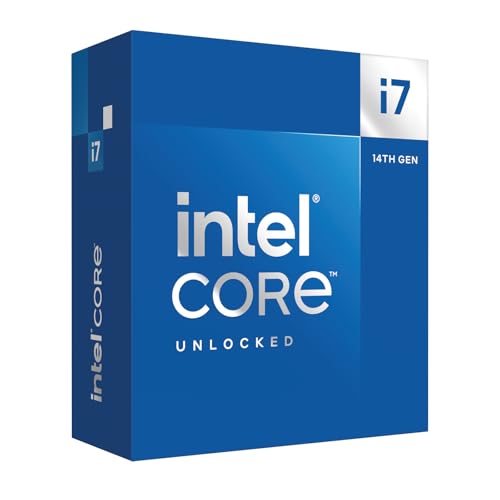
Intel Core i7-14700K Desktop Processor
Best for: High-performance gaming and multitasking
- Core Count
- 20 cores
- Thread Count
- 28 threads
- Max Boost Clock
- 5.6 GHz
- Integrated Graphics
- Intel UHD Graphics 770
- Use Case
- Gaming
- Series
- Core i7
View on Amazon: Intel Core i7-14700K Desktop Processor Affiliate link
The Intel Core i7-14700K offers 20 cores and 28 threads for high-end desktop tasks. It reaches up to 5.6 GHz with Turbo Boost Max Technology 3.0. Integrated Intel UHD Graphics 770 handles basic display output. It supports both DDR4 and DDR5 memory platforms. This processor suits gamers and creators who need strong multi-core performance and high single-core speeds.
Pros
- 20 cores (8 P-cores plus 12 E-cores) and 28 threads
- Up to 5.6 GHz max boost clock
- Integrated Intel UHD Graphics 770
- Supports both DDR4 and DDR5 memory
Cons
- Requires a 600-series or 700-series motherboard
- No included cooling solution listed
- Lacks dedicated discrete graphics capability
Good fit if
- You want high single-core speeds for gaming
- You need multi-threaded performance for productivity
- You plan to use a dedicated GPU
Skip if
- You need integrated graphics for display output only
- You are using an older LGA 1151 motherboard
- You want a processor with included cooling
Verdict: Intel Core i7-14700K 20-Core Processor delivers strong gaming and multitasking performance. It fits users building on Z690 or Z790 boards who prioritize raw speed.

Micro Center Core i7-14700KF MSI Z790 Combo
Best for: Gaming and productivity builds needing 20 cores
- Core Count
- 20
- Thread Count
- 28
- Max Boost Clock
- Up to 5.6 GHz
- Use Case
- Gaming
- Series
- Core i7
View on Amazon: Micro Center Core i7-14700KF MSI Z790 Combo Affiliate link
This bundle pairs the Intel Core i7-14700KF with the MSI PRO Z790-P WIFI motherboard. The processor delivers 20 cores and 28 threads with boost speeds up to 5.6 GHz. The board supports DDR5 memory up to 7000+ MHz and includes PCIe 5.0 connectivity. It suits gamers and creators needing strong multi-threading performance and fast data transfers for demanding tasks.
Pros
- 20 cores (8P + 12E) and 28 threads for heavy multitasking
- Max boost clock reaches 5.6 GHz for rapid responsiveness
- MSI board features PCIe 5.0 and four M.2 slots
- Supports DDR5 memory speeds up to 7000+ MHz
Cons
- Processor lacks integrated graphics, requiring a discrete GPU
- Base board model is PRO Z790-P, not the premium Z790-E
- Combo packaging may limit individual component upgrades
Good fit if
- You need a complete CPU and motherboard setup for gaming
- You plan to use high-speed DDR5 memory for productivity
- You already have a discrete graphics card for display
Skip if
- You want to use the CPU without a dedicated GPU
- You prefer a single component purchase over a bundle
- You need a motherboard with more than four M.2 slots
Verdict: Micro Center i7-14700KF + MSI Z790 Combo offers high core counts and modern connectivity for users building a dedicated gaming or workstation PC. It fits buyers who want a ready-to-assemble platform with strong multi-threading capabilities.

Intel Core i7-6850K 6-Core Processor
Best for: PCIe expansion and memory bandwidth
- Core Count
- 6 cores
- Thread Count
- 12 threads
- CPU Socket
- LGA 2011-v3
- Max Boost Clock
- 3.80 GHz
- Cache Size
- 15 MB
- Base Power
- 140 W
View on Amazon: Intel Core i7-6850K 6-Core Processor Affiliate link
The Intel Core i7-6850K is a certified refurbished enthusiast processor built for the LGA 2011-v3 socket. It features six cores and twelve threads with a base clock of 3.6 GHz and a max boost up to 3.80 GHz. With 15 MB of cache and support for four-channel DDR4 memory, it offers high bandwidth for demanding workloads. This chip suits users needing PCIe expansion lanes rather than raw core counts.
Pros
- Six cores and twelve threads for multitasking
- LGA 2011-v3 socket compatibility
- Four-channel DDR4 memory support
- Up to 40 PCIe 3.0 lanes
Cons
- Only six cores compared to the 20-core alternatives
- 140W TDP requires robust cooling
- Older generation architecture
Good fit if
- You need four-channel memory bandwidth
- You require many PCIe lanes for expansion
- You are building on an LGA 2011-v3 platform
Skip if
- You want the highest core count available
- You are using a modern consumer socket
- You need the latest architecture
Verdict: The Intel Core i7-6850K 6-Core HEDT is a specialized choice for users prioritizing memory bandwidth and PCIe expansion over core count. It fits builders who already have an LGA 2011-v3 motherboard and need stable, high-throughput performance.

Intel Core i7-6700K Quad-Core Processor
Best for: upgrading older LGA 1151 desktops
- Core Count
- 4 Core
- CPU Socket
- Socket H4 LGA-1151
- Max Boost Clock
- 4.20 GHz
- Base Clock
- 4.0 GHz
- Cache Size
- 8 MB
- Base Power
- 91 W
View on Amazon: Intel Core i7-6700K Quad-Core Processor Affiliate link
The Intel Core i7-6700K is a quad-core desktop processor built for the LGA 1151 socket. It features a 4.0 GHz base clock and a 4.20 GHz max boost speed. With 8 MB of cache and a 91 W base power draw, it offers solid performance for older platforms. This chip suits users who need reliable quad-core processing without the complexity of newer socket types. It includes integrated Intel HD Graphics 530 for basic display output.
Pros
- Quad-core architecture with 8 MB cache
- 4.20 GHz max boost clock speed
- Compatible with LGA 1151 motherboards
- Includes Intel HD Graphics 530
Cons
- Only four cores compared to modern 20-core alternatives
- Older Skylake generation with limited upgrade path
- Lower core count restricts heavy multitasking
Good fit if
- You are upgrading an existing LGA 1151 system
- You need a reliable quad-core for general tasks
- You prefer a simpler 4-core configuration
Skip if
- You require more than four cores for heavy workloads
- You are building a new high-end gaming PC
- You want the latest socket generation
Verdict: The Intel Core i7-6700K LGA 1151 is a capable quad-core processor for users maintaining older LGA 1151 platforms. It fits those who value stability and established compatibility over raw core count.

Intel Core i7 2.8GHz Tray Processor
Best for: Low-power desktop builds with existing coolers
- Base Clock
- 2.8GHz
- Series
- Core i7
- Dimensions
- 3.94 × 3.94 × 2.36 inches
- Weight
- 4.16 ounces
View on Amazon: Intel Core i7 2.8GHz Tray Processor Affiliate link
This is an Intel Core i7-6700T processor with a 2.8GHz base clock. It is a tray CPU, meaning it comes without a retail box or included cooler. The unit weighs 4.16 ounces and measures 3.94 inches square. It fits the Core i7 series lineup. You might choose this for low-power builds or when you already have a cooling solution ready for your motherboard.
Pros
- 2.8GHz base clock speed
- Part of the Core i7 series
- Tray packaging for custom cooling
Cons
- Low 2.8GHz base clock compared to list peers
- No included cooler in tray packaging
- Older Skylake architecture generation
Good fit if
- You need a low-power T-series chip
- You already own a compatible cooler
- You are building a compact system
Skip if
- You want maximum gaming performance
- You need a boxed CPU with cooler
- You require modern socket compatibility
Verdict: Intel Core i7-6700T 2.8GHz Processor suits users who prioritize power efficiency over raw speed and have their own cooling plans. It is not for those seeking high-clock gaming performance.

Intel Core i7-6950X 10-Core Processor
Best for: Workstation builds needing 10 cores and 4 memory channels
- Core Count
- 10 Core
- Thread Count
- 20 Thread
- CPU Socket
- LGA 2011-v3
- Max Boost Clock
- 3.50 GHz
- Cache Size
- 25M
- Base Power
- 140W
View on Amazon: Intel Core i7-6950X 10-Core Processor Affiliate link
The Intel Core i7-6950X is a 10-core, 20-thread processor built for the LGA 2011-v3 socket. It features 25 MB of cache and a max boost clock of 3.50 GHz. This chip supports four channels of DDR4 memory and offers 40 PCIe lanes. It suits users needing high core counts for heavy multitasking or workstation tasks, rather than standard gaming builds.
Pros
- 10 physical cores and 20 threads for parallel workloads
- 25 MB cache size for data access speed
- Supports four channels of DDR4 memory
- 40 PCIe lanes for multiple expansion cards
Cons
- Older LGA 2011-v3 socket limits upgrade paths
- Lower base clock compared to modern 14th Gen i7s
- Higher 140W TDP requires robust cooling
Good fit if
- You need many cores for rendering or simulation
- You are building on an existing X99 platform
- You require extensive PCIe connectivity for devices
Skip if
- You want the latest LGA 1700 socket
- You prioritize high single-core gaming speeds
- You need energy-efficient low-power operation
Verdict: Intel Core i7-6950X 10-Core Processor delivers serious multi-threading power for workstation builds on the older LGA 2011-v3 platform. It fits users who need 10 cores and four memory channels for professional tasks, not gamers seeking top-tier single-core performance.
Specifications side by side
| Spec | Intel Core i7 20-Core Desktop Processor | Intel Core i7-14700K Desktop Processor | Micro Center Core i7-14700KF MSI Z790 Combo | Intel Core i7-6850K 6-Core Processor | Intel Core i7-6700K Quad-Core Processor | Intel Core i7 2.8GHz Tray Processor | Intel Core i7-6950X 10-Core Processor |
|---|---|---|---|---|---|---|---|
| Core Count | 20 cores | 20 cores | 20 | 6 cores | 4 Core | not stated | 10 Core |
| Thread Count | 28 threads | 28 threads | 28 | 12 threads | not stated | not stated | 20 Thread |
| CPU Socket | not stated | not stated | not stated | LGA 2011-v3 | Socket H4 LGA-1151 | not stated | LGA 2011-v3 |
| Max Boost Clock | Up to 5.4 GHz | 5.6 GHz | Up to 5.6 GHz | 3.80 GHz | 4.20 GHz | not stated | 3.50 GHz |
| Base Clock | not stated | not stated | not stated | not stated | 4.0 GHz | 2.8GHz | not stated |
| Cache Size | 33MB | not stated | not stated | 15 MB | 8 MB | not stated | 25M |
| Base Power | not stated | not stated | not stated | 140 W | 91 W | not stated | 140W |
| Integrated Graphics | Intel UHD Graphics 770 | Intel UHD Graphics 770 | not stated | not stated | Intel HD Graphics 530 | not stated | not stated |
| Use Case | not stated | Gaming | Gaming | not stated | not stated | not stated | not stated |
| Series | Core i7 | Core i7 | Core i7 | Core i7 | Core i7 | Core i7 | Core i7 |
| TDP | not stated | not stated | not stated | not stated | 95W | not stated | not stated |
| Dimensions | 12.4 × 8.2 × 10.8 inches | 4.57 × 1.73 × 0.1 inches | not stated | 4.48 × 4.01 × 3.19 inches | 3.94 × 3.94 × 2.36 inches | 3.94 × 3.94 × 2.36 inches | 4.56 × 1.61 × 3.93 inches |
| Weight | 15.5 ounces | 2.82 ounces | not stated | not stated | 1.44 ounces | 4.16 ounces | 6.4 ounces |
| Color | Silver | black | i7-14700KF+msi Pro Z790-P WiFi D5 | gray | not stated | not stated | gray |
| Model | 14700 | BX8071514700K | 14700KF | i7-6850K | CM8066201919901 | i7-6700T | BX80671I76950X |
| Size | not stated | 1.0 x 4.1 x 1.9 inches | not stated | not stated | not stated | not stated | not stated |
Frequently asked questions
Is the i7-14700K better for gaming than the standard i7-14700?
Yes, the i7-14700K is optimized for high-performance gaming and multitasking. It fits users building on Z690 or Z790 boards who prioritize raw speed. The standard i7-14700 is better for general productivity and includes included cooling.
What is the best budget alternative to the i7-14700?
The Intel Core i7-6850K is the best budget option for specific needs. It is a specialized choice for users prioritizing memory bandwidth and PCIe expansion over core count. It fits builders who already have an LGA 2011-v3 motherboard.
Can I use an i7-14700KF with a motherboard combo?
Yes, the Micro Center i7-14700KF MSI Z790 Combo is available. It offers high core counts and modern connectivity for dedicated gaming or workstation PCs. It fits buyers who want a ready-to-assemble platform with strong multi-threading capabilities.
Is the i7-6700K a good upgrade for older systems?
The i7-6700K is a capable quad-core processor for maintaining older LGA 1151 platforms. It fits those who value stability and established compatibility over raw core count. It is not a direct alternative for modern high-core workloads.
Which processor is best for workstation builds with multiple memory channels?
The Intel Core i7-6950X delivers serious multi-threading power for workstation builds. It features 10 cores and four memory channels on the older LGA 2011-v3 platform. It fits users needing professional task performance rather than top-tier single-core gaming speed.
Is there a low-power i7 option for existing coolers?
The Intel Core i7-6700T 2.8GHz Processor suits users who prioritize power efficiency. It is ideal for low-power desktop builds where you have your own cooling plans. It is not for those seeking high-clock gaming performance.