Best Intel Processors: 15 Models Compared
As an Amazon Associate we earn from qualifying purchases. Links on this page are affiliate links.
Finding the right intel processor depends on your socket type, core requirements, and power limits. Intel offers desktop and server models across its Core and Xeon series, spanning 4 to 18 cores with TDP ratings between 65W and 200W. Supported sockets include LGA 1151, LGA 1200, LGA 1700, LGA 2011-3, and LGA 2066. The Intel Core i5-10500 6-Core Processor leads for everyday LGA 1200 desktop computing builds by providing up to 4.5 GHz speeds within a 65W profile.
We compared 15 products based on the specifications published on the listings to help you find the proper match.
Our top pick: Intel Core i9-9900K 8-Core Processor.
Quick picks
Our 15 picks

Intel Core i9-9900K 8-Core Processor
Best for: Intel 300-series LGA 1151 high-performance builds
- Core Count
- 8 Cores
- Thread Count
- 16 Threads
- CPU Socket
- LGA1151
- Max Boost Clock
- 5.00 GHz
- Base Clock
- 3.60 GHz
- Cache Size
- 16 MB
The Intel Core i9-9900K is an 8-core, 16-thread desktop processor designed for LGA 1151 motherboards using Intel 300-series chipsets. It features a 3.60 GHz base clock, a 5.00 GHz turbo boost frequency, and 16 MB of cache. It includes integrated Intel UHD Graphics 630 and runs at a 95W TDP. This chip fits your build if you need high clock speeds and multi-threading on an Intel 300-series platform.
Pros
- 8 cores and 16 threads
- Up to 5.00 GHz turbo frequency with 3.60 GHz base
- Integrated Intel UHD Graphics 630
- 16 MB cache and Intel Optane Memory support
Cons
- Compatible only with Intel 300-series chipset motherboards
- Requires LGA 1151 socket
Good fit if
- You have an Intel 300-series chipset motherboard.
- You need up to 5.00 GHz clock speeds across 16 threads.
Skip if
- You use a motherboard outside the Intel 300 series.
- You need a socket other than LGA 1151.
Verdict: Intel Core i9-9900K 8-Core Processor delivers 16 threads up to 5.00 GHz for compatible LGA 1151 motherboards. It provides high clock speeds, 16 MB cache, and integrated graphics within a 95W TDP.

Intel Xeon E5-2680 v4 14-Core Processor
Best for: LGA 2011-3 multi-threaded workstation builds
- Core Count
- 14 Cores
- CPU Socket
- LGA 2011-3
- Base Clock
- 2.4GHz
- Cache Size
- 35MB
- Base Power
- 120W
- Dimensions
- 9.69 × 7.17 × 0.63 inches
This renewed Intel Xeon E5-2680 v4 is a server and workstation CPU built for multi-threaded tasks. You get 14 cores, a 2.4GHz base clock frequency, and 35MB of cache memory. It fits motherboards with an LGA 2011-3 socket and runs at a 120W thermal design power. It suits you if you need high core counts for heavy computing workloads on supported enterprise platforms.
Pros
- 14 cores for parallel computing tasks
- 35MB cache memory
- 9.6 GT/s data transfer rate
- 120W thermal design power
Cons
- Base frequency is limited to 2.4GHz
- Requires an LGA 2011-3 socket motherboard
- Renewed unit rather than brand new
Good fit if
- You run multi-threaded server or workstation workloads.
- You have an existing LGA 2011-3 socket motherboard.
- You need 35MB of cache memory for data handling.
Skip if
- You require clock speeds higher than 2.4GHz.
- You build on modern desktop sockets rather than LGA 2011-3.
- You want a brand-new factory-sealed processor.
Verdict: Intel Xeon E5-2680 v4 14-Core Processor delivers 14 cores and 35MB cache for LGA 2011-3 platforms. It supports multi-threaded workloads within a 120W power envelope.
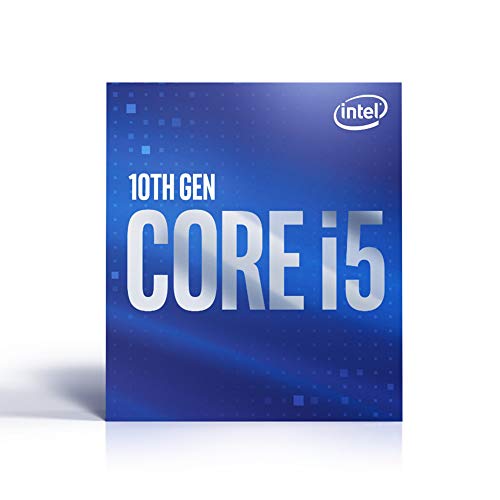
Intel Core i5-10500 6-Core Processor
Best for: everyday LGA 1200 desktop computing builds
- Core Count
- 6 cores
- CPU Socket
- LGA1200
- Max Boost Clock
- 4.5 GHz
- Base Power
- 65W
- Series
- Core i5
- Dimensions
- 4.7 × 3.9 × 2.8 inches
The Intel Core i5-10500 is a 6-core desktop processor built for the LGA 1200 socket and Intel 400 series chipsets. It operates with a clock speed reaching up to 4.5 GHz and features a 65W thermal design power. This setup gives you six physical processing cores for everyday workloads while keeping energy consumption moderate. You will find it suits mainstream desktop builds on supported platforms.
Pros
- Clock speeds reaching up to 4.5 GHz
- 6 physical cores for multi-tasking
- 65W thermal design power
- Engineered for LGA 1200 socket motherboards
Cons
- Fewer cores than 8-core and 10-core processors on this list
- Limited to LGA 1200 socket compatibility
Good fit if
- You need a 6-core processor that hits speeds up to 4.5 GHz.
- You are building or upgrading an LGA 1200 system with an Intel 400 series chipset.
- You want a CPU capped at a 65W TDP.
Skip if
- You run a motherboard that uses a different socket than LGA 1200.
- You need more than 6 cores for heavy multi-threaded workloads.
Verdict: Intel Core i5-10500 6-Core Processor provides up to 4.5 GHz across 6 cores within a standard 65W power profile. It is a solid match for users needing reliable speeds on LGA 1200 motherboards.

Intel Core i5-9600K Desktop Processor
Best for: Intel 300 Series motherboard systems
- Core Count
- 6 Cores
- Thread Count
- 6 Threads
- CPU Socket
- LGA1151
- Max Boost Clock
- 4.60 GHz
- Base Clock
- 3.70 GHz
- Cache Size
- 9 MB
This renewed Intel Core i5-9600K desktop processor features 6 cores and 6 threads. It runs at a base clock speed of 3.70 GHz and reaches up to 4.60 GHz with turbo boost. It includes 9 MB of cache, integrated Intel UHD Graphics 630, and a 95W TDP. Designed for the LGA 1151 socket, it works strictly with Intel 300 Series chipset motherboards, suiting you if you need unlocked desktop performance on that platform.
Pros
- Turbo clock speeds up to 4.60 GHz
- Integrated Intel UHD Graphics 630
- Supports Intel Optane Memory
- 9 MB onboard cache
Cons
- Limited to 6 threads without hyperthreading
- Compatible only with Intel 300 Series chipsets
Good fit if
- You have an LGA 1151 motherboard with an Intel 300 Series chipset.
- You want an unlocked 6-core chip with clock speeds up to 4.60 GHz.
- You need integrated graphics without installing a dedicated video card.
Skip if
- You run a motherboard from an older or newer chipset generation.
- You need more than 6 threads for heavily multithreaded tasks.
Verdict: Intel Core i5-9600K Desktop Processor delivers 6 unlocked cores and up to 4.60 GHz turbo speeds for LGA 1151 systems. It is a dependable fit if your system uses an Intel 300 Series motherboard.
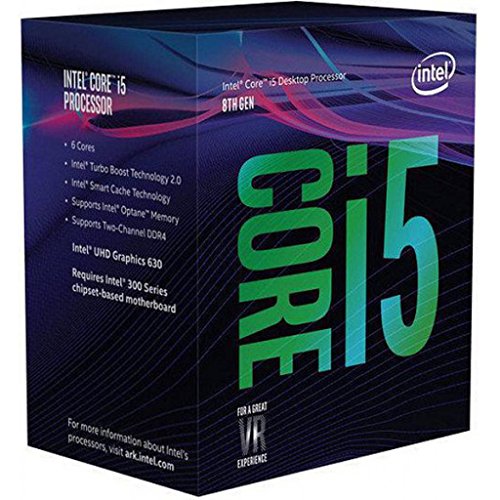
Intel Core i5-8600K 6-Core Processor
Best for: LGA 1151 300 Series motherboard upgrades
- Core Count
- 6 Cores
- CPU Socket
- LGA 1151
- Max Boost Clock
- 4.3 GHz
- Base Power
- 95W
- Series
- Core i5
- Dimensions
- 4.57 × 1.73 × 3.98 inches
This renewed Intel Core i5 processor features six cores and clock speeds up to 4.3 GHz. Built for motherboards using the LGA 1151 socket and 300 Series chipsets, it operates at a 95W TDP. The unlocked design allows multiplier adjustments on compatible boards. It suits you if you need a six-core desktop processor for an existing LGA 1151 platform without upgrading your motherboard socket.
Pros
- Six physical processing cores
- Clock speeds up to 4.3 GHz
- Unlocked multiplier for clock adjustments
- Compatible with LGA 1151 300 Series motherboards
Cons
- Renewed condition rather than brand new
- 95W TDP requires sufficient system cooling
- Limited to LGA 1151 300 Series sockets
Good fit if
- You have an LGA 1151 300 Series motherboard.
- You want an unlocked 6-core processor reaching 4.3 GHz.
- You are comfortable installing a renewed component.
Skip if
- You use a motherboard with a different CPU socket.
- You require a brand-new factory-sealed processor.
- You need a low-power build below 95W TDP.
Verdict: Intel Core i5-8600K 6-Core Processor provides unlocked 6-core performance up to 4.3 GHz for LGA 1151 300 Series systems. It serves as a direct 95W drop-in option if you need renewed hardware on this socket.

Intel Xeon Gold 18-Core Processor
Best for: high-demand multi-threaded server workloads
- Core Count
- 18 cores
- Base Clock
- 3.10GHz
- Cache Size
- 25MB
- Base Power
- 200W
- Series
- Xeon Gold
This CPU is a 2nd Generation Intel Xeon Scalable Gold 6000 series processor built on Cascade Lake architecture. You get 18 cores operating at a 3.10GHz base clock speed alongside 25MB of cache memory. It carries a 200W thermal design power and ships as an OEM tray unit without a bundled cooling device. It suits you if you run heavy parallel computing tasks requiring high multi-core capacity.
Pros
- 18 physical cores for parallel computing tasks
- 3.10GHz base clock speed
- 25MB cache memory for data processing
- Cascade Lake microarchitecture
Cons
- Cooling device not included and must be purchased separately
- 200W TDP requires heavy-duty cooling
- Ships in OEM tray packaging rather than a retail box
Good fit if
- You need 18 cores for intensive multi-threaded workloads.
- You have a dedicated cooling solution rated for at least 200W TDP.
- You build server or workstation systems on the Cascade Lake platform.
Skip if
- You want a bundled cooler included in the package.
- You need a standard boxed retail processor.
- You are restricted to lower-power thermal envelopes below 200W.
Verdict: Intel Xeon Gold 6254 18-Core Processor gives you 18 cores, a 3.10GHz base clock speed, and 25MB of cache for demanding workloads. You will need to supply your own cooling hardware to support its 200W TDP.

Intel Core i5 6-Core Unlocked Processor
Best for: LGA 1200 mid-range unlocked desktop builds
- Core Count
- 6 cores
- CPU Socket
- LGA1200
- Max Boost Clock
- 4.9 GHz
- Base Power
- 125W
- Series
- Core i5
- Dimensions
- 4.57 × 1.73 × 3.98 inches
The Intel Core i5 6-Core Unlocked Desktop Processor runs on the LGA 1200 socket and features 6 cores. It reaches clock speeds up to 4.9 GHz with an unlocked multiplier for tuning. The chip operates at a 125W TDP rating and works with Intel 500 series and select 400 series motherboards. It suits you if you need a mid-range unlocked desktop platform for everyday computing tasks.
Pros
- Clock speeds reach up to 4.9 GHz
- Unlocked multiplier for user tuning
- Compatible with Intel 500 and select 400 series chipsets
- 6 physical processing cores
Cons
- 125W TDP requires capable cooling hardware
- Limited to LGA 1200 socket motherboards
Good fit if
- You build on an LGA 1200 socket motherboard
- You want an unlocked processor reaching up to 4.9 GHz
- You need a 6-core processor for daily desktop workloads
Skip if
- You require more than 6 physical cores
- You use a motherboard that lacks an LGA 1200 socket
Verdict: Intel Core i5 6-Core Unlocked Desktop Processor delivers up to 4.9 GHz speeds on the LGA 1200 socket. It offers a balanced 6-core configuration with unlocked tuning at a 125W TDP.

Intel Xeon Gold 6136 12-Core Processor
Best for: multithreaded enterprise workloads and parallel processing
- Core Count
- 12 cores
- Thread Count
- 24 threads
- Max Boost Clock
- 3.70 GHz
- Base Clock
- 3.0 GHz
- Cache Size
- 12 MB L2, 24.75 MB L3
- Series
- Xeon Gold
The Intel Xeon Gold 6136 is an enterprise-oriented processor featuring 12 cores and 24 threads. It runs at a 3.0 GHz base clock speed with a maximum turbo frequency of 3.70 GHz. Built on 14 nm lithography, it provides 12 MB of L2 cache and 24.75 MB of L3 cache. You get dedicated 64-bit computing hardware designed for heavy parallel processing and multithreaded enterprise workloads.
Pros
- 12 cores and 24 threads for parallel processing
- 24.75 MB L3 cache combined with 12 MB L2 cache
- 3.0 GHz base frequency with 3.70 GHz turbo speed
- Supports 64-bit processing architecture
Cons
- Maximum turbo frequency is limited to 3.70 GHz
- Uses older 14 nm manufacturing process
- No integrated graphics included in specifications
Good fit if
- You need 12 cores and 24 threads for multithreaded computing.
- You run enterprise workloads that utilize 24.75 MB of L3 cache.
Skip if
- You need clock speeds faster than 3.70 GHz.
- You require a processor with integrated graphics capabilities.
Verdict: Intel Xeon Gold 6136 12-Core Processor delivers 24 threads and 24.75 MB of L3 cache for demanding computational tasks. Its 3.0 GHz base speed provides steady multi-core execution for heavy computing requirements.
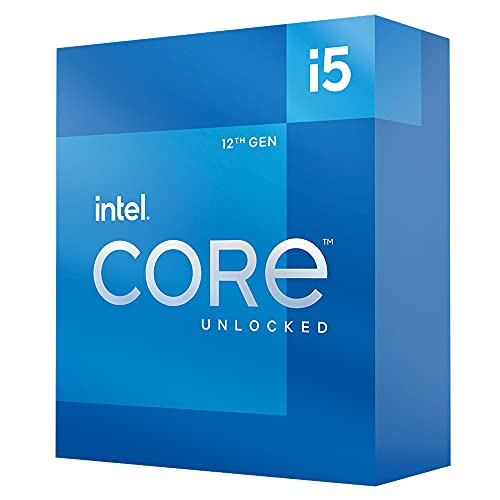
Intel Core i5 10-Core Desktop Processor
Best for: LGA 1700 hybrid multi-core desktop builds
- Core Count
- 10 (6P+4E) Cores
- CPU Socket
- LGA1700
- Max Boost Clock
- 4.9 GHz
- Base Power
- 125W
- Series
- Core i5
- Dimensions
- 4.57 × 1.73 × 3.98 inches
The Intel Core i5 10-Core Desktop Processor gives you an unlocked CPU built for LGA 1700 motherboards and 600 series chipsets. It features 10 total cores split into 6 performance cores and 4 efficient cores, reaching clock speeds up to 4.9 GHz. Running at a 125W TDP, it fits your build if you want modern hybrid-core capability for desktop tasks.
Pros
- 10 cores featuring 6 performance and 4 efficient cores
- Maximum clock speed reaching up to 4.9 GHz
- Unlocked multiplier on the LGA 1700 socket
- Designed for Intel 600 series chipset motherboards
Cons
- 125W TDP demands dedicated thermal management
- Incompatible with older LGA 1200 or LGA 1151 sockets
Good fit if
- You build on an LGA 1700 motherboard with a 600 series chipset.
- You want an unlocked processor capable of reaching up to 4.9 GHz.
- You need a 10-core setup combining performance and efficient cores.
Skip if
- You are using a motherboard with an older socket design.
- You need a processor with a power rating lower than 125W TDP.
Verdict: Intel Core i5 10-Core Desktop Processor delivers unlocked 4.9 GHz speeds and 10 hybrid cores for LGA 1700 builds. It provides modern desktop performance within a 125W power rating.

Intel Core i9-10900X 10-Core Processor
Best for: FCLGA2066 systems needing 10-core multi-threaded processing
- Core Count
- 10 cores
- Thread Count
- 20 threads
- CPU Socket
- FCLGA2066
- Max Boost Clock
- 4.50 GHz
- Base Clock
- 3.70 GHz
- Cache Size
- 19.25 MB
The Intel Core i9-10900X gives you 10 physical cores and 20 threads built for the FCLGA2066 socket. It runs at a 3.70 GHz base clock and reaches up to 4.50 GHz with Intel Turbo Boost. Featuring 19.25 MB of L3 cache and VT-x support, it fits your multi-threaded computing and virtualization workloads if you have a compatible platform.
Pros
- 10 physical cores and 20 threads
- Max turbo clock speed up to 4.50 GHz
- 19.25 MB L3 cache pool
- Intel VT-x virtualization support
Cons
- Does not include a cooler or heatsink
- Requires an FCLGA2066 socket motherboard
Good fit if
- You need 10 cores and 20 threads for multi-threaded tasks.
- You already own an FCLGA2066 motherboard.
- You plan to use a dedicated aftermarket cooler.
Skip if
- You need a bundled heatsink and fan in the box.
- You use a standard mainstream socket rather than FCLGA2066.
Verdict: Intel Core i9-10900X 10-Core Processor provides strong multi-threaded throughput with its 20 threads and 4.50 GHz max turbo speed. It serves as a direct compute upgrade for dedicated FCLGA2066 desktop setups.

Intel Xeon W-2265 12-Core Processor
Best for: LGA 2066 server and workstation builds
- Core Count
- 12-Core
- Thread Count
- 24-Thread
- CPU Socket
- LGA 2066
- Base Clock
- 3.5GHz
- Cache Size
- 19.25MB
- Use Case
- Server
The Intel Xeon W-2265 is a server processor configured with 12 cores and 24 threads running at a 3.5 GHz clock speed. Built for LGA 2066 motherboards, it features a 19.25 MB cache to handle data-heavy workstation tasks. You get high parallel throughput for dedicated server setups, making this renewed unit suitable if you maintain an existing LGA 2066 platform requiring reliable multi-threaded compute capability.
Pros
- 12 cores and 24 threads for multi-threaded server workloads
- Base clock speed of 3.5 GHz
- 19.25 MB onboard cache
- Compatible with LGA 2066 socket motherboards
Cons
- Requires a motherboard with an LGA 2066 socket
- Product condition is renewed rather than brand new
Good fit if
- You need 12 cores and 24 threads for server or workstation compute tasks.
- You already own or plan to build around an LGA 2066 socket motherboard.
- You want a 3.5 GHz processor with a 19.25 MB cache.
Skip if
- You use a standard consumer desktop motherboard such as LGA 1200 or LGA 1151.
- You require a brand-new factory-sealed processor instead of a renewed model.
Verdict: Intel Xeon W-2265 12-Core Server Processor delivers 12 cores, 24 threads, and a 3.5 GHz clock speed for LGA 2066 platforms. It fits dedicated server and workstation setups that require heavy multi-threaded throughput.

Intel Xeon W-2245 8-Core Processor
Best for: LGA 2066 systems requiring 16 threads
- Core Count
- 8
- Thread Count
- 16
- CPU Socket
- FCLGA2066
- Max Boost Clock
- 4.50 GHz
- Base Clock
- 3.90 GHz
- Cache Size
- 16.5 MB
The Intel Xeon W-2245 is an eight-core workstation processor designed for socket LGA 2066 systems. You get 16 threads, a 3.90 GHz base clock speed, a 4.50 GHz maximum turbo frequency, and 16.5 MB of cache. It operates with a 155 W TDP and works with DDR4 memory. This processor suits you if you need sustained multi-threaded computing power on a dedicated workstation motherboard.
Pros
- 8 cores and 16 threads
- 3.90 GHz base frequency with 4.50 GHz turbo
- 16.5 MB cache
- DDR4 memory support
Cons
- High 155 W TDP rating
- Requires LGA 2066 socket motherboard
Good fit if
- You need 16 threads for multi-threaded workloads.
- You have an LGA 2066 socket motherboard.
- You want high base clock speeds of 3.90 GHz.
Skip if
- You need lower power consumption than 155 W.
- You use mainstream desktop LGA 1200 or LGA 1151 sockets.
Verdict: Intel Xeon W-2245 8-Core Processor delivers 16 threads and 3.90 GHz base speeds on the LGA 2066 platform. It provides high-frequency multi-threading backed by 16.5 MB of cache.

Intel Core i7-6850K 6-Core Processor
Best for: LGA 2011-v3 systems needing 40 PCIe lanes
- Core Count
- 6 cores
- Thread Count
- 12 threads
- CPU Socket
- LGA 2011-v3
- Max Boost Clock
- 3.80 GHz
- Cache Size
- 15 MB
- Base Power
- 140 W
The Intel Core i7-6850K is a desktop processor built for the LGA 2011-v3 socket. You get 6 cores, 12 threads, a 3.6 GHz base frequency, and clock speeds up to 3.80 GHz alongside a 15MB cache. It provides 40 PCIe 3.0 lanes and 4-channel DDR4 2400 memory support. This processor suits you if you need extensive PCIe expansion on an LGA 2011-v3 system.
Pros
- 40 PCIe 3.0 lanes for multi-card bandwidth
- 6 cores and 12 threads with 15MB cache
- 4 memory channels supporting DDR4 2400
- Clock speeds up to 3.80 GHz
Cons
- 140W TDP requires robust cooling
- Restricted to older LGA 2011-v3 motherboards
- Memory support capped at DDR4 2400 speed
Good fit if
- You need 40 PCIe 3.0 lanes for expansion cards.
- You run an LGA 2011-v3 motherboard.
- You require 4-channel DDR4 memory support.
Skip if
- You use modern motherboards with different socket designs.
- You need a low-power build under 140W TDP.
Verdict: Intel Core i7-6850K 6-Core Processor provides 40 PCIe 3.0 lanes and 4-channel DDR4 support for compatible LGA 2011-v3 systems. It handles multi-card expansion needs while delivering 12 threads of computing power.

Intel Core i9-9900K 8-Core Processor
Best for: Intel 300-series motherboard upgrades
- Core Count
- 8 Cores
- Thread Count
- 16 Threads
- CPU Socket
- LGA1151
- Max Boost Clock
- 5.00 GHz
- Base Clock
- 3.60 GHz
- Cache Size
- 16 MB
The Intel Core i9-9900K is an 8-core, 16-thread desktop processor designed for LGA 1151 sockets on Intel 300 series chipsets. It features a 3.60 GHz base clock, reaches up to 5.00 GHz turbo, and includes 16 MB cache. You get built-in Intel UHD Graphics 630 and Intel Optane Memory support. This processor suits you if you want high clock speeds and integrated display output on an existing 300 series system.
Pros
- 8 cores and 16 threads
- Up to 5.00 GHz turbo frequency
- Integrated Intel UHD Graphics 630
- 16 MB onboard cache
Cons
- Compatible only with Intel 300 series chipsets
- 95W TDP requires adequate cooling
Good fit if
- You have an Intel 300 series chipset motherboard.
- You need integrated graphics without installing a separate video card.
- You run multithreaded workloads that benefit from 16 threads.
Skip if
- You own a motherboard with a chipset outside the Intel 300 series.
- You need a low-power processor under 95W TDP.
Verdict: Intel Core i9-9900K 8-Core Processor provides 8 cores and up to 5.00 GHz clock speeds for LGA 1151 motherboards with Intel 300 series chipsets. It includes Intel UHD Graphics 630 and 16 MB cache within a 95W design.

Intel Core i7-6700K Quad-Core Processor
Best for: LGA 1151 builds needing four cores
- Core Count
- 4 Core
- CPU Socket
- Socket H4 LGA-1151
- Max Boost Clock
- 4.20 GHz
- Base Clock
- 4.0 GHz
- Cache Size
- 8 MB
- Base Power
- 91 W
The Intel Core i7-6700K is a quad-core desktop processor designed for LGA 1151 motherboards. It features a 4.0 GHz base clock, 4.20 GHz overclocking speed, and 8 MB of cache on a 14 nm process. Integrated Intel HD Graphics 530 provides onboard video. This processor fits you if you want high clock speeds in an LGA 1151 configuration without adding a separate graphics card.
Pros
- 4.0 GHz base clock with 4.20 GHz boost speed
- Integrated Intel HD Graphics 530
- 8 MB cache memory
- Fits Socket LGA 1151 motherboards
Cons
- Limited to 4 physical cores
- Shipped in OEM pack packaging
Good fit if
- You use a compatible LGA 1151 motherboard socket.
- You need built-in Intel HD Graphics 530 support.
- You prioritize a high 4.0 GHz baseline clock rate across 4 cores.
Skip if
- You require more than 4 CPU cores for heavy multitasking.
- You need a different socket architecture than LGA 1151.
Verdict: Intel Core i7-6700K 4-Core Processor delivers a 4.0 GHz base frequency and integrated graphics on the LGA 1151 platform. It is a solid quad-core choice if your workload does not require higher core counts.
Specifications side by side
| Spec | Intel Core i9-9900K 8-Core Processor | Intel Xeon E5-2680 v4 14-Core Processor | Intel Core i5-10500 6-Core Processor | Intel Core i5-9600K Desktop Processor | Intel Core i5-8600K 6-Core Processor | Intel Xeon Gold 18-Core Processor | Intel Core i5 6-Core Unlocked Processor | Intel Xeon Gold 6136 12-Core Processor | Intel Core i5 10-Core Desktop Processor | Intel Core i9-10900X 10-Core Processor | Intel Xeon W-2265 12-Core Processor | Intel Xeon W-2245 8-Core Processor | Intel Core i7-6850K 6-Core Processor | Intel Core i9-9900K 8-Core Processor | Intel Core i7-6700K Quad-Core Processor |
|---|---|---|---|---|---|---|---|---|---|---|---|---|---|---|---|
| Core Count | 8 Cores | 14 Cores | 6 cores | 6 Cores | 6 Cores | 18 cores | 6 cores | 12 cores | 10 (6P+4E) Cores | 10 cores | 12-Core | 8 | 6 cores | 8 Cores | 4 Core |
| Thread Count | 16 Threads | not specified | not specified | 6 Threads | not specified | not specified | not specified | 24 threads | not specified | 20 threads | 24-Thread | 16 | 12 threads | 16 Threads | not specified |
| CPU Socket | LGA1151 | LGA 2011-3 | LGA1200 | LGA1151 | LGA 1151 | not specified | LGA1200 | not specified | LGA1700 | FCLGA2066 | LGA 2066 | FCLGA2066 | LGA 2011-v3 | LGA1151 | Socket H4 LGA-1151 |
| Max Boost Clock | 5.00 GHz | not specified | 4.5 GHz | 4.60 GHz | 4.3 GHz | not specified | 4.9 GHz | 3.70 GHz | 4.9 GHz | 4.50 GHz | not specified | 4.50 GHz | 3.80 GHz | 5.00 GHz | 4.20 GHz |
| Base Clock | 3.60 GHz | 2.4GHz | not specified | 3.70 GHz | not specified | 3.10GHz | not specified | 3.0 GHz | not specified | 3.70 GHz | 3.5GHz | 3.90 GHz | not specified | 3.60 GHz | 4.0 GHz |
| Cache Size | 16 MB | 35MB | not specified | 9 MB | not specified | 25MB | not specified | 12 MB L2, 24.75 MB L3 | not specified | 19.25 MB | 19.25MB | 16.5 MB | 15 MB | 16 MB | 8 MB |
| Base Power | 95W | 120W | 65W | 95W | 95W | 200W | 125W | not specified | 125W | 165 W | not specified | 155 W | 140 W | 95W | 91 W |
| Integrated Graphics | Intel UHD Graphics 630 | not specified | not specified | Intel UHD Graphics 630 | not specified | not specified | not specified | not specified | not specified | not specified | not specified | not specified | not specified | Intel UHD Graphics 630 | Intel HD Graphics 530 |
| Use Case | not specified | not specified | not specified | not specified | not specified | not specified | not specified | not specified | not specified | not specified | Server | not specified | not specified | not specified | not specified |
| Series | Core i9 | not specified | Core i5 | Core i5 | Core i5 | Xeon Gold | Core i5 | Xeon Gold | Core i5 | Core i9 | not specified | not specified | Core i7 | Core i9 | Core i7 |
| TDP | 95W | not specified | 65W | 95W | 95W | not specified | 125W | not specified | 125W | not specified | not specified | not specified | not specified | 95W | 95W |
| Dimensions | 2.91 × 4.41 × 4.61 inches | 9.69 × 7.17 × 0.63 inches | 4.7 × 3.9 × 2.8 inches | 4.57 × 3.98 × 2.76 inches | 4.57 × 1.73 × 3.98 inches | not specified | 4.57 × 1.73 × 3.98 inches | not specified | 4.57 × 1.73 × 3.98 inches | not specified | not specified | not specified | 4.48 × 4.01 × 3.19 inches | 2.91 × 4.41 × 4.61 inches | 3.94 × 3.94 × 2.36 inches |
| Weight | not specified | not specified | 4.8 ounces | 2.4 ounces | 0.71 ounces | not specified | not specified | not specified | 1.41 ounces | not specified | 1 pounds | 1 pounds | not specified | not specified | 1.44 ounces |
| Model | SRELS | SR2N7 | SRH3A | Core i5-9600K | BX80684I58600K | CD8069504194501-cr | i5-11600K | SR3B2 | i5-12600K | SRGV7 | SRGSQ | SRH02 | i7-6850K | BX80684I99900K | CM8066201919901 |
| Size | not specified | not specified | not specified | not specified | Processor | not specified | not specified | not specified | not specified | not specified | not specified | not specified | not specified | I9-9900K | not specified |
| Color | not specified | not specified | not specified | not specified | not specified | not specified | not specified | not specified | not specified | not specified | not specified | not specified | gray | not specified | not specified |
Comparing Intel Desktop and Workstation Processors
For standard desktop systems, you choose between mainstream sockets like LGA 1151, LGA 1200, and LGA 1700. Models such as the Intel Core i5-10500 offer a 65W TDP for everyday computing, while the Intel Core i9-9900K provides an 8-core design on LGA 1151 motherboards. These processors suit you if you build or upgrade a standard consumer PC.
For server and workstation use cases, Intel provides platforms like LGA 2066 and LGA 2011-v3. Options such as the Intel Xeon W-2265 deliver 12 cores and 24 threads for dedicated server setups, while the Intel Core i7-6850K supplies 40 PCIe lanes and 4-channel DDR4 memory support. This group fits your needs if you manage multithreaded workloads or expansion cards.
Who the Intel Range Suits Best
You will find options here ranging from 4-core desktop units up to 18-core enterprise hardware. Power targets scale from 65W up to 200W across Core and Xeon families. This selection suits desktop builders maintaining LGA 1151, LGA 1200, or LGA 1700 setups, alongside workstation operators needing LGA 2011-v3 or LGA 2066 motherboards.
Noticeable gaps exist across the 15 options. You will not find entry-level Core i3 processors or ultra-low-power chips operating below 65W. The list also excludes mobile processors, configurations with fewer than 4 cores, and enterprise chips scaling beyond 18 cores.
How to Choose the Right Intel Processor
-
Match the Exact Socket
Your motherboard physical socket determines which processor fits. Sockets are not interchangeable. Installing a chip into the wrong socket will damage pins. Match your motherboard specification directly to the processor socket type. For example, the Intel Core i5 10-Core Desktop Processor fits only LGA 1700 motherboards and will not seat into LGA 1200 or LGA 1151 slots. Verify your existing board or intended board purchase matches the processor socket before buying to avoid physical incompatibility and hardware failures during assembly.
-
Plan for Thermal Dissipation
Thermal Design Power measures the heat a processor produces under standard operation. Base your cooler choice on this wattage value. Standard desktop chips operate at 65W or 95W, whereas high-end configurations demand heavier cooling hardware. The Intel Xeon Gold 18-Core Processor operates at a 200W TDP and requires an aftermarket cooling solution capable of managing that thermal load. Selecting a cooler rated below the processor TDP leads to thermal throttling and lost operating speed under sustained computing loads.
-
Balance Cores and Threads
Evaluate your software to choose between single-thread speed and overall core capacity. Standard office tasks and light workloads operate smoothly on four or six cores. Parallel workloads like virtualization, data compiling, and multi-threaded server tasks benefit directly from higher core and thread quantities. The Intel Xeon W-2265 12-Core Processor provides 24 threads to run multiple processes simultaneously. Choose higher core and thread counts when your daily workflow involves multi-threaded rendering or server hosting rather than basic desktop use.
-
Verify Motherboard Chipset Support
Socket compatibility alone does not guarantee a processor will boot. Motherboard chipsets must support the specific processor generation. Certain sockets house multiple generations that use distinct chipsets. For instance, the Intel Core i5-8600K 6-Core Processor uses the LGA 1151 socket but strictly requires an Intel 300 Series motherboard chipset to operate. Older LGA 1151 motherboards with 100 or 200 series chipsets cannot run this chip. Check the motherboard manufacturer CPU support list to confirm your specific chipset revision supports the processor model.
-
Assess PCIe Lane Capacity
Expansion card support depends directly on the number of PCIe lanes supplied by the processor. Standard desktop processors offer limited lanes suited for a single graphics card and basic storage. Workstation processors provide higher lane allocations for multi-card setups and high-speed add-in hardware. The Intel Core i7-6850K 6-Core Processor provides 40 PCIe 3.0 lanes alongside 4-channel DDR4 memory support. Check your add-in card requirements before choosing a processor to ensure sufficient dedicated bandwidth across all installed expansion slots.
-
Check Integrated Graphics Support
Some processors feature onboard graphics while others require a separate dedicated graphics card to display video output. If you are building a system without an independent GPU, confirm that your chosen processor contains integrated display hardware. The Intel Core i7-6700K Quad-Core Processor includes integrated graphics, allowing video output directly through motherboard display ports. Server and workstation chips often lack this feature, requiring you to install a dedicated discrete card. Check display specs to avoid display setup issues.
Frequently asked questions
Which Intel processor on this list offers a hybrid core architecture?
The Intel Core i5-12600K is the model in this guide featuring a hybrid core design. Built for the LGA 1700 socket, it features 10 hybrid cores running at unlocked speeds up to 4.9 GHz with a 125W TDP. This configuration splits processing tasks across core types to balance desktop computing workloads efficiently.
What is the highest core count available among these Intel processors?
The Intel Xeon Gold 6254 offers the highest core count in this lineup with 18 physical cores. This enterprise processor runs at a base clock frequency of 3.10 GHz and provides 25 MB of cache. It carries a 200W TDP, meaning you will need dedicated cooling hardware to support multi-threaded server workloads.
Can you run an Intel Core i9-9900K on any LGA 1151 motherboard?
No, you need an LGA 1151 motherboard with an Intel 300-series chipset to run the Core i9-9900K. Although earlier platforms share the physical socket, 8-core models require 300-series power delivery. The processor delivers 16 threads up to 5.00 GHz, 16 MB of cache, and integrated Intel UHD Graphics 630 within a 95W TDP.
Which Intel desktop processor listed has the lowest power consumption?
The Intel Core i5-10500 features the lowest thermal design power on this list at 65W. Operating on the LGA 1200 socket, it delivers up to 4.5 GHz across 6 cores. This lower TDP makes it suitable for standard desktop enclosures with moderate cooling capacity, whereas unlocked K-series chips like the Core i5-11600K draw 125W.
Which Intel processor provides 40 PCIe lanes for expansion cards?
The Intel Core i7-6850K provides 40 PCIe 3.0 lanes for multi-card expansion setups. Designed for the LGA 2011-v3 platform, this 6-core processor also supports 4-channel DDR4 memory configurations. It handles 12 computing threads simultaneously, making it ideal if you need high bandwidth across multiple add-in cards such as storage controllers or capture cards.
What options are available for LGA 2066 workstation systems?
You have multiple dedicated options for LGA 2066 and FCLGA2066, including Core i9 and Xeon W processors. The Core i9-10900X provides 10 cores, 20 threads, and 4.50 GHz boost speeds. If you require workstation-grade Xeon hardware, the Xeon W-2265 supplies 12 cores and 24 threads at 3.5 GHz, while the Xeon W-2245 delivers 8 cores, 16 threads, and 3.90 GHz base speeds.
What is the difference between the Core i5-9600K and Core i5-8600K?
The main difference between these two unlocked 6-core LGA 1151 processors is their clock speed. The Core i5-9600K reaches turbo speeds up to 4.60 GHz, while the Core i5-8600K operates up to 4.3 GHz. Both share a 95W TDP and fit Intel 300-series motherboards, allowing direct drop-in upgrades without changing thermal infrastructure.