Best Motherboards with 2.5GbE in 2026: 15 Picks Ranked by Specs
As an Amazon Associate we earn from qualifying purchases. Links on this page are affiliate links.
Finding the right motherboard with 25gbe support ensures you get reliable multi-gigabit wired speeds for demanding home networks and gaming setups. We compared 15 models using the specifications published on their official product listings.
The MSI PRO ATX DDR5 Motherboard takes the top spot because it pairs a 2.5GbE port with PCIe 5.0 expansion and DDR5 memory support on the Intel LGA 1700 socket. This guide helps you choose the ideal board for your processor socket, expansion requirements, and form factor.
Quick picks
The best fit for you
- You want a balanced Intel DDR5 ATX build foundation MSI PRO ATX DDR5 Motherboard This board features an LGA 1700 socket, DDR5 memory support, PCIe 5.0 capability, and a 2.5GbE Ethernet port.
- You build an AMD AM5 system with high-speed networking ASUS TUF Gaming AM5 ATX Motherboard It provides Socket AM5 compatibility, DDR5 support, Wi-Fi 6E, and 2.5GbE Ethernet connectivity.
- You want a compact Intel microATX layout with 2.5GbE ASUS Prime Micro-ATX DDR5 Motherboard The micro-ATX form factor provides LGA 1700 support, DDR5 memory capability, and a 2.5GbE port.
- You need an ultra-compact AMD small-form-factor setup Gigabyte AM5 Mini-ITX Motherboard The Mini-ITX form factor includes Socket AM5 support, DDR5 memory, Wi-Fi 6E, and 2.5GbE networking.
Our 15 picks

MSI PRO ATX DDR5 Motherboard
Best for: Intel LGA 1700 builds needing 2.5GbE
- Ethernet Speed
- 2.5GbE (what this guide is about)
- CPU Socket
- LGA 1700
- Form Factor
- ATX
- Memory Type
- DDR5
- PCIe Version
- PCIe 5.0
- Wi-Fi Standard
- Wi-Fi 6E
This ATX board gives you 2.5GbE networking alongside built-in Wi-Fi 6E and Bluetooth 5.3. Designed around the LGA 1700 socket, it supports 12th, 13th, and 14th Gen Intel processors. Four DDR5 memory slots accommodate up to 128GB of RAM, and a PCIe 5.0 slot supports modern expansion cards. DisplayPort, HDMI, and USB 3.2 Gen2 ports handle your standard peripheral connections. It suits you if you need fast 2.5GbE networking on an Intel platform.
Pros
- Integrated 2.5Gbps LAN and Wi-Fi 6E
- PCIe 5.0 interface for expansion cards
- Four DDR5 slots supporting up to 128GB RAM
- Compatible with 12th, 13th, and 14th Gen Intel CPUs
Cons
- Incompatible with AMD processors
- Does not support older DDR4 memory
- Full ATX form factor does not fit compact cases
Good fit if
- You need 2.5Gbps wired LAN combined with Wi-Fi 6E.
- You plan to run an Intel 12th, 13th, or 14th Gen CPU on socket LGA 1700.
- You want DDR5 memory capacity up to 128GB.
Skip if
- You intend to use an AMD processor.
- You want to keep an existing DDR4 RAM kit.
- You are building inside a Mini-ITX or Micro-ATX chassis.
Verdict: MSI Pro Series DDR5 ATX Motherboard provides essential 2.5GbE networking, PCIe 5.0 capability, and DDR5 support for modern Intel builds. It is a solid standard-ATX foundation for multi-gigabit setups.

MSI Gaming Plus ATX DDR5 Motherboard
Best for: Intel gaming builds needing 2.5GbE networking
- Ethernet Speed
- 2.5GbE (what this guide is about)
- CPU Socket
- LGA 1700
- Chipset
- Z790
- Form Factor
- ATX
- Memory Type
- DDR5
- PCIe Version
- PCIe 5.0
This MSI ATX board features a 2.5GbE network port alongside integrated Wi-Fi 6E connectivity. Built around the Intel LGA 1700 socket, it supports 12th, 13th, and 14th Gen Intel desktop processors. You also get support for DDR5 memory modules and PCIe 5.0 expansion lanes. This configuration suits you if you need high-speed wired networking paired with modern Intel processor support for a gaming system.
Pros
- 2.5GbE wired network interface
- PCIe 5.0 expansion standard support
- DDR5 memory compatibility
- Integrated Wi-Fi 6E wireless
Cons
- Requires DDR5 memory with no DDR4 backward compatibility
- Full ATX form factor does not fit compact cases
- Restricted to Intel LGA 1700 processors
Good fit if
- You run a 2.5GbE local network and need fast wired transfers.
- You plan to build with a 12th, 13th, or 14th Gen Intel CPU.
- You want DDR5 memory and PCIe 5.0 support.
Skip if
- You intend to build an AMD Ryzen processor setup.
- You want to reuse an existing DDR4 memory kit.
- You require a Micro-ATX or Mini-ITX form factor for a compact case.
Verdict: MSI Z790 Gaming Plus ATX Motherboard provides 2.5GbE networking, Wi-Fi 6E, and PCIe 5.0 support for modern Intel LGA 1700 builds. It serves well as a standard ATX foundation for high-bandwidth gaming rigs using DDR5 memory.

MSI MPG LGA 1700 DDR5 ATX Motherboard
Best for: Intel LGA 1700 DDR5 gaming systems
- Ethernet Speed
- 2.5GbE (what this guide is about)
- CPU Socket
- LGA 1700
- Form Factor
- ATX
- Memory Type
- DDR5
- PCIe Version
- PCIe 5.0
- Wi-Fi Standard
- Wi-Fi 6E
The MSI MPG Z790 Edge WiFi ATX Motherboard provides high-speed networking with integrated 2.5GbE wired LAN and Wi-Fi 6E wireless connectivity. It features an LGA 1700 socket compatible with 12th and 13th Generation Intel Core processors. You get DDR5 memory support, a PCIe 5.0 expansion slot, and multiple M.2 storage slots alongside USB 3.2 ports. This board suits you if you want fast wired connectivity and modern platform features for your desktop build.
Pros
- Integrated 2.5GbE LAN and Wi-Fi 6E wireless networking
- PCIe 5.0 expansion support for compatible add-in cards
- DDR5 memory compatibility and LGA 1700 CPU socket
- Multiple M.2 storage slots and USB 3.2 connectivity
Cons
- Renewed hardware rather than a brand-new unit
- Data lists support only for 12th and 13th Gen Intel Core CPUs
Good fit if
- You need 2.5GbE Ethernet alongside Wi-Fi 6E connectivity.
- You build with a 12th or 13th Gen Intel processor and DDR5 RAM.
- You want PCIe 5.0 support and multiple M.2 drives.
Skip if
- You prefer a factory-new motherboard over a renewed unit.
- You plan to run an AMD processor or require an AM5 socket.
Verdict: MSI MPG Z790 Edge WiFi ATX Motherboard delivers dependable 2.5GbE networking, PCIe 5.0 expansion, and DDR5 support for Intel LGA 1700 configurations.

MSI PRO DDR5 ATX Motherboard
Best for: budget 2.5GbE Intel DDR5 builds
- Ethernet Speed
- 2.5GbE (what this guide is about)
- CPU Socket
- LGA 1700
- Chipset
- Intel B760
- Form Factor
- ATX
- Memory Type
- DDR5
- PCIe Version
- PCIe 4.0
The MSI PRO B760 ATX Motherboard gives you a full-size ATX platform designed for 12th and 13th Gen Intel processors on the LGA 1700 socket. For high-speed networking, it features a 2.5GbE Ethernet port alongside built-in Wi-Fi 5 wireless connectivity. It supports modern DDR5 memory and PCIe 4.0 expansion lanes. This board suits builders who want fast 2.5GbE local transfers and DDR5 capability on a standard ATX layout.
Pros
- 2.5GbE Ethernet port for high-speed wired networking
- Supports DDR5 system memory
- Full-size ATX form factor
- PCIe 4.0 expansion support
Cons
- Wireless connectivity limited to Wi-Fi 5
- PCIe support tops out at version 4.0
- Processor support explicitly listed for 12th and 13th Gen Intel only
Good fit if
- You need a 2.5GbE wired network connection for your local setup.
- You plan to run DDR5 memory on a 12th or 13th Gen Intel processor.
- You want a standard ATX form factor with PCIe 4.0 support.
Skip if
- You require faster Wi-Fi 6 or Wi-Fi 7 wireless standards.
- You need PCIe 5.0 bandwidth for future expansion hardware.
Verdict: MSI PRO B760 ATX Motherboard delivers fast 2.5GbE wired networking and DDR5 memory support in a standard ATX layout. It provides essential high-speed connectivity for Intel LGA 1700 desktop builds.

ASUS Prime Micro-ATX DDR5 Motherboard
Best for: compact Intel builds needing 2.5GbE networking
- Ethernet Speed
- 2.5GbE (what this guide is about)
- CPU Socket
- LGA 1700
- Form Factor
- microATX
- Memory Type
- DDR5
- PCIe Version
- PCIe 4.0
- M.2 Slots
- 2
The ASUS Prime Micro-ATX DDR5 Motherboard provides high-speed networking and modern memory in a compact form factor. You get an LGA 1700 socket supporting 12th and 13th Gen Intel Core processors alongside Realtek 2.5GbE LAN and built-in Wi-Fi 6. It includes two M.2 slots, PCIe 4.0 expansion, and DDR5 support up to 64GB. This board suits you if you want fast wired networking in a space-saving microATX desktop build.
Pros
- Realtek 2.5GbE LAN and integrated Wi-Fi 6
- PCIe 4.0 interface with two M.2 storage slots
- Rear USB 3.2 Gen 2 and front USB 3.2 Gen 1 Type-C ports
- DDR5 support up to 64GB capacity
Cons
- Maximum memory capacity limited to 64GB
- Provides only two M.2 storage slots
- Processor compatibility limited to 12th and 13th Gen Intel Core CPUs
Good fit if
- You build inside a compact microATX PC case.
- You need 2.5GbE wired networking paired with Wi-Fi 6 connectivity.
- You use a 12th or 13th Gen Intel Core CPU with DDR5 memory.
Skip if
- You need more than 64GB of system memory.
- You require more than two M.2 storage drives.
- You plan to run an AMD processor.
Verdict: ASUS Prime Micro-ATX DDR5 Motherboard delivers fast 2.5GbE networking, Wi-Fi 6, and DDR5 support in a space-efficient microATX layout. It provides essential LGA 1700 connectivity without taking up the room of full-size ATX alternatives.
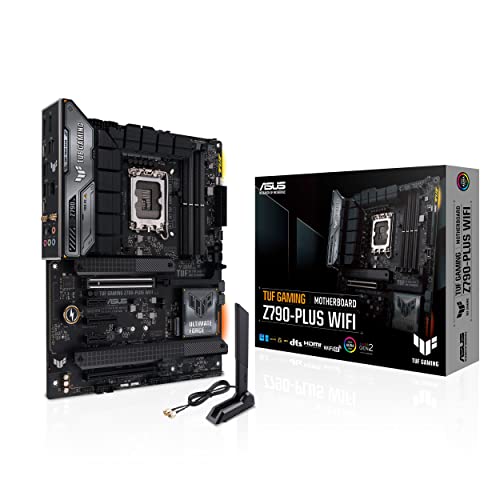
ASUS TUF Gaming PCIe 5.0 ATX Motherboard
Best for: Intel LGA 1700 builds needing 2.5GbE networking
- Ethernet Speed
- 2.5GbE (what this guide is about)
- CPU Socket
- LGA 1700
- Chipset
- Z790
- Form Factor
- ATX
- Memory Type
- DDR5
- PCIe Version
- PCIe 5.0
This ATX gaming motherboard gives you a 2.5GbE wired network port alongside built-in Wi-Fi 6 wireless connectivity. Built for Intel 12th, 13th, and 14th Gen processors on the LGA 1700 socket, it features modern DDR5 memory support, four M.2 storage slots, and a PCIe 5.0 expansion slot. It suits you if you want high-speed wired networking paired with current-generation Intel desktop hardware in a full-sized ATX chassis.
Pros
- 2.5GbE wired network port
- PCIe 5.0 support
- Four M.2 expansion slots
- DDR5 memory compatibility
- Integrated Wi-Fi 6 wireless
Cons
- Wi-Fi 6 rather than Wi-Fi 6E or Wi-Fi 7
- Not compatible with AMD AM4 or AM5 processors
- Full ATX footprint does not fit smaller cases
Good fit if
- You want a 2.5GbE port with Wi-Fi 6 on an ATX board.
- You use an Intel 12th, 13th, or 14th Gen LGA 1700 CPU.
- You require DDR5 support and four M.2 drive slots.
Skip if
- You build around an AMD Ryzen platform.
- You need a compact microATX or Mini-ITX layout.
- You plan to reuse existing DDR4 memory.
Verdict: ASUS TUF Gaming DDR5 ATX Motherboard provides 2.5GbE networking, PCIe 5.0 capability, and four M.2 slots for Intel LGA 1700 systems. It is a solid full-sized option when you want fast wired connectivity and modern DDR5 memory support.

ASUS TUF Gaming AM5 ATX Motherboard
Best for: AMD Ryzen 7000 DDR5 gaming builds
- Ethernet Speed
- 2.5GbE (what this guide is about)
- CPU Socket
- AM5
- Form Factor
- ATX
- Memory Type
- DDR5
- PCIe Version
- PCIe 5.0
- M.2 Slots
- 4
This ASUS ATX board gives you 2.5GbE networking alongside Wi-Fi 6E wireless connectivity for high-speed data transfers. Built around the AM5 socket with DDR5 memory support, it features 16 power stages designed for AMD Ryzen 7000 series processors. If you want a full-sized gaming foundation that pairs fast wired Ethernet with current-generation hardware interfaces, this board provides the core network and component specs your desktop setup needs.
Pros
- 2.5GbE wired network connectivity
- Wi-Fi 6E wireless support
- Socket AM5 compatible with Ryzen 7000 series
- DDR5 memory support
Cons
- Not compatible with older DDR4 memory modules
- ATX form factor does not fit compact Mini-ITX cases
- Limited to AMD AM5 processors
Good fit if
- You need 2.5GbE networking combined with Wi-Fi 6E wireless support.
- You are planning a build around an AMD Ryzen 7000 CPU and DDR5 memory.
- You have a standard ATX PC chassis.
Skip if
- You plan to reuse DDR4 memory modules.
- You require an Intel CPU socket or an older AM4 socket.
- You are building inside a compact Mini-ITX or Micro-ATX chassis.
Verdict: ASUS TUF Gaming AM5 ATX Motherboard delivers 2.5GbE Ethernet and Wi-Fi 6E for AMD Ryzen 7000 setups. It gives you a reliable ATX foundation with DDR5 support and 16 power stages.

Gigabyte AM5 Mini-ITX Motherboard
Best for: compact AMD AM5 small-form-factor builds
- Ethernet Speed
- 2.5GbE (what this guide is about)
- CPU Socket
- AM5
- Form Factor
- Mini ITX
- Memory Type
- DDR5
- M.2 Slots
- 1
- Wi-Fi Standard
- Wi-Fi 6E
This compact Mini-ITX board gives you 2.5GbE wired networking alongside Wi-Fi 6E for compact builds. It features the AMD Socket AM5 platform with dual-channel DDR5 memory support across two DIMM slots. You get one high-speed PCIe 4.0 x4 M.2 connector for solid-state storage and DisplayPort plus HDMI outputs for integrated graphics. It fits small-form-factor setups where you need fast network bandwidth without the bulk of standard desktop cases.
Pros
- 2.5GbE LAN and Wi-Fi 6E wireless connectivity
- Compact Mini-ITX form factor measuring 6.69 by 6.69 inches
- Dual-channel DDR5 support up to 6400MHz OC
- PCIe x16 slot with EZ-Latch quick release design
Cons
- Limited to two memory DIMM slots
- Provides only one PCIe 4.0 x4 M.2 connector
- Uses a 5+2+1 phase digital VRM design
Good fit if
- You need 2.5GbE LAN and Wi-Fi 6E in a compact Mini-ITX build.
- You plan to use an AMD Socket AM5 processor with DDR5 memory.
- You want HDMI and DisplayPort video outputs for integrated graphics.
Skip if
- You need more than two memory DIMM slots for high-capacity RAM setups.
- You require multiple onboard PCIe 4.0 x4 M.2 solid-state drive slots.
Verdict: Gigabyte Mini-ITX AM5 Motherboard provides 2.5GbE networking and Wi-Fi 6E in a compact footprint. It delivers essential Socket AM5 features with DDR5 support for small-form-factor systems.
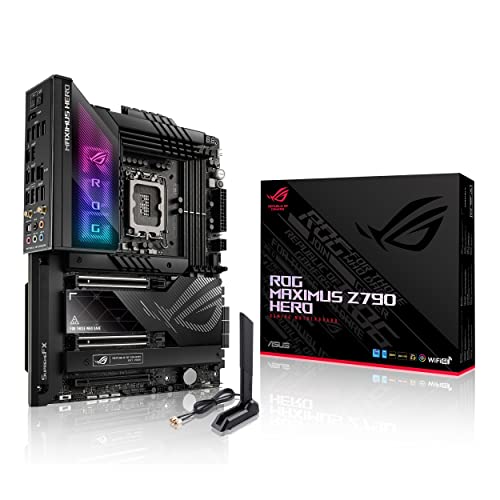
ASUS ROG Maximus DDR5 ATX Motherboard
Best for: high-end Intel LGA 1700 gaming builds
- Ethernet Speed
- 2.5GbE (what this guide is about)
- CPU Socket
- LGA 1700
- Form Factor
- ATX
- Memory Type
- DDR5
- PCIe Version
- PCIe 5.0
- M.2 Slots
- 5
This ATX gaming motherboard pairs an Intel LGA 1700 socket with high-speed connectivity. You get a dedicated Intel 2.5Gb Ethernet port alongside Wi-Fi 6E and Bluetooth 5.2. It supports DDR5 memory and PCIe 5.0 expansion cards for modern builds. With 20+1 power stages rated for 90 A and five M.2 slots, it suits you if you run high-demand 12th, 13th, or 14th Gen Intel Core processors.
Pros
- Intel 2.5Gb Ethernet with ASUS LANGuard
- 20+1 teamed power stages rated for 90 A
- Five onboard M.2 slots with heatsinks
- PCIe 5.0 and DDR5 memory compatibility
- Integrated Wi-Fi 6E and Bluetooth 5.2
Cons
- Incompatible with DDR4 memory modules
- Lacks newer Wi-Fi 7 connectivity
Good fit if
- You need 2.5GbE networking and Wi-Fi 6E for an Intel LGA 1700 build.
- You plan to install up to five M.2 solid-state drives.
- You use a 12th, 13th, or 14th Gen Intel Core processor with DDR5 RAM.
Skip if
- You intend to build an AMD-based system.
- You want Wi-Fi 7 wireless hardware.
- You plan to reuse existing DDR4 memory.
Verdict: ASUS ROG Maximus Z790 Hero Motherboard delivers robust 2.5GbE networking, 20+1 90A power stages, and five M.2 slots for high-end LGA 1700 builds. It provides full PCIe 5.0 and DDR5 bandwidth for top-tier Intel configurations.

Gigabyte Z590 UD ATX Motherboard
Best for: 10th and 11th Gen Intel 2.5GbE builds
- Ethernet Speed
- 2.5GbE (what this guide is about)
- CPU Socket
- LGA 1200
- Chipset
- Intel Z590
- Form Factor
- ATX
- Memory Type
- DDR4
- PCIe Version
- PCIe 4.0
This ATX motherboard equips your build with 2.5GbE networking for fast local transfers. It features the Intel LGA 1200 socket, supporting 10th and 11th Gen Intel Core processors alongside four DDR4 memory slots. You also get PCIe 4.0 support and triple M.2 connectors for storage expansion. It suits you if you want high-speed wired Ethernet for an Intel setup.
Pros
- Onboard 2.5GbE LAN interface
- Direct 12+1 phases digital VRM solution
- Supports PCIe 4.0 expansion
- Triple M.2 connectors for storage
Cons
- Limited to older LGA 1200 socket processors
- No integrated Wi-Fi listed in specifications
- Supports DDR4 memory rather than DDR5
Good fit if
- You use a 10th or 11th Gen Intel Core processor.
- You need 2.5GbE wired network speeds on an ATX board.
- You plan to run DDR4 RAM with triple M.2 storage.
Skip if
- You need an LGA 1700 or AMD processor socket.
- You require built-in wireless Wi-Fi connectivity.
- You want a motherboard that supports DDR5 memory.
Verdict: Gigabyte Z590 ATX Motherboard delivers 2.5GbE connectivity, PCIe 4.0 support, and digital VRM power delivery for compatible Intel systems. It serves as a dedicated wired foundation if you build around an LGA 1200 processor.

GIGABYTE AORUS Mini-ITX DDR4 Motherboard
Best for: compact 2.5GbE Intel DDR4 mini-ITX builds
- Ethernet Speed
- 2.5GbE (what this guide is about)
- CPU Socket
- LGA 1700
- Chipset
- B660
- Form Factor
- Mini-ITX
- Memory Type
- DDR4
- PCIe Version
- PCIe 4.0
This Mini-ITX motherboard pairs an Intel LGA 1700 socket with fast networking hardware for compact desktop builds. You get an Intel 2.5GbE Ethernet port along with integrated Wi-Fi 6 and Bluetooth 5. It runs dual-channel DDR4 memory across two DIMM slots and provides a PCIe 4.0 expansion slot alongside one NVMe PCIe 4.0 M.2 connector. It suits compact gaming systems requiring 2.5GbE wired network speeds without moving to DDR5.
Pros
- Intel 2.5GbE LAN and integrated Wi-Fi 6
- 8+1+1 phases digital VRM with 90A SPS
- USB 3.2 Gen 2x2 Type-C connectivity
- Q-Flash Plus BIOS updates without CPU or memory installed
Cons
- Only a single M.2 drive slot
- Limited to two DDR4 memory slots
Good fit if
- You want a compact Mini-ITX build featuring 2.5GbE networking.
- You plan to reuse or buy DDR4 memory instead of DDR5.
- You only require a single M.2 NVMe storage drive.
Skip if
- You need multiple M.2 NVMe storage drives.
- You plan to use DDR5 memory modules.
- You need more than two memory slots for expansion.
Verdict: Gigabyte B660 Aorus Pro Mini-ITX delivers 2.5GbE networking and Wi-Fi 6 in a compact footprint. It serves small builds that require DDR4 compatibility and need only one high-speed M.2 drive.

GIGABYTE AORUS ATX DDR5 Motherboard
Best for: Intel LGA 1700 builds needing Wi-Fi 7
- Ethernet Speed
- 2.5GbE (what this guide is about)
- CPU Socket
- LGA 1700
- Chipset
- Z790
- Form Factor
- ATX
- Memory Type
- DDR5
- PCIe Version
- PCIe 5.0
This ATX motherboard features 2.5GbE wired networking alongside integrated Wi-Fi 7 wireless connectivity. Built on the Intel LGA 1700 socket, it supports 12th, 13th, and 14th Gen Intel Core processors and dual-channel DDR5 memory across four DIMM slots. With four PCIe 4.0 x4 M.2 slots and PCIe 5.0 support, it gives you high-speed expansion options. It suits you if you want modern wireless bandwidth alongside a dedicated multi-gigabit Ethernet port.
Pros
- Built-in Wi-Fi 7 and 2.5GbE networking
- PCIe 5.0 expansion support
- Four PCIe 4.0 x4 M.2 storage slots
- 16+1+2 phase digital VRM design
Cons
- M.2 slots limited to PCIe 4.0 rather than PCIe 5.0
- ATX form factor requires a standard or large PC case
- Limited to Intel LGA 1700 socket processors
Good fit if
- You need both 2.5GbE LAN and Wi-Fi 7 on an ATX board.
- You plan to run a 12th, 13th, or 14th Gen Intel Core CPU with DDR5.
- You want four onboard PCIe 4.0 M.2 slots for high-speed storage.
Skip if
- You use an AMD processor rather than Intel LGA 1700.
- You build in a compact Mini-ITX or Micro-ATX chassis.
- You require PCIe 5.0 speed on your M.2 NVMe drives.
Verdict: GIGABYTE AORUS Elite ATX Motherboard with Wi-Fi 7 combines fast 2.5GbE wired connectivity with Wi-Fi 7 and PCIe 5.0 capability for modern Intel setups. It delivers strong power delivery and four PCIe 4.0 M.2 slots for storage-heavy configurations.

MSI MPG ATX DDR4 Motherboard
Best for: 10th Gen Intel builds needing 2.5GbE
- Ethernet Speed
- 2.5GbE (what this guide is about)
- CPU Socket
- LGA 1200
- Chipset
- Z490
- Form Factor
- ATX
- Memory Type
- DDR4
- M.2 Slots
- 2
This ATX board features on-board 2.5GbE and Gigabit LAN ports alongside integrated Wi-Fi 6 connectivity. Built around the LGA 1200 socket, it supports 10th Gen Intel processors and holds up to 128GB of dual-channel DDR4 memory across four slots. You also get dual M.2 slots for storage drives. It suits you if you need multi-gigabit wired networking for a 10th Gen Intel desktop build.
Pros
- On-board 2.5GbE plus secondary Gigabit LAN port
- Wi-Fi 6 (802.11ax) wireless connectivity built in
- Supports up to 128GB DDR4 memory at up to 4800MHz
- Dual M.2 slots with M.2 Shield Frozr heatsink
- Pre-installed I/O shield protects against electrostatic discharge
Cons
- Limited to 10th Gen Intel Core, Pentium Gold, and Celeron processors
- Requires DDR4 memory rather than DDR5
Good fit if
- You run a 10th Gen Intel CPU on the LGA 1200 socket.
- You need both 2.5GbE and Gigabit wired LAN connections.
- You use DDR4 memory modules up to 128GB capacity.
Skip if
- You plan to use an 11th, 12th, 13th, or 14th Gen Intel processor.
- You want newer DDR5 system memory.
Verdict: MSI MPG Gaming Plus ATX Motherboard delivers dependable 2.5GbE networking, Wi-Fi 6, and dual M.2 slots for LGA 1200 systems. It gives 10th Gen Intel builds capable multi-gigabit connectivity and DDR4 memory support.
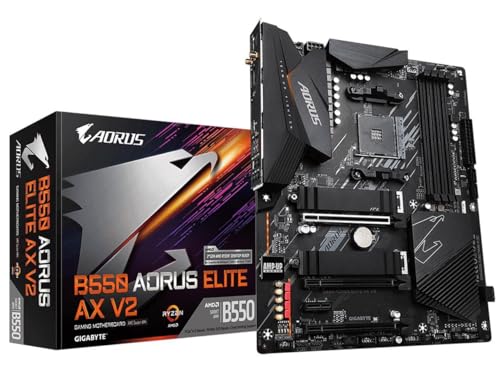
GIGABYTE AORUS Elite ATX Motherboard
Best for: AMD AM4 builds needing 2.5GbE networking
- Ethernet Speed
- 2.5GbE (what this guide is about)
- CPU Socket
- AM4
- Form Factor
- ATX
- Memory Type
- DDR4
- PCIe Version
- PCIe 4.0
- M.2 Slots
- 2
The Gigabyte B550 Aorus Elite ATX Motherboard pairs an AMD AM4 socket with 2.5GbE wired networking and integrated Wi-Fi 6. Designed for AMD Ryzen 3000, 4000, and 5000 series processors, it gives you four DDR4 memory slots, a 12+2 power phase design, and two M.2 slots. It suits you if you need reliable high-speed networking for an AM4 desktop build using standard DDR4 memory.
Pros
- Built-in 2.5GbE Ethernet and Wi-Fi 6 support
- 12+2 power phase setup with VRM thermal heatsinks
- PCIe 4.0 support on the primary x16 expansion slot and main M.2 slot
- Front USB 3.2 Gen 1 Type-C and dual rear USB 3.2 Gen 2 Type-A ports
Cons
- Second M.2 slot is limited to PCIe 3.0 bandwidth
- Restricted to DDR4 memory and AM4 platform processors
Good fit if
- You use an AMD Ryzen 3000, 4000, or 5000 series processor.
- You want 2.5GbE networking alongside built-in Wi-Fi 6 on an ATX board.
- You plan to use DDR4 memory modules.
Skip if
- You need an AM5 socket for newer processor generations.
- You require PCIe 4.0 speeds on both M.2 storage slots.
Verdict: Gigabyte B550 Aorus Elite ATX Motherboard delivers dependable 2.5GbE and Wi-Fi 6 networking for AMD AM4 builds. It provides a solid mix of PCIe 4.0 support, DDR4 memory compatibility, and robust 12+2 power delivery.
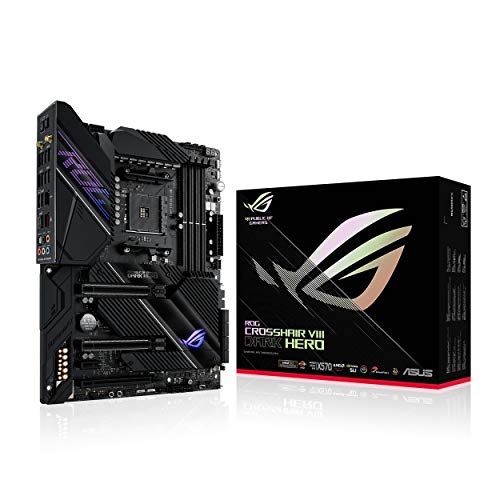
ASUS ROG Crosshair VIII Dark Hero ATX Motherboard
Best for: AM4 systems needing dual 2.5GbE and Gigabit networking
- Ethernet Speed
- 2.5GbE (what this guide is about)
- CPU Socket
- AM4
- Chipset
- X570S
- Form Factor
- ATX
- PCIe Version
- PCIe 4.0
- Wi-Fi Standard
- Wi-Fi 6
View on Amazon: ASUS ROG Crosshair VIII Dark Hero ATX Motherboard
This ATX gaming board pairs an AMD AM4 socket with dual wired networking, giving you both a 2.5 Gbps Ethernet port and a secondary Gigabit Ethernet port. You get Wi-Fi 6, Bluetooth 5.1, and PCIe 4.0 lanes alongside a 14+2 power stage delivery setup. Passive chipset cooling keeps operation silent without a fan. It suits you if you run Ryzen desktop processors and require dedicated dual-LAN connections.
Pros
- Dual Ethernet layout with 2.5 Gbps and Gigabit ports
- 14+2 power stages rated for 90A
- Integrated Wi-Fi 6 and Bluetooth 5.1 support
- Passive chipset heatsink with zero fan noise
Cons
- Uses previous-generation AM4 socket instead of AM5
- Limited to PCIe 4.0 without PCIe 5.0 bandwidth
Good fit if
- You need both 2.5GbE and secondary Gigabit Ethernet ports on one board.
- You run an AMD AM4 Ryzen desktop processor.
- You prefer completely passive chipset cooling without small fans.
Skip if
- You need an Intel socket or AMD AM5 socket support.
- You want PCIe 5.0 support for newer expansion cards.
Verdict: ASUS ROG Crosshair Dark Hero ATX delivers dual wired networking with 2.5GbE and 1GbE ports alongside robust AM4 power delivery. It provides solid high-bandwidth connectivity for dedicated Ryzen workstation and gaming builds.
Specifications side by side
| Spec | MSI PRO ATX DDR5 Motherboard | MSI Gaming Plus ATX DDR5 Motherboard | MSI MPG LGA 1700 DDR5 ATX Motherboard | MSI PRO DDR5 ATX Motherboard | ASUS Prime Micro-ATX DDR5 Motherboard | ASUS TUF Gaming PCIe 5.0 ATX Motherboard | ASUS TUF Gaming AM5 ATX Motherboard | Gigabyte AM5 Mini-ITX Motherboard | ASUS ROG Maximus DDR5 ATX Motherboard | Gigabyte Z590 UD ATX Motherboard | GIGABYTE AORUS Mini-ITX DDR4 Motherboard | GIGABYTE AORUS ATX DDR5 Motherboard | MSI MPG ATX DDR4 Motherboard | GIGABYTE AORUS Elite ATX Motherboard | ASUS ROG Crosshair VIII Dark Hero ATX Motherboard |
|---|---|---|---|---|---|---|---|---|---|---|---|---|---|---|---|
| CPU Socket | LGA 1700 | LGA 1700 | LGA 1700 | LGA 1700 | LGA 1700 | LGA 1700 | AM5 | AM5 | LGA 1700 | LGA 1200 | LGA 1700 | LGA 1700 | LGA 1200 | AM4 | AM4 |
| Chipset | not specified | Z790 | not specified | Intel B760 | not specified | Z790 | not specified | not specified | not specified | Intel Z590 | B660 | Z790 | Z490 | not specified | X570S |
| Form Factor | ATX | ATX | ATX | ATX | microATX | ATX | ATX | Mini ITX | ATX | ATX | Mini-ITX | ATX | ATX | ATX | ATX |
| Memory Type | DDR5 | DDR5 | DDR5 | DDR5 | DDR5 | DDR5 | DDR5 | DDR5 | DDR5 | DDR4 | DDR4 | DDR5 | DDR4 | DDR4 | not specified |
| PCIe Version | PCIe 5.0 | PCIe 5.0 | PCIe 5.0 | PCIe 4.0 | PCIe 4.0 | PCIe 5.0 | PCIe 5.0 | not specified | PCIe 5.0 | PCIe 4.0 | PCIe 4.0 | PCIe 5.0 | not specified | PCIe 4.0 | PCIe 4.0 |
| M.2 Slots | not specified | not specified | not specified | not specified | 2 | 4 | 4 | 1 | 5 | 3 | 1 | 4 | 2 | 2 | not specified |
| Wi-Fi Standard | Wi-Fi 6E | Wi-Fi 6E | Wi-Fi 6E | Wi-Fi 5 | Wi-Fi 6 | not specified | WiFi 6E | Wi-Fi 6E | Wi-Fi 6E | not specified | Wi-Fi 6 | Wi-Fi 7 | Wi-Fi 6 | Wi-Fi 6 | Wi-Fi 6 |
| Ethernet Speed | 2.5Gbps | 2.5Gbps | 2.5Gbps LAN | 2.5 Gbps | 2.5 Gb | not specified | 2.5 Gb | 2.5GbE LAN | 2.5 GbE | 2.5GbE | 2.5 GbE | 2.5 GbE | 2.5G, Gigabit | 2.5 GbE | 2.5 Gbps, Gigabit |
| Power Phases | not specified | not specified | not specified | not specified | not specified | 16+1 | 16 | 5+2+1 | 20+1 | 12+1 | 8+1+1 | 16+1+2 | not specified | 12+2 | 14+2 |
| Wi-Fi | Wi-Fi 6E | Wi-Fi 6E | Wi-Fi 6E | Wi-Fi 5 | Wi-Fi 6 | Wi-Fi 6 | Wi-Fi 6E | Wi-Fi 6E | Wi-Fi 6E | not specified | Wi-Fi 6 | Wi-Fi 7 | not specified | Wi-Fi 6 | Wi-Fi 6 |
| Use Case | not specified | Gaming | Gaming | not specified | not specified | Gaming | Gaming | not specified | Gaming | not specified | Gaming | not specified | Gaming | not specified | Gaming |
| Dimensions | 5.91 × 1.57 × 5.91 inches | not specified | 2.76 × 1.97 × 0.39 inches | 12 × 9.6 × 2.5 inches | 10.8 × 10.4 × 2.58 inches | 10.7 × 2.75 × 14 inches | 10.8 × 2.9 × 13.3 inches | 6.69 × 6.69 × 1.38 inches | 12.2 × 4.5 × 14.6 inches | not specified | 9.25 × 8.94 × 3.74 inches | 13.2 × 10.6 × 3.14 inches | 12 × 9.6 × 2 inches | 10.6 × 3.14 × 13.2 inches | 14.6 × 12.3 × 4.25 inches |
| Weight | 1.25 pounds | not specified | 3.92 pounds | not specified | 3.11 pounds | 2.91 pounds | 4.45 pounds | not specified | 9.3 pounds | 2.94 pounds | not specified | 4.89 pounds | 2.79 pounds | not specified | 4.25 pounds |
| Model | PRO Z790-P WiFi ProSeries | MSI Z790 GAMING PLUS WIFI-AMZ | Z790 | MSI PRO B760-VC WiFi | PRIME B760M-A AX | TUF GAMING Z790-PLUS WIFI | TUF GAMING X670E-PLUS WIFI | A620I AX | ROG MAXIMUS Z790 HERO | Z590 | B660I | Z790 AORUS ELITE X WIFI7 | MPG Z490 Gaming Plus | B550 AORUS ELITE AX V2 | ROG Crosshair VIII Dark Hero |
| Size | not specified | ATX | not specified | ATX | PRIME B760M-A AX | not specified | not specified | Mini ITX | Z790 Hero|M.2 x5|WiFi 6E| | Z590 UD | B660I AORUS PRO DDR4 | ATX | not specified | ATX | not specified |
| Color | not specified | Black | Black | not specified | BLACK | BLACK | not specified | Black | BLACK | not specified | black | not specified | not specified | not specified | not specified |
Is a 2.5GbE Motherboard Worth It for Your Build?
A 2.5GbE port provides multi-gigabit wired networking directly on your motherboard. This interface delivers higher data bandwidth than standard 1GbE connections for desktop setups. You plug an Ethernet cable into the rear I/O to access these speeds without extra expansion cards. The boards in this guide pair 2.5GbE with Wi-Fi 5, Wi-Fi 6, Wi-Fi 6E, or Wi-Fi 7. It gives you a dedicated wired link built for high-speed multi-gigabit environments.
Worth it if
- You connect your system to a multi-gigabit wired network.
- You require high-bandwidth wired connectivity for gaming or workstation tasks.
Skip it if
- You rely entirely on wireless networking like Wi-Fi 6 or Wi-Fi 7.
- You connect exclusively to standard 1GbE network hardware.
How We Chose These Motherboards
To find motherboards for this guide, you see only models with 2.5GbE stated directly in the title or feature list of the listing. Only one size or variant of the same product family is shown. All details come strictly from the specifications and feature lists published on the listings. Products are not physically handled.
The 15 models are ordered: products in stock first, then by Amazon sales rank (better-selling products first). Stock information is shown live on the page and is refreshed at least daily to support your build planning in 2026.
How to Choose a 2.5GbE Motherboard
-
Select the Form Factor
You need to match the motherboard dimensions to your computer chassis. Standard ATX boards offer the highest expansion capacity with multiple PCIe and M.2 slots for larger towers. If you build a compact desktop, Micro-ATX options like the ASUS Prime Micro-ATX DDR5 Motherboard reduce height while retaining dual-channel memory and expansion slots. For ultra-compact enclosures, select Mini-ITX. Mini-ITX limits expansion to a single PCIe slot. Check your case specifications for clearance before selecting a board size.
-
Check PCIe Generation Support
Evaluate the PCIe version supported by the primary expansion slot. PCIe 5.0 doubles the theoretical bandwidth per lane over PCIe 4.0, providing headroom for next-generation graphics cards and high-speed add-in cards. Models like the MSI PRO ATX DDR5 Motherboard supply PCIe 5.0 connectivity for future component upgrades. If you run current-generation graphics cards and standard NVMe storage, PCIe 4.0 provides adequate bandwidth for everyday gaming and productivity workloads. Compare the PCIe version on the spec sheet to your intended hardware lifecycle.
-
Compare Integrated Wi-Fi Standards
Wired 2.5GbE provides primary network throughput, but wireless hardware varies significantly across motherboards. Entry-level models provide older Wi-Fi 5 or Wi-Fi 6 standards, which limit local wireless speeds. Newer designs like the GIGABYTE AORUS ATX DDR5 Motherboard integrate Wi-Fi 7, while others provide Wi-Fi 6E. Wi-Fi 6E and Wi-Fi 7 grant access to the 6GHz frequency band for lower network congestion and lower latency. Check your wireless router specifications to ensure the motherboard wireless protocol matches your home access point.
-
Count M.2 Storage Slots
Review the number of onboard M.2 slots if your system requires multiple high-speed solid-state drives. Compact Mini-ITX options typically fit only one or two storage drives due to PCB dimensions. In contrast, premium full-sized boards such as the ASUS ROG Maximus DDR5 ATX Motherboard feature five M.2 slots for massive NVMe drive arrays without requiring PCIe riser cards. If you store large game libraries, video files, or system backups directly on the board, verify that the total slot count accommodates your drive configuration.
-
Verify Wired Port Configurations
While every model on this list includes a 2.5GbE port, certain motherboards provide secondary network controllers. Options like the ASUS ROG Crosshair VIII Dark Hero ATX Motherboard combine a 2.5GbE port with an extra 1GbE jack. Dual Ethernet ports allow you to connect simultaneously to a dedicated network-attached storage unit and an external internet router. If you operate a dedicated home server, network bridge, or segregated LAN setup, verify whether the rear panel supplies two physical RJ-45 ports instead of one.
Frequently asked questions
Can you use a 2.5GbE motherboard with a standard Gigabit router?
Yes, a 2.5GbE Ethernet port works with standard Gigabit network hardware. When you plug your board into a 1GbE router or switch, the controller negotiates to 1Gbps speeds automatically. You can safely connect to existing networks without replacing your router immediately. However, you need 2.5GbE-capable switches, routers, and cabling to reach the port's maximum data transfer speed.
Which motherboards with 2.5GbE support AMD AM4 processors?
The GIGABYTE AORUS Elite ATX Motherboard and the ASUS ROG Crosshair VIII Dark Hero ATX Motherboard both support AMD AM4 processors with 2.5GbE networking. Both models feature PCIe 4.0 expansion and Wi-Fi 6 wireless connectivity. The ASUS ROG Crosshair model also includes dual wired networking with both 2.5GbE and 1GbE ports alongside DDR4 memory support for your AM4 build.
Are there Mini-ITX motherboards available with 2.5GbE networking?
Yes, compact options include the Gigabyte AM5 Mini-ITX Motherboard and the GIGABYTE AORUS Mini-ITX DDR4 Motherboard. Both include 2.5GbE Ethernet and onboard Wi-Fi. The Gigabyte AM5 board uses DDR5 memory and Wi-Fi 6E for small-form-factor AMD setups. The GIGABYTE AORUS model pairs an Intel LGA 1700 socket with DDR4 memory, PCIe 4.0 support, and Wi-Fi 6 for compact builds.
Does a 2.5GbE port require a special Ethernet cable?
No, you do not need special cables for 2.5GbE connections. Standard Cat 5e Ethernet cables support 2.5Gbps speeds over normal runs up to 100 meters. Using Cat 6 or Cat 6a cables also ensures solid signal integrity across your home network. You simply plug your standard RJ-45 cable into the motherboard's rear 2.5GbE port to establish the connection.
Which 2.5GbE motherboards offer Wi-Fi 7 wireless connectivity?
The GIGABYTE AORUS ATX DDR5 Motherboard includes Wi-Fi 7 alongside its 2.5GbE wired network port. This board uses an Intel LGA 1700 socket, DDR5 memory, and PCIe 5.0 expansion. It also provides four PCIe 4.0 M.2 slots for high-speed storage. Choosing this board gives you the latest wireless standard alongside multi-gigabit wired capability on a standard ATX layout.
Can you find 2.5GbE motherboards for older Intel LGA 1200 CPUs?
Yes, the Gigabyte Z590 UD ATX Motherboard and MSI MPG ATX DDR4 Motherboard both offer 2.5GbE networking for Intel LGA 1200 processors. The Gigabyte model includes PCIe 4.0 expansion support and digital VRM power delivery. The MSI MPG Gaming Plus board provides DDR4 memory support, dual M.2 slots, and Wi-Fi 6 connectivity for 10th and 11th Gen Intel setups.
How many M.2 slots do high-end 2.5GbE motherboards have?
High-end models on this list carry four or five M.2 slots. The ASUS ROG Maximus DDR5 ATX Motherboard provides five M.2 slots, 20+1 power stages, and PCIe 5.0 support. The ASUS TUF Gaming PCIe 5.0 ATX Motherboard and GIGABYTE AORUS ATX DDR5 Motherboard each include four M.2 storage slots for extensive high-speed drive configurations.