Intel Core i7-9700K 8-Core Processor Review: Specs, Pros and Cons
As an Amazon Associate we earn from qualifying purchases. Links on this page are affiliate links.
This intel core i7 9700k desktop processor review covers an eight-core chip designed for high-performance computing tasks. It features a base clock of 3.60 GHz and can reach a maximum boost clock of 4.90 GHz. The processor includes 12 MB of cache and supports DDR4 memory up to 2666 MHz. It is built for LGA1151 sockets and requires a 300-series chipset motherboard. The unit weighs 1.59 ounces and does not include a cooling device. You need to supply your own cooler for proper operation.
What stands out
- Eight physical cores with eight threads for parallel workloads
- Max boost clock of 4.90 GHz for burst performance
- 12 MB cache to reduce memory latency
- Intel UHD Graphics 630 for basic display output
- Dual-channel DDR4 support up to 64 GB capacity
Who it fits
Good fit for
This processor suits users who need strong multi-threaded performance for gaming or content creation on a compatible LGA1151 platform. The high boost clock benefits single-threaded applications, while the eight cores handle background tasks efficiently. It is ideal for builders using 300-series motherboards who want a locked-out frequency option. You should choose this if you plan to use DDR4 RAM and require integrated graphics for initial setup or light media tasks.
Who should skip it
You should look at another option if your motherboard uses an older chipset, as this part only works with Intel 300-series boards. It lacks hyper-threading, so it may not match eight-thread competitors for heavy rendering or virtualization workloads. If you need higher base frequencies or more cores, this model may fall short. Additionally, since no cooler is included, you must budget for a separate cooling solution. Users seeking the latest socket compatibility should avoid this legacy platform.
Verdict: The Intel Core i7-9700K offers solid eight-core performance for LGA1151 systems. It fits users who prioritize high boost clocks and do not require hyper-threading.
Intel Core i7-9700K Key Specs Explained
Core Count: 8 Cores
This processor contains eight independent processing units. Each core handles tasks separately, allowing your computer to run multiple applications smoothly. You benefit from improved multitasking and faster rendering in video editing or 3D modeling software. When shopping, compare this to quad-core or hexa-core chips. More cores generally mean better performance in heavy workloads, making this suitable for users who run several programs at once.
Max Boost Clock: 4.90 GHz
The processor can increase its speed up to 4.90 GHz when demand is high. This turbo feature provides extra power for single-threaded tasks like gaming or opening large files. You get faster response times without manual tweaking. Compare this to lower GHz ratings on other chips. Higher boost clocks often result in smoother gameplay and quicker application launches, which matters if you prioritize speed in everyday computing tasks.
CPU Socket: LGA1151
This chip uses the LGA1151 socket type, which dictates which motherboards you can buy. It fits only on boards with the 300 series chipset. You must ensure your motherboard matches this socket before purchasing. Compare socket types when building a PC, as they are not interchangeable. This compatibility requirement limits your upgrade path, so check your existing board or plan your new build around this specific connection interface.
Base Power: 95W
The Thermal Design Power is 95 watts, indicating heat output and power usage. This rating helps you choose an adequate cooling solution and power supply. You need a cooler that can handle at least this wattage to prevent overheating. Compare this with other CPUs to gauge efficiency. A 95W chip requires robust airflow, so consider your case ventilation and cooler capacity when selecting components for your system to maintain stable performance.
Design and build specifications
According to the listing, the Intel Core i7-9700K measures 4.57 inches in length, 3.98 inches in width, and 2.76 inches in height. The package weighs 1.59 ounces. These dimensions define the physical footprint of the processor assembly. You must ensure your case has adequate clearance for the cooler, as the listing notes that a cooling device is not included. The LGA1151 socket determines compatibility. It fits only motherboards based on Intel 300 Series Chipsets. This restriction limits your motherboard choices to specific boards released for this generation. You cannot install this chip on older or newer socket types.
The build focuses on the silicon die and its packaging. There are no external controls, displays, or buttons on the processor itself. The finish is standard for desktop CPUs, designed to transfer heat efficiently to the cooler. The 95W base power rating indicates the thermal design power. This value helps you select a cooling solution capable of handling the heat output under load. The integrated Intel UHD Graphics 630 is embedded in the package. It allows basic display output without a dedicated graphics card. This feature simplifies initial setup for users who do not plan to add a discrete GPU immediately. The compact size ensures it fits in standard ATX, micro-ATX, and mini-ITX cases, provided the socket matches.
Setup and Everyday Use
Installation begins with ensuring your motherboard uses an Intel 300 Series chipset. The processor fits the LGA1151 socket. You must verify compatibility before purchase, as the chip does not work with older or different socket types. The listing notes that a cooling device is not included. You need to purchase a separate CPU cooler to manage the 95W thermal design power. Proper mounting is essential for stable operation.
Once installed, the system relies on DDR4 memory. The processor supports a maximum capacity of 64 GB. It runs at speeds up to 2666 MHz in a dual-channel architecture. This configuration provides a maximum memory bandwidth of 41 GB/s. This speed helps data move quickly between the CPU and RAM, reducing bottlenecks during heavy workloads. You can enable Intel Optane Memory to further accelerate storage performance if your motherboard supports it.
For everyday use, the eight cores and eight threads handle multitasking efficiently. The base clock of 3.60 GHz ensures steady performance for standard tasks. When you launch demanding applications, the chip boosts up to 4.90 GHz. This helps with video editing, 3D modeling, and gaming. The integrated Intel UHD Graphics 630 allows you to output video without a dedicated graphics card. This is useful for basic display needs or troubleshooting if your GPU fails. The 12 MB of cache keeps frequently used data close to the cores, improving responsiveness across various software environments.
What You Need To Know First
Before you buy this processor, you must ensure your motherboard supports Intel 300 Series chipsets. The LGA1151 socket is specific, so verify compatibility with your existing board. Since the listing states no cooling device is included, you need to purchase a compatible CPU cooler separately. This chip has a 95W thermal design power, so your cooling solution must handle that load effectively. You should also check if your memory supports DDR4 at 2666 MHz, as this is the maximum supported speed. The processor includes Intel UHD Graphics 630, which allows basic display output without a dedicated graphics card. However, for gaming or heavy rendering, you will likely need a discrete GPU. This eight-core unit fits well in mid-range builds focused on productivity. It sits alongside other high-performance options by offering solid multi-threaded performance. Just remember that it lacks Hyper-Threading, so thread count matches core count. Ensure your power supply is adequate for the system’s total draw.
Check before you buy
- Verify your motherboard uses an Intel 300 Series chipset
- Purchase a separate CPU cooler as none is included
- Confirm your RAM supports DDR4 2666 MHz maximum speed
- Check if your case fits the processor and cooler dimensions
- Ensure your power supply can handle the system's total wattage
The product at a glance
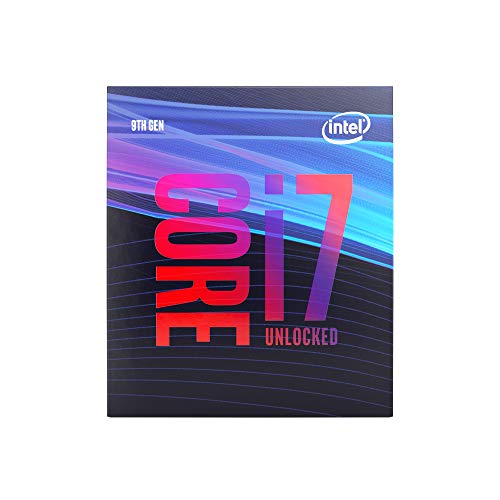
Intel Core i7-9700K 8-Core Processor
Best for: Gaming and single-threaded workloads
- Core Count
- 8 Cores
- Thread Count
- 8 Threads
- CPU Socket
- LGA1151
- Max Boost Clock
- 4.90 GHz
- Base Clock
- 3.60 GHz
- Cache Size
- 12 MB
View on Amazon: Intel Core i7-9700K 8-Core Processor Affiliate link
The Intel Core i7-9700K is an unlocked desktop processor with eight cores and eight threads. It features a base clock of 3.60 GHz and can boost up to 4.90 GHz. The chip includes 12 MB of cache and Intel UHD Graphics 630. It supports DDR4 memory up to 64 GB. You need a 300-series motherboard for compatibility. This processor suits users who want high single-core performance for gaming or content creation.
Pros
- 8 cores and 8 threads for multitasking
- Up to 4.90 GHz max boost clock
- Unlocked for overclocking potential
- Integrated Intel UHD Graphics 630
Cons
- 95W base power consumption
- Requires separate cooling device
- Limited to DDR4 2666 MHz memory
Good fit if
- You want high clock speeds for gaming
- You have a compatible 300-series motherboard
- You need integrated graphics
Skip if
- You need more than 8 threads
- You use a non-Intel socket
- You prefer lower power consumption
Verdict: Intel Core i7-9700K 8-Core Processor delivers strong single-thread performance for gamers and creators who prioritize clock speed. It fits users with compatible 300-series boards who do not require hyper-threading.
Specifications side by side
| Spec | Intel Core i7-9700K 8-Core Processor |
|---|---|
| Core Count | 8 Cores |
| Thread Count | 8 Threads |
| CPU Socket | LGA1151 |
| Max Boost Clock | 4.90 GHz |
| Base Clock | 3.60 GHz |
| Cache Size | 12 MB |
| Base Power | 95W |
| Integrated Graphics | Intel UHD Graphics 630 |
| Series | Core i7 |
| TDP | 95W |
| Dimensions | 4.57 × 3.98 × 2.76 inches |
| Weight | 1.59 ounces |
| Size | I7-9700K |
| Model | BX80684I79700K |
Frequently asked questions
Is the Intel Core i7-9700K good for gaming?
Yes, this processor is excellent for gaming. It delivers strong single-thread performance, which is critical for many game engines. The high boost clock of 4.90 GHz ensures fast frame rates in titles that rely heavily on individual core speed rather than multiple cores.
Does this CPU support hyper-threading?
No, the Intel Core i7-9700K does not support hyper-threading. It features eight physical cores but lacks the ability to handle two threads per core. This means you have eight simultaneous execution threads rather than sixteen, which may limit performance in heavily multithreaded applications compared to competitors with similar core counts.
What motherboard socket does the i7-9700K use?
It uses the LGA 1151 socket. You must pair this chip with a motherboard that supports the Intel 300 Series chipset. Older boards with previous chipset generations are not compatible, so verifying your motherboard model is essential before installation to ensure proper fit and functionality.
How much cache does the i7-9700K have?
The processor includes 12 MB of cache. This memory sits close to the cores to store frequently accessed data, reducing latency. The larger cache size helps improve performance in tasks that require rapid data retrieval, such as video editing or complex calculations, by keeping information readily available to the CPU.
What is the thermal design power of this chip?
The TDP is 95 watts. This figure indicates the typical heat output under basic workload conditions. You need a cooling solution capable of dissipating this amount of heat effectively. Since no cooler is included, you must purchase a compatible CPU fan or liquid cooling system separately to maintain safe operating temperatures.
Can I overclock the Intel Core i7-9700K?
Yes, the K suffix indicates an unlocked multiplier for overclocking. You can increase the clock speed beyond the base 3.60 GHz and boost 4.90 GHz limits. This requires a compatible motherboard and adequate cooling. Overclocking can provide additional performance gains for gaming and single-threaded workloads if your system supports it.
Is this processor suitable for content creation?
It is suitable for creators who prioritize single-threaded speed. The eight cores handle multitasking well, and the high clock speeds accelerate tasks like photo editing. However, the lack of hyper-threading may make it less ideal for heavy video rendering compared to chips with more threads, though it remains a strong choice for general creative work.