15 Best Intel Core i7 Processors, Compared
As an Amazon Associate we earn from qualifying purchases. Links on this page are affiliate links.
Choosing among the best intel Core i7 processors requires matching socket types, core counts, and thermal specifications to your motherboard. The Intel Core i7-6850K 6-Core Processor leads this lineup by providing 40 PCIe 3.0 lanes and quad-channel memory support on the LGA 2011-v3 platform.
We compared 15 models based on the specifications published on the listings. This guide helps you choose the right balance of core architecture, thread count, and hardware compatibility for your build.
Quick picks
The best fit for you
- You need maximum PCIe expansion lanes for add-in cards Intel Core i7-6850K 6-Core Processor It provides 40 PCIe 3.0 lanes and quad-channel memory support on the LGA 2011-v3 platform.
- You want maximum core count alongside integrated graphics Intel Core i7-14700K Desktop Processor This chip offers 20 cores, boost speeds up to 5.6 GHz, and integrated UHD Graphics 770.
- You need a low-power processor for compact systems Intel Core i7-7700T Desktop Processor It operates within an efficient 35W thermal profile suited for compact LGA-1151 enclosures.
- You are building on an LGA 1200 motherboard Intel Core i7 8-Core Unlocked Processor It delivers 8 cores with boost speeds up to 5.1 GHz for compatible LGA 1200 sockets.
Our 15 picks

Intel Core i7-6850K 6-Core Processor
Best for: PCIe expansion and quad-channel memory setups
- Series
- Core i7 (what this guide is about)
- Core Count
- 6 cores
- Thread Count
- 12 threads
- CPU Socket
- LGA 2011-v3
- Max Boost Clock
- 3.80 GHz
- Cache Size
- 15 MB
The Intel Core i7-6850K is a desktop processor built for the LGA 2011-v3 socket. It delivers 6 cores and 12 threads running up to 3.80 GHz, paired with a 15 MB cache. With support for quad-channel DDR4 memory and up to 40 PCIe 3.0 lanes, it gives you broad bandwidth for storage and graphics. It suits you if you need robust multi-GPU connectivity and multichannel memory throughput.
Pros
- Up to 40 PCIe 3.0 lanes for multi-card expansion
- 4-channel DDR4-2400 memory support
- 6 cores and 12 threads with up to 3.80 GHz turbo clock
- 15 MB cache size
Cons
- High 140W TDP requires substantial thermal management
- Restricted to one DIMM per memory channel
- Requires an older LGA 2011-v3 socket motherboard
Good fit if
- You need 40 PCIe lanes to run multiple expansion cards.
- You use an LGA 2011-v3 motherboard with quad-channel DDR4 memory.
- You want 6 cores and 12 threads for multithreaded tasks.
Skip if
- You require a power-efficient setup with lower than 140W TDP.
- You plan to run multiple DIMMs on each memory channel.
- You use a modern motherboard socket instead of LGA 2011-v3.
Verdict: Intel Core i7-6850K 6-Core Processor provides 40 PCIe 3.0 lanes and quad-channel memory support on the LGA 2011-v3 platform. It delivers dependable six-core multithreaded capacity for expansion-heavy desktop systems.

Intel Core i7-6700K Quad-Core Processor
Best for: LGA 1151 quad-core desktop builds
- Series
- Core i7 (what this guide is about)
- Core Count
- 4 Core
- CPU Socket
- Socket H4 LGA-1151
- Max Boost Clock
- 4.20 GHz
- Base Clock
- 4.0 GHz
- Cache Size
- 8 MB
The Intel Core i7-6700K Quad-Core Processor is a 14 nm desktop CPU built for Socket LGA 1151 systems. It features 4 cores operating at a 4.0 GHz base frequency with a 4.20 GHz overclocking speed, 8 MB of cache, and integrated Intel HD Graphics 530. With a 91 W or 95W TDP rating, this OEM pack processor suits you if you maintain or upgrade an existing LGA 1151 motherboard setup.
Pros
- 4.0 GHz base frequency with 4.20 GHz overclocking speed
- Integrated Intel HD Graphics 530
- 8 MB cache memory
- Compatible with Socket H4 LGA-1151 motherboards
Cons
- Comes in an OEM pack without retail packaging
- Limited to 4 processing cores
Good fit if
- You have a compatible LGA 1151 socket motherboard.
- You need integrated Intel HD Graphics 530 video support.
- You want a quad-core processor with a 4.0 GHz base clock speed.
Skip if
- You need a CPU with more than 4 cores for your workload.
- You use a motherboard that does not feature an LGA 1151 socket.
Verdict: Intel Core i7-6700K Quad-Core Processor provides reliable 4.0 GHz quad-core performance and integrated graphics for LGA 1151 motherboard systems. It is a solid match when you need a 14 nm CPU with 8 MB cache.

Intel Core i7 2.8GHz Tray Processor
Best for: bare tray Core i7 desktop builds
- Series
- Core i7 (what this guide is about)
- Base Clock
- 2.8GHz
- Dimensions
- 3.94 × 3.94 × 2.36 inches
- Weight
- 4.16 ounces
The Intel Core i7 2.8GHz Tray Processor gives you a standard desktop component from Intel's Core i7 series. It features a 2.8GHz clock speed and comes in tray packaging without extra retail bulk. The physical unit weighs 0.26 pounds and measures 3.94 by 3.94 inches with a height of 2.36 inches. This processor suits you if you already own dedicated cooling and need a Core i7 chip for your setup.
Pros
- 2.8GHz clock speed
- Intel Core i7 series processor
- Lightweight 0.26-pound unit
- Compact 3.94 by 3.94-inch profile
Cons
- Shipped as a tray CPU without retail box accessories
- No bundled cooling hardware listed
- Core count and cache specifications not provided
Good fit if
- You need an Intel Core i7 processor operating at 2.8GHz.
- You specifically want tray packaging for your build.
- You already have a compatible cooling solution.
Skip if
- You need an included cooler inside the package.
- You require verified core and thread specifications before purchasing.
Verdict: Intel Core i7 2.8GHz Tray Processor provides Core i7 series computing with a 2.8GHz clock speed. It is a direct fit if you require a standalone tray CPU and have your own thermal hardware.

Intel Core i7-6950X 10-Core Processor
Best for: LGA 2011-v3 multi-threaded workstations
- Series
- Core i7 (what this guide is about)
- Core Count
- 10 Core
- Thread Count
- 20 Thread
- CPU Socket
- LGA 2011-v3
- Max Boost Clock
- 3.50 GHz
- Cache Size
- 25M
The Intel Core i7-6950X brings workstation-grade specs to the LGA 2011-v3 platform. You get 10 cores and 20 threads alongside a 25 MB cache, operating at speeds up to 3.50 GHz. With four memory channels supporting DDR4-2400 and 40 PCIe 3.0 lanes, this processor fits complex multi-device configurations. It suits you if you handle heavy multi-threaded computing tasks and require extensive expansion bandwidth on a 140W thermal design.
Pros
- 10 physical cores and 20 threads
- 40 PCIe 3.0 lanes for expansion cards
- Quad-channel DDR4-2400 memory support
- 25 MB cache allocation
Cons
- 140W TDP requires robust cooling
- Maximum clock speed limited to 3.50 GHz
- Requires LGA 2011-v3 socket motherboard
Good fit if
- You need 40 PCIe lanes for multi-card setups.
- You run multi-threaded workloads needing 10 cores.
- You use an LGA 2011-v3 motherboard platform.
Skip if
- You need clock speeds higher than 3.50 GHz.
- You use standard mainstream desktop sockets instead of LGA 2011-v3.
Verdict: Intel Core i7-6950X 10-Core Processor delivers high thread counts and 40 PCIe lanes for LGA 2011-v3 systems. It excels at heavy multi-threaded workloads despite its 140W TDP and 3.50 GHz ceiling.

Intel Core i7-6850K 6-Core Processor
Best for: LGA 2011-v3 multi-card expansion systems
- Series
- Core i7 (what this guide is about)
- Core Count
- 6 Core
- Thread Count
- 12 Thread
- CPU Socket
- LGA 2011-v3
- Max Boost Clock
- 3.80 GHz
- Cache Size
- 15M
The Intel Core i7-6850K 6-Core Processor gives you 6 cores and 12 threads with a 3.60 GHz base clock and up to 3.80 GHz boost. It features 15MB of cache and 40 PCIe 3.0 lanes across an LGA 2011-v3 socket. You also get quad-channel DDR4-2400 memory support. This processor suits you if you need extensive PCIe expansion and quad-channel bandwidth on an LGA 2011-v3 platform.
Pros
- 40 PCIe 3.0 lanes for multi-card expansion
- Quad-channel DDR4 memory support
- 15MB cache
- 6 cores and 12 threads
Cons
- 140W TDP requires capable cooling
- Requires older LGA 2011-v3 socket
- Memory speed supported up to DDR4 2400
Good fit if
- You build on an LGA 2011-v3 motherboard.
- You need 40 PCIe 3.0 lanes for expansion cards.
- You run a quad-channel DDR4 memory configuration.
Skip if
- You need lower power consumption than 140W TDP.
- You use modern mainstream sockets.
Verdict: Intel Core i7-6850K 6-Core Processor delivers 40 PCIe lanes and quad-channel memory support for LGA 2011-v3 motherboards. It provides solid multi-threaded capability and expansion bandwidth for dedicated workstation tasks.

Intel Core i7-7700T Desktop Processor
Best for: low-power and compact LGA-1151 PC builds
- Series
- Core i7 (what this guide is about)
- Core Count
- 4 Core
- CPU Socket
- Socket H4 LGA-1151
- Max Boost Clock
- 3.80 GHz
- Base Clock
- 2.90 GHz
- Cache Size
- 8 MB
The Intel Core i7-7700T Desktop Processor is a quad-core socket LGA-1151 CPU designed for low-power operation with a 35 W power envelope. You get a 2.90 GHz base clock speed that boosts up to 3.80 GHz, alongside 8 MB of cache and integrated Intel HD Graphics 630 capable of driving three monitors. This processor suits your setup if you want dependable performance for compact systems with strict thermal limits.
Pros
- Low 35 W power consumption
- Integrated Intel HD Graphics 630 with 3-monitor support
- Clock speeds reaching up to 3.80 GHz
- Equipped with 8 MB cache
Cons
- Base frequency starts at 2.90 GHz
- Limited to 4 processing cores
Good fit if
- You build inside compact cases requiring a 35 W power envelope.
- You need integrated graphics capable of driving up to three displays.
- You use an LGA-1151 socket motherboard.
Skip if
- You require more than 4 processing cores for heavy workloads.
- You need a base operating frequency higher than 2.90 GHz.
Verdict: Intel Core i7-7700T Desktop Processor delivers quad-core LGA-1151 performance within an efficient 35 W thermal profile. It serves as a dependable choice when you need integrated multi-display graphics in a compact enclosure.

Intel Core i7-7700K Quad-Core Processor
Best for: Intel 100 and 200 series motherboard builds
- Series
- Core i7 (what this guide is about)
- Core Count
- Quad-Core
- Max Boost Clock
- 4.50 GHz
- Cache Size
- 8 MB
- Dimensions
- 5 × 4.9 × 9.5 inches
The Intel Core i7-7700K is an unlocked quad-core Kaby Lake desktop processor designed for Intel 100 and 200 series motherboards. It features four cores, an 8M cache, and maximum clock speeds reaching up to 4.50 GHz. This configuration provides you with unlocked multiplier support on compatible hardware. It suits you if you need a quad-core chip for an Intel 100 or 200 series motherboard.
Pros
- Up to 4.50 GHz clock speed
- Unlocked multiplier design
- 8M cache buffer
Cons
- Works only with 100 and 200 series motherboards
- Limited to 4 cores
- Sold as processor only without a bundled cooler
Good fit if
- You have an Intel 100 or 200 series motherboard.
- You want clock speeds up to 4.50 GHz.
- You need an unlocked quad-core Kaby Lake CPU.
Skip if
- You run a motherboard outside the 100 and 200 series.
- You require more than 4 processing cores.
Verdict: Intel Core i7-7700K Quad-Core CPU delivers clock speeds up to 4.50 GHz and an unlocked design for 100 and 200 series systems. It serves as a targeted quad-core option strictly for compatible motherboards.

Intel Core i7 6-Core Unlocked Processor
Best for: high clock speeds and commemorative builds
- Series
- Core i7 (what this guide is about)
- Core Count
- 6 Cores
- Thread Count
- 12 Threads
- Max Boost Clock
- 5.0 GHz
- Dimensions
- 4.57 × 3.98 × 2.76 inches
- Weight
- 4.94 ounces
This Intel Core i7 processor provides 6 cores and 12 threads with an unlocked design for overclocking. You reach up to a 5.0 GHz max turbo frequency out of the box. Packaged in commemorative casing, it fits desktop setups where you want high per-core speeds. It suits you if you run applications that prioritize fast single-thread performance.
Pros
- Max turbo frequency of 5.0 GHz
- 6 cores and 12 threads
- Unlocked for overclocking
- Commemorative packaging
Cons
- 6 cores offer lower parallel capacity than higher-tier options
- No cooling solution included in the specifications
Good fit if
- You want a 5.0 GHz max turbo frequency for single-core tasks.
- You plan to manually overclock your 6-core processor.
- You value commemorative packaging and limited edition hardware.
Skip if
- You need more than 6 cores for heavily multithreaded rendering or computing.
- You require a bundled cooler included with your processor purchase.
Verdict: Intel Core i7 6-Core 5.0 GHz Processor delivers up to 5.0 GHz turbo clocks and full overclocking support across 6 cores. It serves desktop users who prioritize fast frequency over higher core counts.
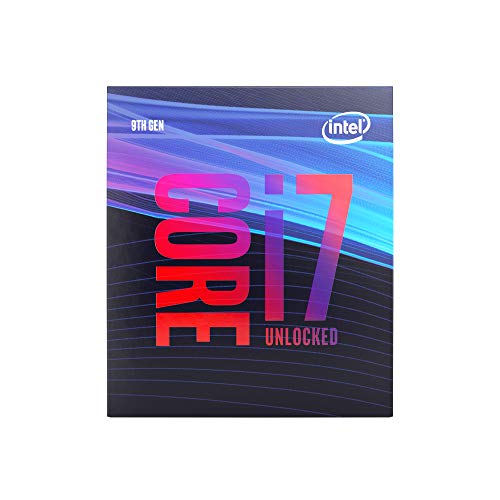
Intel Core i7-9700K 8-Core Processor
Best for: Intel 300-series LGA 1151 motherboard builds
- Series
- Core i7 (what this guide is about)
- Core Count
- 8 Cores
- Thread Count
- 8 Threads
- CPU Socket
- LGA1151
- Max Boost Clock
- 4.90 GHz
- Base Clock
- 3.60 GHz
The Intel Core i7-9700K gives you 8 physical cores and 8 threads running at a 3.60 GHz base clock with turbo boost up to 4.90 GHz. It drops into LGA 1151 motherboards using Intel 300-series chipsets and includes integrated Intel UHD Graphics 630. With a 95W TDP and support for up to 64 GB of DDR4-2666 RAM, this processor suits you if you need reliable octa-core processing on an existing compatible LGA 1151 board.
Pros
- 8 cores with turbo clock speeds reaching up to 4.90 GHz
- Integrated Intel UHD Graphics 630 display output
- 12 MB cache with support for Intel Optane memory
- Supports dual-channel DDR4-2666 memory up to 64 GB
Cons
- Cooling device is not included in the box
- Only compatible with Intel 300-series chipset motherboards
- Does not support hyperthreading beyond 8 threads
Good fit if
- You have a motherboard using an Intel 300-series chipset.
- You want an 8-core CPU with built-in integrated graphics.
- You already have a dedicated cooling solution rated for 95W TDP.
Skip if
- You use a motherboard that is not an Intel 300-series platform.
- You need a CPU that includes an out-of-the-box heatsink and fan.
- You require multi-threaded workloads needing more than 8 threads.
Verdict: Intel Core i7-9700K 8-Core Desktop CPU delivers 8 cores clocked up to 4.90 GHz for systems built on the LGA 1151 300-series platform. It provides dependable computing power, provided you supply your own cooling hardware.

Intel Core i7 8-Core Unlocked Processor
Best for: unlocked LGA 1200 desktop builds
- Series
- Core i7 (what this guide is about)
- Core Count
- 8 Cores
- Thread Count
- 16 Threads
- CPU Socket
- LGA 1200
- Max Boost Clock
- 5.1 GHz
- Base Power
- 125W
The Intel Core i7 8-Core Unlocked Processor is a desktop CPU designed for LGA 1200 motherboards with Intel 400 series chipsets. It features 8 cores, 16 threads, and clock speeds up to 5.1 GHz with Intel Turbo Boost Max Technology 3.0. With an unlocked multiplier and Intel Optane Memory support, it fits your setup if you need multithreaded performance for an LGA 1200 build.
Pros
- 8 cores and 16 threads for multithreaded workloads
- Up to 5.1 GHz clock speed with unlocked multiplier
- Intel Turbo Boost Max Technology 3.0 support
- Compatible with Intel Optane Memory
Cons
- Requires an LGA 1200 socket motherboard
- 125W TDP requires adequate cooling
Good fit if
- You have or plan to use an Intel 400 series chipset motherboard.
- You want an unlocked 8-core, 16-thread processor that reaches up to 5.1 GHz.
Skip if
- You have a motherboard using a different socket than LGA 1200.
- You need a lower-power processor than this 125W model.
Verdict: Intel Core i7 8-Core Unlocked Processor delivers up to 5.1 GHz boost speeds across 8 cores and 16 threads for compatible LGA 1200 systems. It is an unlocked option if your build uses an Intel 400 series motherboard.

Intel Core i7-11700KF 8-Core Processor
Best for: LGA 1200 setups requiring unlocked 8-core speeds
- Series
- Core i7 (what this guide is about)
- Core Count
- 8 cores
- CPU Socket
- LGA1200
- Max Boost Clock
- 5.0 GHz
- Base Power
- 125W
- Dimensions
- 1.5 × 1.5 × 0.2 inches
The Intel Core i7-11700KF is an unlocked 8-core desktop processor built for the LGA 1200 socket. It reaches clock speeds up to 5.0 GHz via Intel Turbo Boost Max Technology 3.0 and features a 125W TDP. It supports PCIe Gen 4.0 and Intel Optane Memory on compatible Intel 500 and select 400 series motherboards. You will find it suits high-demand desktop builds where you already own a dedicated cooler.
Pros
- Up to 5.0 GHz with Intel Turbo Boost Max 3.0
- PCIe Gen 4.0 support
- 8 unlocked cores
- Intel Optane Memory support
Cons
- No thermal solution included in the box
- High 125W TDP requires robust cooling
- Restricted to LGA 1200 socket motherboards
Good fit if
- You have an LGA 1200 motherboard using an Intel 500 or select 400 series chipset.
- You want up to 5.0 GHz clock speeds across 8 unlocked cores.
- You plan to supply your own aftermarket CPU cooler.
Skip if
- You need a processor that includes a bundled cooler.
- You use a motherboard that does not feature an LGA 1200 socket.
Verdict: Intel Core i7-11700KF 8-Core Processor delivers up to 5.0 GHz boost speeds and PCIe Gen 4.0 bandwidth for LGA 1200 motherboards. It provides solid 8-core performance if you supply your own cooling solution.
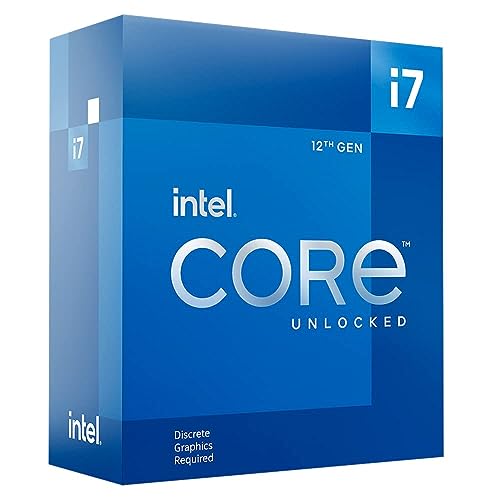
Intel Core i7-12700KF 12-Core Processor
Best for: LGA 1700 systems running demanding applications
- Series
- Core i7 (what this guide is about)
- Core Count
- 12 (8P+4E) cores
- CPU Socket
- LGA1700
- Max Boost Clock
- 5.0 GHz
- Base Clock
- 3.60 GHz
- Cache Size
- 11 MB L2, 25 MB L3
The Intel Core i7-12700KF Desktop Processor is an unlocked desktop CPU built on Intel 7 architecture for LGA 1700 motherboards. It provides 12 cores, split into 8 performance cores and 4 efficient cores, with boost clock speeds reaching up to 5.0 GHz and a 125W base TDP. With 25 MB of L3 cache, this processor suits you if you need reliable multithreaded computing for demanding desktop workloads.
Pros
- 12 cores featuring 8 performance cores and 4 efficient cores
- Turbo boost clock speeds reaching up to 5.0 GHz
- Equipped with 25 MB L3 cache and 11 MB L2 cache
- Unlocked multiplier for performance tuning
Cons
- 125W base TDP requires a robust cooling setup
- Requires a motherboard with an LGA 1700 socket and 600 series chipset
Good fit if
- You have an LGA 1700 motherboard with a 600 series chipset.
- You run computation-intensive applications requiring 12 cores and up to 5.0 GHz boost speeds.
- You want an unlocked processor with 25 MB of L3 cache.
Skip if
- You use an older motherboard that does not feature an LGA 1700 socket.
- You need a low-power processor that draws less than 125W TDP.
Verdict: Intel Core i7-12700KF Desktop Processor delivers 12 cores and up to 5.0 GHz speeds for LGA 1700 systems. It provides solid capability for computation-heavy tasks that benefit from 25 MB of L3 cache.

Intel Core i7 20-Core Desktop Processor
Best for: Multithreaded workloads needing included thermal cooling
- Series
- Core i7 (what this guide is about)
- Core Count
- 20 cores
- Thread Count
- 28 threads
- Max Boost Clock
- Up to 5.4 GHz
- Cache Size
- 33MB
- Integrated Graphics
- Intel UHD Graphics 770
This is a desktop processor with 20 cores (8 performance, 12 efficient) and 28 threads. You get boost speeds up to 5.4 GHz, 33MB cache, and integrated Intel UHD Graphics 770. It works with DDR4 and DDR5 memory on 600- and 700-series boards, making it suitable if you need multithreaded computing with an included cooler.
Pros
- 20 cores (8 P-cores and 12 E-cores) across 28 threads
- Integrated Intel UHD Graphics 770
- Includes Intel Laminar RM1 cooler
- Supports both DDR4 and DDR5 memory
Cons
- Requires potential BIOS update for 600-series motherboards
- Limited to Intel 600-series and 700-series chipsets
Good fit if
- You need a bundled cooler in the box.
- You want 20 cores for multithreaded desktop workloads.
- You plan to run a system without a discrete graphics card.
Skip if
- You use an older motherboard outside the 600 or 700 series.
- You want to avoid performing a BIOS update on a 600-series board.
Verdict: Intel Core i7 20-Core Desktop Processor serves users who need 28 threads and integrated graphics with an included thermal solution.

Intel Core i7-12700K 12-Core Desktop Processor
Best for: LGA 1700 gaming rigs needing integrated graphics
- Series
- Core i7 (what this guide is about)
- Core Count
- 12 (8P+4E) cores
- CPU Socket
- LGA1700
- Max Boost Clock
- 5.0 GHz
- Base Clock
- 3.60 GHz
- Cache Size
- 25 MB L3
View on Amazon: Intel Core i7-12700K 12-Core Desktop Processor
The Intel Core i7-12700K is an unlocked desktop processor built for gaming and multitasking. It features 12 cores split into eight performance cores and four efficient cores, reaching clock speeds up to 5.0 GHz. With 25 MB of L3 cache, a 125W TDP, and integrated Intel UHD Graphics, this chip fits standard LGA 1700 motherboards. You get balanced multi-threaded computing power without needing a discrete graphics card immediately.
Pros
- 12 cores with 8 performance cores and 4 efficient cores
- Boost clock speeds up to 5.0 GHz
- Integrated Intel UHD Graphics controller
- 25 MB L3 cache
Cons
- Requires an LGA 1700 socket motherboard
- 125W TDP requires adequate cooling capacity
Good fit if
- You need integrated display output without installing a discrete graphics card.
- You have or plan to build around an LGA 1700 motherboard.
- You want a 12-core hybrid architecture for gaming workloads.
Skip if
- You use an older system board that lacks the LGA 1700 socket.
- You need a low-power processor operating below 125W TDP.
Verdict: Intel Core i7-12700K 12-Core Desktop Processor delivers dependable hybrid performance up to 5.0 GHz with built-in display capabilities for LGA 1700 setups.
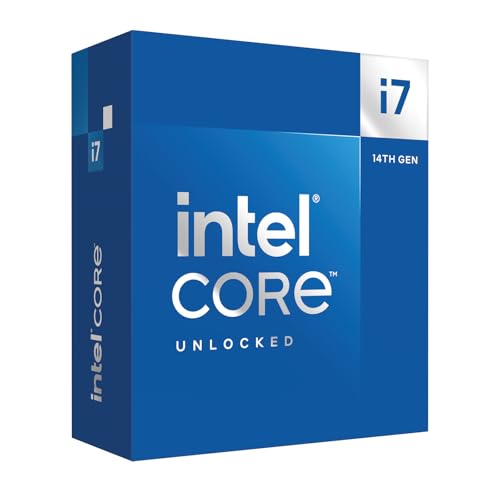
Intel Core i7-14700K Desktop Processor
Best for: hybrid core performance with integrated graphics
- Series
- Core i7 (what this guide is about)
- Core Count
- 20 cores
- Thread Count
- 28 threads
- Max Boost Clock
- 5.6 GHz
- Integrated Graphics
- Intel UHD Graphics 770
- Use Case
- Gaming
The Intel Core i7-14700K is a 14th Gen desktop processor built with 20 cores and 28 threads, dividing tasks between eight Performance cores and 12 Efficient cores. It reaches clock speeds up to 5.6 GHz and includes integrated Intel UHD Graphics 770. This CPU suits you if you want high clock speeds for demanding software, flexible DDR4 or DDR5 memory options, and built-in display output without needing a discrete graphics card.
Pros
- 20 cores (8 P-cores and 12 E-cores) with 28 threads
- Maximum clock speeds reaching up to 5.6 GHz
- Integrated Intel UHD Graphics 770 included
- Supports both DDR4 and DDR5 memory platforms
Cons
- May require a BIOS update on Intel 600-series motherboards
- Requires an Intel 600-series or 700-series motherboard
Good fit if
- You want integrated Intel UHD Graphics 770 for display output.
- You need 20 cores and 28 threads for multi-threaded tasks.
- You plan to build on either a DDR4 or DDR5 memory platform.
Skip if
- You own a motherboard older than the Intel 600 or 700 series.
- You want to avoid potential BIOS updates on a 600-series chipset.
Verdict: Intel Core i7-14700K Desktop Processor delivers 20 cores, 5.6 GHz maximum boost speeds, and integrated UHD Graphics 770 on compatible Intel motherboards. It provides versatile build flexibility with support for both DDR4 and DDR5 system memory.
Specifications side by side
| Spec | Intel Core i7-6850K 6-Core Processor | Intel Core i7-6700K Quad-Core Processor | Intel Core i7 2.8GHz Tray Processor | Intel Core i7-6950X 10-Core Processor | Intel Core i7-6850K 6-Core Processor | Intel Core i7-7700T Desktop Processor | Intel Core i7-7700K Quad-Core Processor | Intel Core i7 6-Core Unlocked Processor | Intel Core i7-9700K 8-Core Processor | Intel Core i7 8-Core Unlocked Processor | Intel Core i7-11700KF 8-Core Processor | Intel Core i7-12700KF 12-Core Processor | Intel Core i7 20-Core Desktop Processor | Intel Core i7-12700K 12-Core Desktop Processor | Intel Core i7-14700K Desktop Processor |
|---|---|---|---|---|---|---|---|---|---|---|---|---|---|---|---|
| Core Count | 6 cores | 4 Core | not specified | 10 Core | 6 Core | 4 Core | Quad-Core | 6 Cores | 8 Cores | 8 Cores | 8 cores | 12 (8P+4E) cores | 20 cores | 12 (8P+4E) cores | 20 cores |
| Thread Count | 12 threads | not specified | not specified | 20 Thread | 12 Thread | not specified | not specified | 12 Threads | 8 Threads | 16 Threads | not specified | not specified | 28 threads | not specified | 28 threads |
| CPU Socket | LGA 2011-v3 | Socket H4 LGA-1151 | not specified | LGA 2011-v3 | LGA 2011-v3 | Socket H4 LGA-1151 | not specified | not specified | LGA1151 | LGA 1200 | LGA1200 | LGA1700 | not specified | LGA1700 | not specified |
| Max Boost Clock | 3.80 GHz | 4.20 GHz | not specified | 3.50 GHz | 3.80 GHz | 3.80 GHz | 4.50 GHz | 5.0 GHz | 4.90 GHz | 5.1 GHz | 5.0 GHz | 5.0 GHz | Up to 5.4 GHz | 5.0 GHz | 5.6 GHz |
| Base Clock | not specified | 4.0 GHz | 2.8GHz | not specified | not specified | 2.90 GHz | not specified | not specified | 3.60 GHz | not specified | not specified | 3.60 GHz | not specified | 3.60 GHz | not specified |
| Cache Size | 15 MB | 8 MB | not specified | 25M | 15M | 8 MB | 8 MB | not specified | 12 MB | not specified | not specified | 11 MB L2, 25 MB L3 | 33MB | 25 MB L3 | not specified |
| Base Power | 140 W | 91 W | not specified | 140W | 140W | 35 W | not specified | not specified | 95W | 125W | 125W | 125W | not specified | 125W | not specified |
| Integrated Graphics | not specified | Intel HD Graphics 530 | not specified | not specified | not specified | Intel HD Graphics 630 | not specified | not specified | Intel UHD Graphics 630 | not specified | not specified | not specified | Intel UHD Graphics 770 | Intel UHD Graphics | Intel UHD Graphics 770 |
| Use Case | not specified | not specified | not specified | not specified | not specified | not specified | not specified | not specified | not specified | not specified | not specified | not specified | not specified | Gaming | Gaming |
| Series | Core i7 | Core i7 | Core i7 | Core i7 | Core i7 | Core i7 | Core i7 | Core i7 | Core i7 | Core i7 | Core i7 | Core i7 | Core i7 | Core i7 | Core i7 |
| TDP | not specified | 95W | not specified | not specified | not specified | not specified | not specified | not specified | 95W | 125W | 125W | 125W | not specified | 125W | not specified |
| Dimensions | 4.48 × 4.01 × 3.19 inches | 3.94 × 3.94 × 2.36 inches | 3.94 × 3.94 × 2.36 inches | 4.56 × 1.61 × 3.93 inches | 4.48 × 4.01 × 3.19 inches | 4.6 × 4.3 × 3.1 inches | 5 × 4.9 × 9.5 inches | 4.57 × 3.98 × 2.76 inches | 4.57 × 3.98 × 2.76 inches | 7.09 × 6.3 × 3.94 inches | 1.5 × 1.5 × 0.2 inches | 4.57 × 1.73 × 3.98 inches | 12.4 × 8.2 × 10.8 inches | 4.57 × 1.73 × 3.98 inches | 4.57 × 1.73 × 0.1 inches |
| Weight | not specified | 1.44 ounces | 4.16 ounces | 6.4 ounces | 3.53 ounces | not specified | not specified | 4.94 ounces | 1.59 ounces | not specified | 1.8 ounces | 2.82 ounces | 15.5 ounces | 2.82 ounces | 2.82 ounces |
| Color | gray | not specified | not specified | gray | gray | not specified | Processor Only | not specified | not specified | not specified | not specified | Black | Silver | Original | black |
| Model | i7-6850K | CM8066201919901 | i7-6700T | BX80671I76950X | BX80671I76850K | BX80677I77700T | BX80677I77700K | BX80684I78086K | BX80684I79700K | i7-10700K | BX8070811700KF | BX8071512700KF | 14700 | BX8071512700K | BX8071514700K |
| Size | not specified | not specified | not specified | not specified | not specified | not specified | not specified | Processor | I7-9700K | 1.5"x1.5" | 1.5"x1.5" | Standard | not specified | Standard | 1.0 x 4.1 x 1.9 inches |
If you prefer portable systems over standalone processors, compare specifications for the best gaming laptops with Intel Core i7.
How to Choose an Intel Core i7
-
Matching TDP to Cooling
Thermal Design Power indicates how much heat a processor produces under standard operating conditions. High-performance processors require substantial aftermarket cooling solutions to prevent thermal throttling during intensive operations. In contrast, low-power options such as the Intel Core i7-7700T operate at an efficient 35W TDP, making them ideal for compact desktop enclosures with tight airflow constraints. When selecting a CPU, verify that your computer case and CPU cooler can dissipate the rated wattage. Overclocked desktop chips with 95W or 125W ratings necessitate robust liquid or dual-tower air coolers.
-
Evaluating Integrated Graphics Needs
Intel Core i7 processors differ in their display output capabilities based on model naming. Standard or K-suffix models feature integrated graphics that provide native display outputs without an add-in card. Meanwhile, KF-suffix processors like the Intel Core i7-14700KF lack onboard graphics hardware completely. Choosing a KF model requires you to install a dedicated graphics card to send video output to your monitor. If you plan to build a workstation without a dedicated GPU, or if you need an emergency display fallback for hardware troubleshooting, choose a processor specification that includes integrated graphics.
-
Balancing Physical Core Counts
Physical core counts determine how effectively a processor handles simultaneous computing threads and background processes. Quad-core options like the Intel Core i7-6700K handle daily productivity and light gaming workflows smoothly. However, modern multi-threaded rendering, code compiling, and heavy multitasking benefit significantly from higher core counts. Newer generations scale to 8, 12, or 20 cores to distribute complex system loads efficiently across separate execution units. If your computing workload focuses primarily on light desktop usage, high core counts remain underutilized, but demanding professional software scales directly with every added physical compute core.
-
Checking Memory Architecture Support
Motherboard and processor generations determine which RAM technology and channel configurations your build supports. Standard desktop motherboards commonly use dual-channel DDR4 memory architectures. Advanced chips like the Intel Core i7-14700K feature dual memory controllers that support both DDR4 and high-bandwidth DDR5 modules, depending on the specific motherboard installed. In comparison, legacy enthusiast platforms implement quad-channel memory pipelines for broader bandwidth across four simultaneous memory modules. Verify the memory standards listed on your motherboard specification sheet before buying a processor to ensure system RAM operates at its rated operational frequencies.
-
Understanding Packaging Formats
Processors are distributed in either retail boxed packaging or bare OEM tray formats. Units like the Intel Core i7 2.8GHz Tray Processor arrive without retail consumer boxes, supplemental documentation, or bundled thermal solutions. If you purchase a tray processor, you must source a compatible CPU heatsink, thermal paste, and mounting brackets independently. Retail boxed units sometimes provide standardized packaging, but high-end unlocked chips often exclude stock coolers entirely regardless of packaging format. Always inspect the product packaging specification to verify whether you need to allocate parts for an aftermarket cooler before assembly.
-
Assessing Maximum Clock Speeds
Clock speed, measured in gigahertz, dictates how rapidly individual CPU cores execute instructions. High peak clock frequencies benefit latency-sensitive operations, older gaming engines, and single-threaded desktop tasks. The Intel Core i7 6-Core Unlocked Processor reaches turbo speeds up to 5.0 GHz to maximize single-core velocity. When comparing processors, identify whether your software benefits from raw frequency or parallel compute resources. Systems built for gaming and rapid interactive responsiveness perform best with elevated boost clocks, whereas parallel production workloads prioritize total thread count even if peak clock rates remain lower.
Frequently asked questions
What is the difference between Intel K and KF series processors?
Intel processors with a K suffix include integrated graphics, whereas KF models lack display silicon entirely. Choosing a KF model like the Core i7-14700KF requires you to install a dedicated graphics card for video output. If you select a K model such as the Core i7-14700K, you receive integrated Intel UHD Graphics 770. Both versions maintain unlocked multiplier designs for manual tuning.
What do Intel T suffix processors offer compared to standard models?
Intel T-series processors prioritize lower power consumption for compact or thermally constrained desktop builds. For example, the Core i7-7700T features a 35W thermal profile alongside quad-core performance and integrated multi-display graphics. In comparison, standard desktop variants operate at higher base wattages, such as the 95W Core i7-6700K. You sacrifice base clock frequencies to achieve cooler, lower-draw system operation.
Can you run DDR4 and DDR5 memory on the same Core i7 processor?
Recent Intel Core i7 processors support both DDR4 and DDR5 memory standards, but your choice depends entirely on your motherboard. Models like the Core i7-14700K and Core i7-14700KF contain internal memory controllers capable of handling either standard. Motherboard circuit designs accommodate only one RAM type per board. You must select a matching DDR4 or DDR5 motherboard before assembling your desktop system.
Which Intel Core i7 processor provides the highest core count in this guide?
The Core i7-14700K and Core i7-14700KF provide the highest core counts among the listed processors, featuring 20 total cores. Older multi-core flagship designs in the lineup include the Core i7-6950X with 10 cores and the Core i7-12700KF with 12 cores. Quad-core options like the Core i7-7700K represent baseline multi-threaded capacity. Higher core counts enable expanded parallel workload processing across demanding multitasking environments.
What is the highest boost clock speed available among these Intel Core i7 models?
The Core i7-14700K and Core i7-14700KF reach the highest boost frequencies in this group, topping out at 5.6 GHz. Other fast options include the Core i7 8-Core Unlocked Processor (model i7-10700K) at 5.1 GHz and the commemorative Core i7-8086K reaching 5.0 GHz across its 6 cores. Higher clock frequencies accelerate single-threaded execution, speeding up frame throughput in gaming and responsive everyday computing.
What does buying a tray processor mean for your system build?
A tray processor ships as a bare CPU without retail packaging or bundled accessories. For example, the Core i7 2.8GHz Tray Processor (model i7-6700T) supplies just the chip itself. You must source and mount your own compatible thermal cooling hardware and thermal paste during installation. Tray units function identically in performance to retail counterparts but require you to supply every external assembly component.
How do PCIe lane counts differ across Core i7 desktop generations?
Dedicated high-end desktop platforms provide significantly more direct PCIe connectivity than mainstream sockets. The Core i7-6950X and Core i7-6850K provide 40 PCIe lanes on the LGA 2011-v3 platform, accommodating multiple expansion cards without lane bifurcation. Meanwhile, mainstream desktop chips like the LGA 1200 Core i7-11700KF emphasize newer PCIe Gen 4.0 signaling speeds over raw lane quantity, balancing high-speed storage with modern GPU bandwidth demands.