Intel Core i5-8600K 6-Core Processor vs Intel Core i7-6850K 6-Core Processor (2026): Key Differences
As an Amazon Associate we earn from qualifying purchases. Links on this page are affiliate links.
You are comparing the intel core i5 8600k desktop processor vs boxed core i7 6850k processor. Both are six-core chips from Intel. They differ in architecture and platform. The i7-6850K uses the LGA 2011-v3 socket with quad-channel memory. The i5-8600K uses the LGA 1151 socket. Power usage also varies significantly between these two models.
Key differences
| Aspect | Intel Core i7-6850K 6-Core Processor | Intel Core i5-8600K 6-Core Processor |
|---|---|---|
| CPU Socket | LGA 2011-v3 | LGA 1151 |
| Max Boost Clock | 3.80 GHz | 4.3 GHz |
| Base Power | 140 W | 95 W |
| Memory Channels | 4 Channels | not listed |
Which one should you choose?
Choose Intel Core i7-6850K 6-Core Processor if
- You need quad-channel memory bandwidth for heavy data workloads.
- You are building on an existing X99 platform.
- You require the higher core count of 12 threads for multitasking.
Choose Intel Core i5-8600K 6-Core Processor if
- You want higher single-core boost speeds up to 4.3 GHz.
- You prefer a more power-efficient design at 95W TDP.
- You are building a new system with mainstream LGA 1151 motherboards.
Verdict: The i7-6850K suits users needing quad-channel memory and multi-threaded performance. The i5-8600K is better for those wanting higher boost clocks and lower power consumption on a mainstream platform. Your choice depends on whether you prioritize memory bandwidth or single-core speed.
i5-8600K vs i7-6850K Specs
Max Boost Clock
The Intel Core i5-8600K reaches a maximum boost clock of 4.3 GHz. This is higher than the Intel Core i7-6850K, which tops out at 3.80 GHz. A higher boost clock generally means better single-threaded performance for tasks that do not use all cores simultaneously. This includes everyday applications like web browsing and office work. You will notice a speed advantage with the i5-8600K in these scenarios. The i7-6850K relies on its core count and cache to compete, but the raw frequency is lower. If you prioritize quick response times in single-core tasks, the i5-8600K has a clear edge.
Base Power
Power efficiency is a key difference between these two processors. The Intel Core i5-8600K has a base power rating of 95W. In comparison, the Intel Core i7-6850K draws 140W under load. This 45W difference is significant for your system's heat output and cooling requirements. A lower TDP means the i5-8600K generates less heat and consumes less electricity during standard operation. You may need a more robust cooling solution for the i7-6850K to maintain stable temperatures. For users building a compact system or one that runs quietly, the lower power draw of the i5-8600K is a practical advantage.
CPU Socket
The platform socket determines which motherboard you must buy. The Intel Core i7-6850K uses the LGA 2011-v3 socket. This is part of Intel's enthusiast HEDT platform. The Intel Core i5-8600K uses the LGA 1151 socket, which is standard for mainstream desktops. These sockets are not compatible with each other. You cannot install either processor on a motherboard designed for the other. This means you must choose a platform based on your other needs, such as PCIe lanes or memory channels. The socket choice locks you into a specific ecosystem of motherboards and features.
Cache Size
Cache memory helps the processor access data quickly without going to the main RAM. The Intel Core i7-6850K includes 15 MB of cache. The Intel Core i5-8600K does not have a specific cache size listed in the provided data. Generally, larger cache sizes benefit complex calculations and gaming. The i7-6850K's 15 MB is substantial for a six-core processor. This may help with multitasking and heavy workloads. Without the specific cache figure for the i5-8600K, we cannot make a direct comparison. However, the i7-6850K explicitly offers this larger resource for data handling.
Memory Channels
Memory bandwidth affects how fast data moves between the CPU and RAM. The Intel Core i7-6850K supports quad-channel DDR4 memory. This allows for four memory sticks to operate simultaneously, doubling the bandwidth of dual-channel systems. The Intel Core i5-8600K uses the LGA 1151 platform, which typically supports dual-channel memory. This is not explicitly stated in the data for the i5, but it is the standard for this socket. Quad-channel memory is beneficial for professional workflows involving large datasets. If you need maximum memory throughput, the i7-6850K's architecture provides a distinct hardware advantage.
PCIe Lanes
PCIe lanes connect components like graphics cards and NVMe drives. The Intel Core i7-6850K provides up to 40 PCIe 3.0 lanes. The Intel Core i5-8600K does not have a specific lane count listed in the data. Mainstream LGA 1151 platforms usually offer fewer lanes, often around 16 to 24. The i7-6850K's 40 lanes allow for more expansion cards without bottlenecking. You can run multiple high-end GPUs or many storage devices simultaneously. If you plan to build a system with many peripherals, the higher lane count on the i7-6850K is a significant structural benefit.
Which Intel Processor Should You Buy
You need high single-thread speed for gaming
The Core i5-8600K reaches a max boost clock of 4.3 GHz. This is significantly faster than the i7-6850K, which tops out at 3.80 GHz. A higher boost clock generally improves single-threaded performance. You will see better frame rates in games that rely on fewer cores. The 95W TDP also suggests lower power draw during these tasks.
You require quad-channel memory for heavy workloads
The Core i7-6850K supports quad-channel DDR4 memory at 2400 MHz. This provides four memory channels, compared to the dual-channel limit on the i5-8600K. You gain higher memory bandwidth for data-intensive tasks like video editing or 3D rendering. The 15 MB cache also helps when processing large datasets that fit in the processor's internal storage.
You want more PCIe lanes for expansion
The i7-6850K offers up to 40 PCIe 3.0 lanes. This allows you to connect multiple high-speed devices, such as NVMe drives or capture cards, without bottlenecking. The i5-8600K provides fewer lanes on its LGA 1151 platform. If your build requires extensive expansion cards, the i7-6850K gives you the necessary connectivity options.
The products compared

Intel Core i7-6850K 6-Core Processor
Best for: Multi-GPU workstations and memory-intensive tasks
- Core Count
- 6 cores
- Thread Count
- 12 threads
- CPU Socket
- LGA 2011-v3
- Max Boost Clock
- 3.80 GHz
- Cache Size
- 15 MB
- Base Power
- 140 W
View on Amazon: Intel Core i7-6850K 6-Core Processor Affiliate link
The Intel Core i7-6850K is a six-core, twelve-thread desktop processor designed for the LGA 2011-v3 socket. It features a 15 MB cache and reaches up to 3.80 GHz with its max boost clock. This chip supports four channels of DDR4 memory at 2400 MHz. It draws 140W of power. You should choose this CPU if you need extensive PCIe lanes for multi-GPU setups or high-end workstations requiring stable, multi-channel memory bandwidth.
Pros
- Six cores and twelve threads for multitasking
- 15 MB cache for data access speed
- Supports four channels of DDR4 memory
- Provides up to 40 PCIe 3.0 lanes
Cons
- 140W TDP requires robust cooling
- Max boost clock of 3.80 GHz is lower than newer rivals
- LGA 2011-v3 socket limits upgrade paths
Good fit if
- You need four-channel memory support for heavy workloads
- You require many PCIe lanes for multiple GPUs
- You are building on an LGA 2011-v3 platform
Skip if
- You want the highest single-core boost speeds
- You are using a mainstream LGA 1151 socket
- You prefer lower power consumption under load
Verdict: Intel Core i7-6850K 6-Core Processor offers strong multi-threaded performance and extensive connectivity. It fits users who prioritize memory bandwidth and PCIe expansion over raw clock speed.
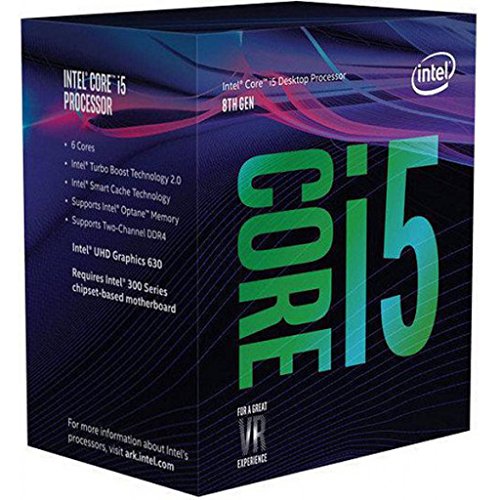
Intel Core i5-8600K 6-Core Processor
Best for: LGA 1151 gaming and overclocking
- Core Count
- 6 Cores
- CPU Socket
- LGA 1151
- Max Boost Clock
- 4.3 GHz
- Base Power
- 95W
- Series
- Core i5
- Dimensions
- 4.57 × 1.73 × 3.98 inches
View on Amazon: Intel Core i5-8600K 6-Core Processor Affiliate link
The Intel Core i5-8600K is a 6-core desktop processor designed for LGA 1151 sockets. It features a 95W TDP and reaches up to 4.3 GHz with its unlocked multiplier. This chip suits users who want strong single-threaded performance for gaming or general desktop tasks. It fits well on 300-series motherboards. You get six physical cores for multitasking without needing higher-end hardware.
Pros
- Six physical cores for solid multitasking
- Unlocked multiplier allows for overclocking
- Max boost clock reaches 4.3 GHz
- Standard 95W thermal design power
Cons
- Only six cores compared to higher-end options
- No hyper-threading for doubled thread counts
- Renewed condition may vary in cosmetic state
Good fit if
- You are building on an LGA 1151 platform
- You want to overclock your CPU performance
- You need a 6-core processor for gaming
Skip if
- You require more than six cores
- You need hyper-threading for heavy rendering
- You are using a newer socket type
Verdict: The Intel Core i5-8600K 6-Core 4.3 GHz Processor delivers reliable 6-core performance for LGA 1151 builds. It is ideal for gamers who want to push clock speeds higher through manual tuning.
Specifications side by side
| Spec | Intel Core i7-6850K 6-Core Processor | Intel Core i5-8600K 6-Core Processor |
|---|---|---|
| Core Count | 6 cores | 6 Cores |
| Thread Count | 12 threads | not stated |
| CPU Socket | LGA 2011-v3 | LGA 1151 |
| Max Boost Clock | 3.80 GHz | 4.3 GHz |
| Cache Size | 15 MB | not stated |
| Base Power | 140 W | 95W |
| Series | Core i7 | Core i5 |
| TDP | not stated | 95W |
| Dimensions | 4.48 × 4.01 × 3.19 inches | 4.57 × 1.73 × 3.98 inches |
| Weight | not stated | 0.71 ounces |
| Color | gray | not stated |
| Model | i7-6850K | BX80684I58600K |
| Size | not stated | Processor |
Frequently asked questions
Which processor is better for gaming?
The Intel Core i5-8600K is the better choice for gaming. It features a higher maximum boost clock of 4.3 GHz compared to the i7-6850K's 3.80 GHz. This speed advantage improves single-threaded performance, which is critical for most modern games. The i5-8600K is also optimized for LGA 1151 gaming builds.
Does the i7-6850K support more memory channels?
Yes, the Intel Core i7-6850K supports quad-channel memory. This provides greater memory bandwidth, which is beneficial for memory-intensive tasks and multi-GPU workstation setups. The i5-8600K uses the LGA 1151 platform, which typically supports dual-channel memory. The quad-channel capability makes the i7-6850K superior for heavy data workloads.
Which CPU has a higher power consumption?
The Intel Core i5-8600K has a specified Thermal Design Power of 95W. The provided data does not list the TDP for the i7-6850K. You should check your motherboard and cooling solution specifications to ensure they can handle the 95W requirement of the i5-8600K during sustained loads or overclocking.
Is the i5-8600K good for overclocking?
The Intel Core i5-8600K is ideal for users who want to push clock speeds higher through manual tuning. Its K-series designation indicates an unlocked multiplier, allowing for easy overclocking on compatible LGA 1151 motherboards. This makes it a strong option for enthusiasts seeking to maximize performance beyond stock settings.
Which processor offers more PCIe expansion?
The Intel Core i7-6850K is designed for extensive connectivity and PCIe expansion. It fits users who prioritize adding multiple GPUs or high-speed peripherals. The i5-8600K focuses on standard desktop gaming needs. If you need more PCIe lanes for a multi-card setup, the i7-6850K is the appropriate selection.
Can I use the i7-6850K in a standard desktop?
The Intel Core i7-6850K uses the LGA 2011-v3 socket, which is distinct from the LGA 1151 socket used by the i5-8600K. You cannot use the i7-6850K in a standard LGA 1151 motherboard. You must select a motherboard compatible with the LGA 2011-v3 platform to install this processor.