6 Cores vs 12 Cores Processors: Which Should You Buy?
As an Amazon Associate we earn from qualifying purchases. Links on this page are affiliate links.
Choosing between a 6 Cores vs 12 Cores processor depends on your specific workload. Both options are Intel desktop and workstation chips designed for performance. They share a focus on multi-threaded tasks, but they target different environments. The main difference lies in their architecture and intended use. One is a consumer-grade i5 for general desktop use, while the other is a Xeon W series chip built for server and workstation stability. You need to match the core count and socket type to your motherboard.
Key differences
| Aspect | Intel Core i5-10500 6-Core Processor | Intel Xeon W-2265 12-Core Processor |
|---|---|---|
| Core Count | 6 cores | 12 cores |
| CPU Socket | LGA1200 | LGA 2066 |
| Max Boost Clock | 4.5 GHz | not listed |
| Base Clock | not listed | 3.5 GHz |
| Thread Count | not listed | 24 threads |
| Cache Size | not listed | 19.25 MB |
Which one should you choose?
Choose Intel Core i5-10500 6-Core Processor if
- You need a processor for standard desktop tasks and gaming on an LGA1200 motherboard.
- You prefer a higher boost clock speed for single-threaded performance.
- You are building a system with a 65W TDP constraint.
Choose Intel Xeon W-2265 12-Core Processor if
- You require 12 cores and 24 threads for heavy workstation or server workloads.
- You are using a workstation motherboard with an LGA 2066 socket.
- You need larger cache memory for data-intensive applications.
Verdict: The Intel Core i5-10500 is the practical choice for most desktop users due to its higher boost clock and consumer-friendly socket. The Intel Xeon W-2265 suits professionals who need double the cores and threads for server or workstation tasks. Select the chip that matches your motherboard socket and specific performance needs.
6 vs 12 Core Processor Specs
Core Count
The Intel Core i5-10500 features 6 cores, while the Intel Xeon W-2265 offers 12 cores. This difference significantly impacts multi-threaded performance. The Xeon provides double the physical cores, allowing it to handle more simultaneous tasks. This makes it better for heavy workloads like rendering or compiling code. The i5 is sufficient for general gaming and everyday computing. You choose the i5 for simpler tasks. You choose the Xeon for intensive parallel processing. The core count is the primary differentiator for performance scaling.
Thread Count
The Intel Core i5-10500 has 6 cores. The Intel Xeon W-2265 has 24 threads. The Xeon supports simultaneous multi-threading, allowing each core to handle two threads. This doubles the logical processing units compared to the i5. The i5 data does not list a thread count, so we assume standard single-threading per core. The Xeon’s 24 threads provide superior multitasking capability. This is crucial for professional applications that utilize many threads. The i5 is limited to fewer concurrent operations. The Xeon wins for parallel workloads.
CPU Socket
The Intel Core i5-10500 uses the LGA1200 socket. The Intel Xeon W-2265 uses the LGA2066 socket. These sockets are not compatible with each other. You need a motherboard designed for the specific socket type. LGA1200 is common for 10th Gen Intel desktops. LGA2066 is used for workstation and server platforms. This means you cannot swap these processors into the same board. Your motherboard choice is locked to the processor’s socket. The Xeon requires a workstation motherboard. The i5 fits standard desktop boards.
Use Case
The Intel Core i5-10500 is a desktop processor. It is designed for general consumer use. The Intel Xeon W-2265 is labeled for server and workstation use. It targets professional environments requiring stability and high core counts. The Xeon is built for continuous operation under heavy loads. The i5 is optimized for bursty consumer tasks. If you run video editing or simulation software, the Xeon is better. For gaming or web browsing, the i5 is appropriate. The use case dictates the platform choice.
Power Consumption
The Intel Core i5-10500 has a Thermal Design Power of 65W. The Intel Xeon W-2265 data does not list a TDP value. We cannot compare power efficiency directly without the Xeon’s spec. The i5 is energy-efficient for a desktop chip. The Xeon likely consumes more power due to its higher core count and workstation nature. However, without the specific wattage, we cannot declare a winner. The i5 is known for low power draw. The Xeon’s power needs are unknown from the data. This is a tie based on available information.
Which processor fits your needs?
Standard desktop users seeking efficiency
The Intel Core i5-10500 uses 65W of power. This lower thermal design power suits standard home or office desktops. It boosts up to 4.5 GHz for responsive everyday tasks. The LGA1200 socket fits common consumer motherboards. You get solid single-thread performance without needing heavy cooling solutions or specialized hardware.
Workstation professionals needing multi-threading
The Intel Xeon W-2265 provides 12 cores and 24 threads. This high core count handles complex rendering and server workloads efficiently. It includes 19.25MB of cache to manage large data sets. The LGA2066 socket supports professional workstation platforms. You gain significant parallel processing power for demanding applications that utilize multiple threads simultaneously.
Gamers wanting high clock speeds
The Intel Core i5-10500 reaches a max boost clock of 4.5 GHz. Higher clock speeds improve frame rates in many games. Its 6 cores are sufficient for modern gaming titles. The chip fits into LGA1200 boards with good compatibility. You prioritize fast single-core performance for gaming over the multi-core strength found in the alternative option.
Quick picks
| # | Product | Best for | Price |
|---|---|---|---|
| 1 | Intel Core i5-10500 6-Core Processor | mainstream gaming and office productivity | Check price of Intel Core i5-10500 6-Core Processor on Amazon |
| 2 | Intel Xeon W-2265 12-Core Processor | Workstation tasks requiring 12 cores | Check price of Intel Xeon W-2265 12-Core Processor on Amazon |
The products compared
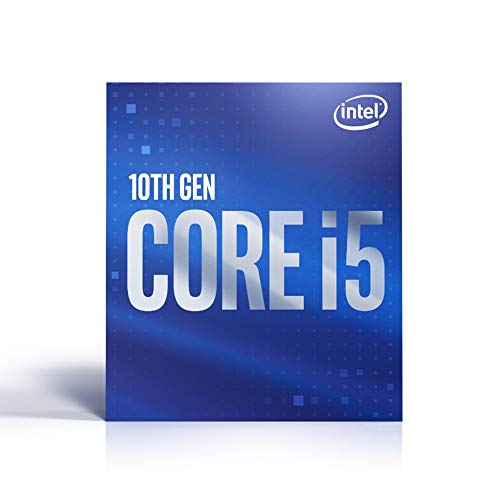
Intel Core i5-10500 6-Core Processor
Best for: mainstream gaming and office productivity
- Core Count
- 6 Cores (what this guide is about)
- CPU Socket
- LGA1200
- Max Boost Clock
- 4.5 GHz
- Base Power
- 65W
- Series
- Core i5
- Dimensions
- 4.7 × 3.9 × 2.8 inches
View on Amazon: Intel Core i5-10500 6-Core Processor Affiliate link
The Intel Core i5-10500 is a 6-core desktop processor designed for the LGA1200 socket. It features a maximum boost clock of 4.5 GHz and a thermal design power of 65W. This chip fits into Intel 400 series chipsets. It suits users who need reliable multi-threading for everyday tasks without requiring the higher core counts found in 12-core alternatives.
Pros
- 6 cores for solid multitasking performance
- Up to 4.5 GHz max boost clock
- 65W TDP for efficient power usage
- Compatible with LGA1200 socket motherboards
Cons
- Only 6 cores compared to 12-core competitors
- Locked to older LGA1200 platform
- Lower core count limits heavy rendering workloads
Good fit if
- You need a balanced CPU for gaming and general use
- You are building on an Intel 400 series motherboard
- You prefer lower power consumption with 65W TDP
Skip if
- You require high core counts for professional video editing
- You want the latest LGA1700 socket platform
- You need more than 6 threads for heavy multitasking
Verdict: Intel Core i5-10500 6-Core Processor delivers steady performance for mainstream users on the LGA1200 platform. It is ideal for gamers and office workers who do not need the extra cores of a 12-core chip.

Intel Xeon W-2265 12-Core Processor
Best for: Workstation tasks requiring 12 cores
- Core Count
- 12 Cores (what this guide is about)
- Thread Count
- 24-Thread
- CPU Socket
- LGA 2066
- Base Clock
- 3.5GHz
- Cache Size
- 19.25MB
- Use Case
- Server
View on Amazon: Intel Xeon W-2265 12-Core Processor Affiliate link
This Intel Xeon W-2265 is a 12-core, 24-thread processor designed for server and workstation use. It features a 3.5 GHz base clock and 19.25 MB of cache. The chip fits into LGA 2066 sockets. You should choose this if you need heavy multi-threaded performance for professional tasks. It suits users who prioritize core count over high single-core speeds.
Pros
- 12 cores and 24 threads for heavy multitasking
- 3.5 GHz base clock speed
- 19.25 MB cache size
- LGA 2066 socket compatibility
Cons
- Lower base clock than typical gaming CPUs
- Requires expensive workstation motherboard
- Sold as a renewed item
Good fit if
- You need many cores for rendering or simulation
- You are building a workstation on LGA 2066
- You prioritize multi-threaded performance over single-core speed
Skip if
- You want a gaming-focused high clock speed
- You are building a standard desktop with consumer parts
- You prefer new condition hardware
Verdict: Intel Xeon W-2265 12-Core Workstation CPU is a solid choice for professionals needing 12 cores on an LGA 2066 platform. It fits users who value thread count for workstation tasks rather than high-frequency gaming.
Specifications side by side
| Spec | Intel Core i5-10500 6-Core Processor | Intel Xeon W-2265 12-Core Processor |
|---|---|---|
| Core Count | 6 cores | 12-Core |
| Thread Count | not stated | 24-Thread |
| CPU Socket | LGA1200 | LGA 2066 |
| Max Boost Clock | 4.5 GHz | not stated |
| Base Clock | not stated | 3.5GHz |
| Cache Size | not stated | 19.25MB |
| Base Power | 65W | not stated |
| Use Case | not stated | Server |
| Series | Core i5 | not stated |
| TDP | 65W | not stated |
| Dimensions | 4.7 × 3.9 × 2.8 inches | not stated |
| Weight | 4.8 ounces | 1 pounds |
| Model | SRH3A | SRGSQ |
Frequently asked questions
Is 6 cores enough for gaming in 2026?
Yes, six cores are sufficient for most mainstream gaming. The Intel Core i5-10500 is designed for this use case. It delivers steady performance for gamers who do not need extra cores. This chip fits well on the LGA1200 platform for standard desktop builds.
Do I need 12 cores for workstation tasks?
It depends on your specific workload. The Intel Xeon W-2265 offers 12 cores and 24 threads for heavy multitasking. This processor is ideal for professionals who value thread count over high-frequency gaming. It is built for workstation environments rather than standard home use.
Which socket do these processors use?
The Intel Core i5-10500 uses the LGA1200 socket. The Intel Xeon W-2265 uses the LGA 2066 socket. You must choose a motherboard that matches the specific socket type of your chosen processor. These sockets are not interchangeable between the two models.
How does power consumption compare between 6 and 12 cores?
The Intel Core i5-10500 has a TDP of 65W. This lower thermal design power suits standard home or office desktops. The Intel Xeon W-2265 is designed for server or workstation use. Its power requirements are higher to support its 12-core architecture and sustained workloads.
Can a 12-core processor handle everyday office work?
Yes, but it may be overkill. The Intel Xeon W-2265 is built for server and workstation tasks. It provides 24 threads for heavy multitasking. For standard office productivity, a 6-core chip like the i5-10500 is more appropriate and efficient for typical daily tasks.
What is the main difference between Core i5 and Xeon?
The Core i5-10500 targets mainstream users and gamers. The Xeon W-2265 targets professionals needing 12 cores. The Xeon is designed for server environments and workstation tasks. The i5 focuses on responsive everyday tasks with lower power consumption and a different socket platform.