6 Cores vs 24 Cores Processors in 2026: Key Differences
As an Amazon Associate we earn from qualifying purchases. Links on this page are affiliate links.
Choosing between a 6 Cores vs 24 Cores processor depends on your specific workload and hardware constraints. Both options are Intel desktop-class CPUs designed for distinct performance tiers. The primary difference lies in core count and power efficiency. The six-core model prioritizes single-thread speed and lower energy use, while the twenty-four-core variant offers massive multi-thread capacity for heavy tasks. Understanding these specs helps you match the chip to your needs.
Key differences
| Aspect | Intel Core i5-10500 6-Core Processor | HP Intel Xeon Gold 24-Core Processor |
|---|---|---|
| Core Count | 6 cores | 24 cores |
| Max Clock Speed | 4.5 GHz | 3 GHz |
| Base Power | 65W | 205W |
| CPU Socket | LGA1200 | not listed |
| Cache Size | not listed | 75 MB |
Which one should you choose?
Choose Intel Core i5-10500 6-Core Processor if
- You need high single-thread performance for gaming or light productivity.
- Your power supply or cooling solution cannot handle high wattage loads.
- You are building a budget desktop with LGA1200 motherboards.
Choose HP Intel Xeon Gold 24-Core Processor if
- You run heavy multi-threaded workloads like video rendering or virtualization.
- You require large cache sizes for data-intensive applications.
- Your workstation needs maximum core density for parallel processing tasks.
Verdict: The six-core Intel Core i5-10500 suits everyday users and gamers who value speed and efficiency. The twenty-four-core Xeon Gold 6248R is built for professionals needing raw multi-threaded power. Select the chip that aligns with your specific performance requirements.
6 vs 24 Core Processor Comparison
Core Count
The Intel Core i5-10500 features six physical cores, while the HP Intel Xeon Gold 6248R offers twenty-four. This fourfold difference defines their primary use cases. Six cores handle typical desktop tasks, gaming, and moderate multitasking with ease. Twenty-four cores excel in heavy workloads like video rendering, virtualization, and scientific computing. If your work involves parallel processing, the Xeon’s higher core count provides significant throughput. For general computing, the i5’s six cores are sufficient and more efficient.
Clock Speed
The i5-10500 reaches a max boost clock of 4.5 GHz, whereas the Xeon Gold 6248R has a base clock of 3 GHz. Higher clock speeds generally improve single-threaded performance, which matters for gaming and legacy applications. The i5’s ability to boost higher makes it faster for tasks that rely on individual core speed. The Xeon prioritizes multi-threaded stability over raw single-core frequency. If you play games or use apps that do not scale well with many cores, the i5’s speed advantage is noticeable. The Xeon’s lower base clock reflects its focus on sustained multi-core workloads rather than peak single-thread performance.
Power Consumption
Power efficiency differs greatly between these two processors. The i5-10500 has a thermal design power of 65W, making it suitable for standard desktop systems with modest cooling. The Xeon Gold 6248R consumes 205W, requiring robust power supplies and advanced cooling solutions. Higher power draw means more heat generation and increased electricity costs over time. For a home office or gaming PC, the i5’s lower TDP is easier to manage. The Xeon’s high power rating is necessary to sustain its twenty-four cores under load. You must ensure your system can handle the thermal and electrical demands of the Xeon.
CPU Socket
Compatibility depends on the motherboard socket type. The i5-10500 uses the LGA1200 socket, which is common in Intel 400-series chipset motherboards. This makes upgrades and replacements straightforward for existing desktop builds. The Xeon Gold 6248R uses a different socket type not explicitly listed in the provided data, but it is designed for server platforms. You cannot install the Xeon in a standard LGA1200 motherboard. If you are building a new system, you must choose a motherboard that supports the Xeon’s specific socket. The i5 offers broader compatibility with consumer-grade desktop motherboards.
Cache Size
Cache memory helps processors access frequently used data quickly. The Xeon Gold 6248R includes 75 MB of cache, a substantial amount for handling complex data sets. The cache size for the i5-10500 is not listed in the provided data. Larger cache can reduce latency in data-intensive applications. The Xeon’s 75 MB supports its multi-core architecture by providing ample shared memory for all twenty-four cores. This benefits tasks that move large amounts of data between cores. For lighter workloads, the i5’s cache may be adequate, but the Xeon’s larger cache supports its high core count more effectively.
Which 6 or 24 Core CPU Fits You
Standard desktop users and gamers
The Intel Core i5-10500 uses only 65W of power. This makes it efficient for home and office setups. Its 4.5 GHz max boost clock handles daily tasks well. You get reliable performance without needing a massive power supply. This chip fits standard LGA1200 motherboards easily for most users.
Heavy multitaskers and workstation users
The Xeon Gold 6248R provides twenty-four cores for heavy loads. It includes 75 MB of cache to manage large datasets. This processor draws 205W, so you need a strong power system. Use this chip for virtualization, rendering, or complex data processing tasks that require many cores.
Users needing high core counts
You need twenty-four physical cores for parallel processing workloads. The Xeon Gold 6248R delivers this capacity directly. Its 3 GHz base clock ensures consistent performance under load. This option suits professionals who run multiple virtual machines or compile large codebases simultaneously.
Quick picks
| # | Product | Best for | Price |
|---|---|---|---|
| 1 | Intel Core i5-10500 6-Core Processor | general desktop use and office tasks | Check price of Intel Core i5-10500 6-Core Processor on Amazon |
| 2 | HP Intel Xeon Gold 24-Core Processor | heavy multi-threaded server workloads | Check price of HP Intel Xeon Gold 24-Core Processor on Amazon |
The products compared
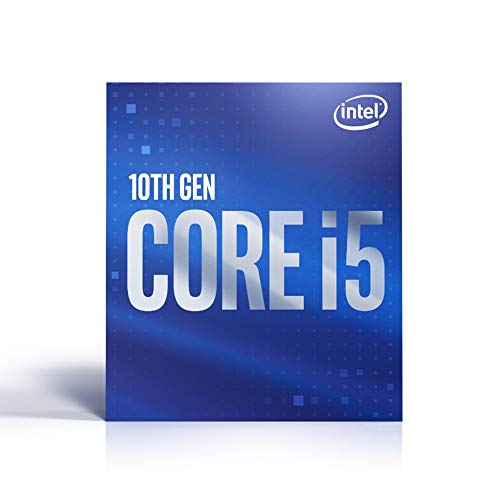
Intel Core i5-10500 6-Core Processor
Best for: general desktop use and office tasks
- Core Count
- 6 Cores (what this guide is about)
- CPU Socket
- LGA1200
- Max Boost Clock
- 4.5 GHz
- Base Power
- 65W
- Series
- Core i5
- Dimensions
- 4.7 × 3.9 × 2.8 inches
View on Amazon: Intel Core i5-10500 6-Core Processor Affiliate link
This Intel Core i5-10500 is a 6-core processor designed for LGA1200 motherboards. It features a base power of 65W and reaches up to 4.5 GHz with max boost clock. The chip measures 3.9 by 2.8 by 4.7 inches and weighs 4.8 ounces. It suits users who need reliable multi-threaded performance for general desktop tasks without excessive power draw.
Pros
- 6 cores for solid multitasking
- Up to 4.5 GHz max boost clock
- Low 65W thermal design power
- Compatible with LGA1200 socket
Cons
- Only 6 cores limit heavy rendering workloads
- No integrated graphics listed in specs
- Older LGA1200 socket limits future upgrades
Good fit if
- You build a budget-friendly desktop PC
- You need efficient power usage for office work
- You use LGA1200 motherboards
Skip if
- You require high core counts for professional rendering
- You want the latest socket platform
- You need integrated graphics for display output
Verdict: Intel Core i5-10500 6-Core Desktop Processor offers balanced performance for everyday computing. It fits users prioritizing efficiency and LGA1200 compatibility over raw core count.

HP Intel Xeon Gold 24-Core Processor
Best for: heavy multi-threaded server workloads
- Core Count
- 24 Cores (what this guide is about)
- Base Clock
- 3 GHz
- Cache Size
- 75 MB
- Base Power
- 205 W
- Series
- Xeon Gold
- Dimensions
- 2.2 × 3 × 7.9 inches
View on Amazon: HP Intel Xeon Gold 24-Core Processor Affiliate link
This HP-branded Intel Xeon Gold 6248R processor offers 24 cores for heavy workloads. It runs at a 3 GHz base clock with 75 MB of cache. The chip has a 205 W base power rating, indicating high energy use. Its physical dimensions are 3 by 7.9 by 2.2 inches, and it weighs 4.41 pounds. You need this unit if you require significant multi-threading performance for server or workstation tasks.
Pros
- 24 cores for high parallel processing
- 3 GHz base clock speed
- 75 MB cache size
- Xeon Gold series reliability
Cons
- 205 W base power draw requires robust cooling
- 4.41 pound weight adds bulk
- Limited to 3 GHz base frequency
Good fit if
- You need 24 cores for virtualization
- You run heavy workstation applications
- You have a server-grade cooling solution
Skip if
- You want a low-power desktop CPU
- You need a higher base clock speed
- You are building a compact PC
Verdict: HP Xeon Gold 6248R 24-Core delivers raw core count for demanding tasks. It suits users who prioritize processing power over energy efficiency or compact size.
Specifications side by side
| Spec | Intel Core i5-10500 6-Core Processor | HP Intel Xeon Gold 24-Core Processor |
|---|---|---|
| Core Count | 6 cores | 24 cores |
| CPU Socket | LGA1200 | not stated |
| Max Boost Clock | 4.5 GHz | not stated |
| Base Clock | not stated | 3 GHz |
| Cache Size | not stated | 75 MB |
| Base Power | 65W | 205 W |
| Series | Core i5 | Xeon Gold |
| TDP | 65W | not stated |
| Dimensions | 4.7 × 3.9 × 2.8 inches | 2.2 × 3 × 7.9 inches |
| Weight | 4.8 ounces | 4.41 pounds |
| Model | SRH3A | SRGZG |
Frequently asked questions
Can a 6-core processor handle modern gaming?
Yes, a six-core processor like the Intel Core i5-10500 handles gaming well. It features a 4.5 GHz max boost clock. This speed ensures smooth performance for daily tasks and moderate gaming. It is designed for users who prioritize efficiency and single-thread speed over raw core count.
Is 24 cores necessary for server workloads?
For heavy multi-threaded server workloads, 24 cores provide significant advantage. The HP Intel Xeon Gold 6248R offers this high core count. It suits users who prioritize processing power above all else. This configuration is ideal for demanding tasks that require extensive parallel processing capabilities.
Which CPU socket does the six-core model use?
The Intel Core i5-10500 uses the LGA 1200 socket. This compatibility allows you to install it in motherboards designed for this specific interface. It fits users prioritizing LGA1200 compatibility over raw core count. This makes it a straightforward choice for standard desktop builds.
How much power does the six-core CPU draw?
The Intel Core i5-10500 has a Thermal Design Power of 65W. This low power draw makes it efficient for home and office setups. It generates less heat than higher-end models. You get reliable performance without requiring extensive cooling solutions or high-wattage power supplies.
What is the physical size of the Xeon processor?
The HP Intel Xeon Gold 6248R measures 3 inches in width and 7.9 inches in height. It weighs 4.41 pounds. This larger footprint reflects its server-grade construction. You must ensure your chassis can accommodate these dimensions and the additional weight compared to desktop CPUs.
Does the six-core chip support multitasking?
Yes, the six-core model handles moderate multitasking with ease. It balances performance for everyday computing tasks. The six physical cores allow you to run multiple applications simultaneously. It is best for general desktop use and office tasks where high core counts are unnecessary.
Which processor is better for energy efficiency?
The Intel Core i5-10500 is better for energy efficiency. It draws only 65W of power. In contrast, the 24-core Xeon prioritizes raw processing power over energy efficiency. If your goal is to minimize power consumption while maintaining solid performance, the six-core option is the practical choice.