6 Cores vs 8 Cores Processors: Which Should You Buy?
As an Amazon Associate we earn from qualifying purchases. Links on this page are affiliate links.
Choosing between a 6 Cores vs 8 Cores processor often comes down to your specific workload and platform needs. Both options are Intel desktop chips designed for performance, but they target different segments of the market. The primary difference lies in their core count and socket compatibility. One offers a lower power draw and newer socket support, while the other provides higher thread counts and faster boost speeds for demanding tasks. You must decide which specifications align with your motherboard and cooling setup.
Key differences
| Aspect | Intel Core i5-10500 6-Core Processor | Intel Core i9-9900K 8-Core Processor |
|---|---|---|
| Core Count | 6 cores | 8 cores |
| CPU Socket | LGA1200 | LGA1151 |
| TDP | 65W | 95W |
| Max Boost Clock | 4.5 GHz | 5.0 GHz |
| Thread Count | not listed | 16 threads |
Which one should you choose?
Choose Intel Core i5-10500 6-Core Processor if
- You need a processor with lower power consumption and heat output for a compact build.
- You are building on a newer Intel 400 series chipset platform with LGA1200 sockets.
- Your primary tasks rely more on single-core speed than heavy multi-threaded workloads.
Choose Intel Core i9-9900K 8-Core Processor if
- You require higher multi-threaded performance for video editing or heavy multitasking.
- You want the highest possible boost clock speed for gaming or single-threaded applications.
- You are using a motherboard based on the older Intel 300 series chipset.
Verdict: The 6-core i5-10500 is better for users prioritizing efficiency and modern socket compatibility. The 8-core i9-9900K suits those needing maximum multi-threaded power and higher boost speeds on older platforms.
6 Cores vs 8 Cores Comparison
Core count
The Intel Core i5-10500 offers six physical cores, while the Intel Core i9-9900K provides eight cores. More cores generally improve performance in multi-threaded tasks like video rendering, 3D modeling, and heavy multitasking. The i9-9900K’s extra two cores allow it to handle more simultaneous processes efficiently. If your workflow relies on parallel processing, the eight-core design provides a tangible advantage. The six-core i5-10500 remains capable for most general applications, but it will reach its limit sooner under sustained heavy loads compared to the eight-core option.
Max boost speed
Clock speed determines how fast individual cores operate during intensive tasks. The Intel Core i9-9900K reaches a maximum boost clock of 5.00 GHz. The Intel Core i5-10500 tops out at 4.5 GHz. Higher boost clocks improve single-threaded performance, which benefits gaming and applications that do not utilize many cores. The i9-9900K’s higher frequency gives it an edge in scenarios where single-core speed is critical. You will notice faster response times in games and legacy software that rely heavily on single-threaded performance.
CPU socket
Processor compatibility depends entirely on the motherboard socket. The Intel Core i5-10500 uses the LGA1200 socket, requiring a 400-series chipset motherboard. The Intel Core i9-9900K uses the LGA1151 socket, compatible only with 300-series chipset motherboards. These sockets are not interchangeable. You must choose a motherboard that matches your selected processor. If you already own a 300-series board, the i9-9900K is the direct fit. If you are building on a newer 400-series platform, the i5-10500 is the required choice. This is a strict compatibility constraint.
Power consumption
Thermal Design Power (TDP) indicates the processor's typical power draw. The Intel Core i5-10500 has a TDP of 65W. The Intel Core i9-9900K has a TDP of 95W. Higher TDP means the i9-9900K consumes more electricity and generates more heat. You will need a more robust cooling solution for the i9-9900K to maintain stable temperatures under load. The i5-10500 is more power-efficient and easier to cool, making it suitable for smaller cases or builds where thermal management is a priority. Efficiency favors the six-core model.
Cache memory
Cache memory provides fast access to data for the processor cores. The Intel Core i9-9900K includes 16 MB of cache. The specifications for the Intel Core i5-10500 do not list its cache size in the provided data. Generally, larger cache sizes improve performance by reducing the time the CPU spends waiting for data from the main RAM. The i9-9900K’s 16 MB cache supports its eight cores and higher clock speeds. Without the specific cache value for the i5-10500, we cannot make a direct comparison, but the i9-9900K offers a substantial cache buffer.
Which Processor Fits Your Needs
Users needing modern LGA1200 platform support
Choose the Intel Core i5-10500 if you are building on a 400 series chipset. It uses the LGA1200 socket, which offers better compatibility with newer motherboards than the older LGA1151 option. With a 65W TDP, it runs cooler and consumes less power while delivering 4.5 GHz boost speeds for efficient daily computing.
Gamers prioritizing single-thread speed
Select the Intel Core i9-9900K for maximum clock speeds. It reaches 5.00 GHz, which is faster than the i5-10500. This higher frequency benefits gaming and applications that rely heavily on single-core performance. The unlocked multiplier allows for additional tuning if your motherboard supports it, providing flexibility for enthusiasts.
Creators requiring multi-core throughput
Opt for the Intel Core i9-9900K if your work involves video editing, 3D rendering, or heavy multitasking. The eight cores and 16 threads handle parallel tasks more effectively than six cores. The 16 MB cache also helps process large datasets faster, making it a stronger choice for professional content creation workflows.
Quick picks
| # | Product | Best for | Price |
|---|---|---|---|
| 1 | Intel Core i5-10500 6-Core Processor | Mid-range LGA1200 builds needing 6 cores | Check price of Intel Core i5-10500 6-Core Processor on Amazon |
| 2 | Intel Core i9-9900K 8-Core Processor | Users with 300-series motherboards needing 8 cores | Check price of Intel Core i9-9900K 8-Core Processor on Amazon |
The products compared
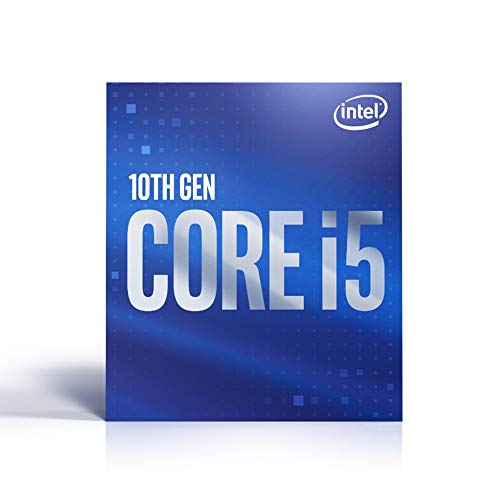
Intel Core i5-10500 6-Core Processor
Best for: Mid-range LGA1200 builds needing 6 cores
- Core Count
- 6 Cores (what this guide is about)
- CPU Socket
- LGA1200
- Max Boost Clock
- 4.5 GHz
- Base Power
- 65W
- Series
- Core i5
- Dimensions
- 4.7 × 3.9 × 2.8 inches
View on Amazon: Intel Core i5-10500 6-Core Processor Affiliate link
The Intel Core i5-10500 is a 6-core desktop processor designed for the LGA1200 socket. It features a base power of 65W and reaches a max boost clock of 4.5 GHz. This CPU fits users who need reliable performance for everyday tasks and light gaming without requiring the higher power draw or core count of an 8-core model. It is a practical option for mid-range builds.
Pros
- 6 cores for multitasking
- 4.5 GHz max boost clock
- 65W TDP for efficiency
- LGA1200 socket compatibility
Cons
- Only 6 cores compared to 8-core options
- Lower max boost clock than 8-core competitors
- No integrated graphics mentioned in specs
Good fit if
- You want a balance of performance and power efficiency
- You are building on an LGA1200 platform
- You do not need heavy multi-core workloads
Skip if
- You require 8 cores for heavy rendering
- You need the highest possible single-core speed
- You are using a different socket type
Verdict: Intel Core i5-10500 6-Core Desktop Processor is a solid choice for users who prioritize efficiency and standard multitasking over maximum core count. It suits those building mid-range systems on LGA1200 motherboards who do not need the extra processing power of an 8-core chip.

Intel Core i9-9900K 8-Core Processor
Best for: Users with 300-series motherboards needing 8 cores
- Core Count
- 8 Cores (what this guide is about)
- Thread Count
- 16 Threads
- CPU Socket
- LGA1151
- Max Boost Clock
- 5.00 GHz
- Base Clock
- 3.60 GHz
- Cache Size
- 16 MB
View on Amazon: Intel Core i9-9900K 8-Core Processor Affiliate link
This Intel Core i9-9900K offers 8 cores and 16 threads for heavy multitasking. It reaches up to 5.00 GHz with 16 MB of cache. The 95W TDP fits standard cooling. You need a 300-series motherboard with an LGA1151 socket. It includes Intel UHD Graphics 630. This processor suits users needing high single-thread performance and core count for demanding workloads.
Pros
- 8 Cores and 16 Threads
- Up to 5.00 GHz Turbo
- 16 MB Cache
- Intel UHD Graphics 630
Cons
- Requires 300-series chipset motherboard
- Uses older LGA1151 socket
- 95W power draw
Good fit if
- You need 8 cores for multitasking
- You have a 300-series motherboard
- You want high boost speeds
Skip if
- You use LGA1200 or newer sockets
- You need 6-core efficiency
- You want latest platform features
Verdict: Intel Core i9-9900K 8-Core LGA1151 delivers strong 8-core performance for users with compatible 300-series boards. It fits those prioritizing high clock speeds and core count over newer socket support.
Specifications side by side
| Spec | Intel Core i5-10500 6-Core Processor | Intel Core i9-9900K 8-Core Processor |
|---|---|---|
| Core Count | 6 cores | 8 Cores |
| Thread Count | not stated | 16 Threads |
| CPU Socket | LGA1200 | LGA1151 |
| Max Boost Clock | 4.5 GHz | 5.00 GHz |
| Base Clock | not stated | 3.60 GHz |
| Cache Size | not stated | 16 MB |
| Base Power | 65W | 95W |
| Integrated Graphics | not stated | Intel UHD Graphics 630 |
| Series | Core i5 | Core i9 |
| TDP | 65W | 95W |
| Dimensions | 4.7 × 3.9 × 2.8 inches | 2.91 × 4.41 × 4.61 inches |
| Weight | 4.8 ounces | not stated |
| Model | SRH3A | SRELS |
Frequently asked questions
Does the i5-10500 support overclocking?
No, it does not. The Intel Core i5-10500 is a locked processor. You cannot increase its clock speed beyond the base frequency. This makes it a stable choice for standard builds. It lacks the unlocked multiplier found in K-series chips like the i9-9900K.
Which processor uses less power?
The Intel Core i5-10500 uses less power. Its thermal design power is 65W. The Intel Core i9-9900K has a TDP of 95W. Lower power consumption means less heat generation and potentially quieter cooling solutions. This makes the i5-10500 more efficient for standard office or gaming tasks.
Can I use the i9-9900K on modern motherboards?
No, it is not compatible with modern boards. The i9-9900K uses the LGA 1151 socket. It requires a 300-series motherboard chipset. Newer motherboards use LGA 1200 or LGA 1700 sockets. You cannot install this chip on current generation platforms without an older board.
Is 8 cores necessary for gaming?
It depends on the game. Many modern titles benefit from eight cores for smoother performance. The Intel Core i9-9900K provides this extra headroom. However, six cores, like those in the i5-10500, remain sufficient for most current games. The i9-9900K also offers higher clock speeds for single-threaded tasks.
What socket does the i5-10500 use?
It uses the LGA 1200 socket. This socket is found on 400-series and 500-series motherboards. It supports Intel’s 10th and 11th generation processors. This platform offers better connectivity and features compared to the older LGA 1151 socket used by the i9-9900K.
Which is better for video editing?
The Intel Core i9-9900K is better for video editing. It has eight cores, which helps with multi-threaded rendering tasks. The i5-10500 has only six cores. More cores allow for faster processing of complex video files. If your workflow involves heavy rendering, the extra two cores provide a tangible speed advantage.