Best Processors with 16 Threads: 15 Spec-Based Picks
As an Amazon Associate we earn from qualifying purchases. Links on this page are affiliate links.
Choosing the right processor with 16 Threads requires matching your workload to the proper socket and platform architecture. We compared 15 processors based strictly on the specifications published on their listings. The Intel Xeon W-2245 8-Core Processor leads the list by delivering a 3.90 GHz base frequency and 8 cores on the LGA 2066 socket.
Whether you need integrated graphics, a 65W TDP, or high L3 cache, this guide helps you decide which processor fits your motherboard, cooler, and computing needs.
Quick picks
The best fit for you
- You need a 16-thread processor for LGA 2066 workstations Intel Xeon W-2245 8-Core Processor It provides 16 threads, an LGA 2066 socket fit, and a 3.90 GHz base frequency.
- You need high PCIe lane connectivity for workstations AMD Ryzen Threadripper 1900X 8-Core Processor It provides 64 PCIe lanes and quad-channel memory across 16 processing threads.
- You want integrated graphics on a Socket AM4 build AMD Ryzen 7 5700G 8-Core Processor It features built-in Radeon Graphics and includes a cooling unit for Socket AM4.
- You want fast DDR5 support on Socket AM5 AMD Ryzen 7 8-Core Desktop Processor It delivers a 5.5 GHz boost clock alongside DDR5-5600 and PCIe 5.0 support.
Our 15 picks

Intel Xeon W-2245 8-Core Processor
Best for: LGA 2066 workstation builds needing 16 threads
- Thread Count
- 16 Threads (what this guide is about)
- Core Count
- 8
- CPU Socket
- FCLGA2066
- Max Boost Clock
- 4.50 GHz
- Base Clock
- 3.90 GHz
- Cache Size
- 16.5 MB
The Intel Xeon W-2245 is an eight-core workstation processor designed for FCLGA2066 motherboards. It delivers sixteen threads with a 3.90 GHz base clock speed and reaches up to 4.50 GHz turbo frequency. With 16.5 MB of cache and DDR4 memory support, it handles sustained multithreaded workloads. This chip suits you if you build or maintain an LGA 2066 workstation system requiring dedicated sixteen-thread computing capacity and high base clock speeds.
Pros
- 3.90 GHz base frequency and 4.50 GHz max turbo
- 8 cores and 16 threads for parallel workloads
- 16.5 MB cache
- DDR4 memory support
Cons
- High TDP rating of 155 W
- Requires an LGA 2066 socket motherboard
- Built on 14 nm lithography
Good fit if
- You have an FCLGA2066 socket motherboard.
- You need 16 threads with a 3.90 GHz base frequency.
- You use DDR4 memory modules.
Skip if
- You want a processor with a TDP lower than 155 W.
- You run a motherboard other than LGA 2066.
Verdict: Intel Xeon W-2245 8-Core Processor delivers balanced 16-thread workstation performance with a fast 3.90 GHz base frequency. Its 155 W TDP requires robust cooling and an LGA 2066 socket.
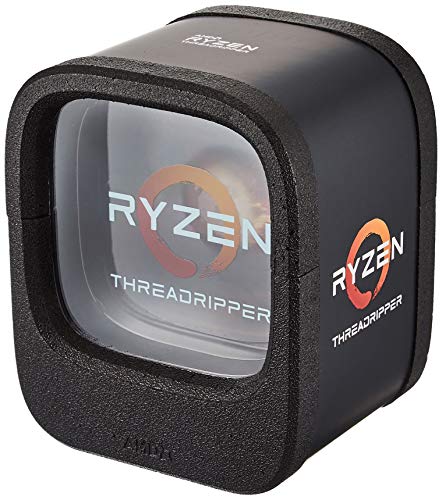
AMD Ryzen Threadripper 1900X 8-Core Processor
Best for: workstation setups needing high PCIe lane counts
- Thread Count
- 16 Threads (what this guide is about)
- Core Count
- 8 Cores
- Max Boost Clock
- 4.0 GHz
- Cache Size
- 20MB
- Series
- Ryzen Threadripper
- Dimensions
- 3.1 × 2.2 × 0.3 inches
View on Amazon: AMD Ryzen Threadripper 1900X 8-Core Processor
The AMD Ryzen Threadripper 1900X is an eight-core, 16-thread processor designed for demanding workstation builds. It features a 4.0 GHz Precision Boost clock that reaches up to 4.2 GHz via XFR, paired with 20MB of cache memory. With support for quad-channel DDR4 memory and 64 PCIe Gen3 lanes, it suits you if you need massive bandwidth for multiple expansion cards and memory modules across your system.
Pros
- 64 PCIe Gen3 lanes for expansion cards
- Quad-channel DDR4 memory architecture
- 4.0 GHz Precision Boost reaching up to 4.2 GHz with XFR
- 20MB total cache memory
Cons
- Limited to PCIe Gen3 speeds rather than newer PCIe standards
- Large physical package weighing 1.9 pounds
Good fit if
- You need 64 PCIe Gen3 lanes for multi-card expansion setups.
- You want quad-channel DDR4 memory support on a 16-thread platform.
- You require boost frequencies reaching up to 4.2 GHz with XFR.
Skip if
- You need newer PCIe Gen4 or Gen5 lane support.
- You prefer standard dual-channel desktop platforms.
Verdict: AMD Ryzen Threadripper 1900X Processor delivers 16 threads alongside quad-channel memory and 64 PCIe lanes for connectivity-heavy workstation setups.

AMD Ryzen 7 5800X Desktop Processor
Best for: AM4 desktop builds needing 16 threads
- Thread Count
- 16 Threads (what this guide is about)
- Core Count
- 8 cores
- CPU Socket
- AM4
- Max Boost Clock
- 4.7 GHz
- Cache Size
- 36 MB
- Series
- Ryzen 7
The AMD Ryzen 7 5800X is an 8-core desktop processor built for the Socket AM4 platform. It provides 16 processing threads, a 4.7 GHz max boost clock, and 36 MB of cache. It supports DDR-3200 system memory and PCIe 4.0 connectivity on compatible B550 and X570 motherboards. This processor suits you if you need unlocked multi-threaded performance for gaming and demanding desktop tasks on an AM4 motherboard setup.
Pros
- 8 cores and 16 processing threads
- 4.7 GHz maximum boost clock
- 36 MB of cache
- PCIe 4.0 support on X570 and B550 motherboards
Cons
- Cooler not included in the package
- Requires a separate high-performance cooler
Good fit if
- You have a compatible Socket AM4 motherboard such as a B550 or X570 model.
- You want 16 threads and up to 4.7 GHz boost speeds for gaming and multi-threaded tasks.
- You plan to install your own aftermarket cooling solution.
Skip if
- You need a processor that comes packaged with a stock cooler.
- You are building on a platform other than Socket AM4.
Verdict: AMD Ryzen 7 5800X 8-Core Desktop Processor delivers 16 threads, 36 MB of cache, and boost clocks up to 4.7 GHz for Socket AM4 systems. It provides unlocked multi-threaded performance provided you supply a dedicated cooling solution.
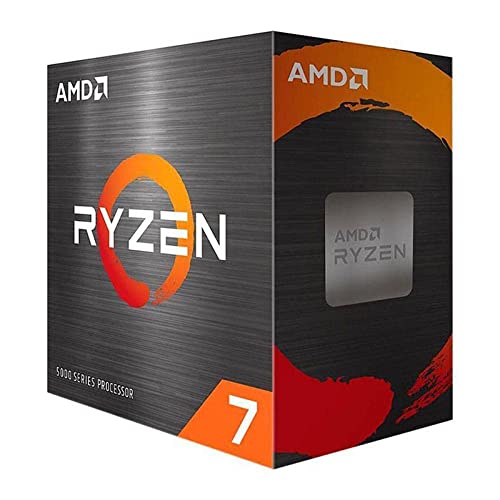
AMD Ryzen 7 5700G 8-Core Processor
Best for: budget 16-thread builds needing integrated graphics
- Thread Count
- 16 Threads (what this guide is about)
- Core Count
- 8 cores
- CPU Socket
- Socket AM4
- Max Boost Clock
- 4.6 GHz
- Cache Size
- 20 MB
- Integrated Graphics
- Radeon Graphics
This Socket AM4 desktop processor features 8 cores, 16 threads, and integrated Radeon graphics. You get a 4.6 GHz maximum boost clock, 20 MB of cache, and support for DDR4-3200 memory. The package includes an AMD Wraith Stealth cooler and operates unlocked for overclocking up to a 95°C maximum temperature. It suits you if you need 16 threads without buying a dedicated graphics card.
Pros
- Integrated Radeon graphics eliminate need for separate GPU
- AMD Wraith Stealth cooler included in box
- 8 cores and 16 processing threads with 4.6 GHz max boost
- Unlocked multiplier for user overclocking
Cons
- 20 MB cache is lower than dedicated non-APU 5000-series models
- Confined to DDR4-3200 memory speeds and Socket AM4
Good fit if
- You want 16 threads without purchasing an add-in graphics card.
- You already use a Socket AM4 motherboard setup.
- You prefer an included boxed cooler to save on components.
Skip if
- You want a platform supporting faster DDR5 memory.
- You require large L3 cache pools for your specific workloads.
Verdict: AMD Ryzen 7 5700G with Radeon Graphics delivers 16 processing threads and integrated visuals on Socket AM4. It provides a complete, cooler-included computing solution without requiring a separate graphics card.

AMD Ryzen 7 5700X 8-Core Desktop Processor
Best for: AM4 desktop builds with discrete graphics
- Thread Count
- 16 Threads (what this guide is about)
- Core Count
- 8 cores
- CPU Socket
- Socket AM4
- Max Boost Clock
- 4.6 GHz
- Cache Size
- 36 MB
- Integrated Graphics
- Discrete graphics card required
The AMD Ryzen 7 5700X provides 8 cores and 16 processing threads on the Socket AM4 platform. It features a 4.6 GHz maximum boost clock, 36 MB of cache, and support for DDR4-3200 memory alongside PCIe 4.0 on compatible chipsets. This processor fits your build if you need reliable multithreaded capacity for computing tasks and intend to run a dedicated graphics card with your system.
Pros
- 16 processing threads across 8 Zen 3 cores
- 36 MB cache and 4.6 GHz maximum boost clock
- Supports PCIe 4.0 on X570 and B550 motherboards
- Unlocked multiplier for overclocking
Cons
- Cooler not included in package
- Requires a discrete graphics card for display output
Good fit if
- You own an AM4 motherboard such as a B550 or X570 board.
- You already have a dedicated graphics card and compatible CPU cooler.
- You want 16 threads with DDR4-3200 memory support.
Skip if
- You need integrated graphics for video output without a discrete GPU.
- You want a bundled thermal cooling solution included in the box.
Verdict: AMD Ryzen 7 5700X 8-Core Processor delivers balanced 16-thread performance with PCIe 4.0 connectivity for AM4 systems. It serves as a capable drop-in upgrade when paired with dedicated graphics and an aftermarket cooler.
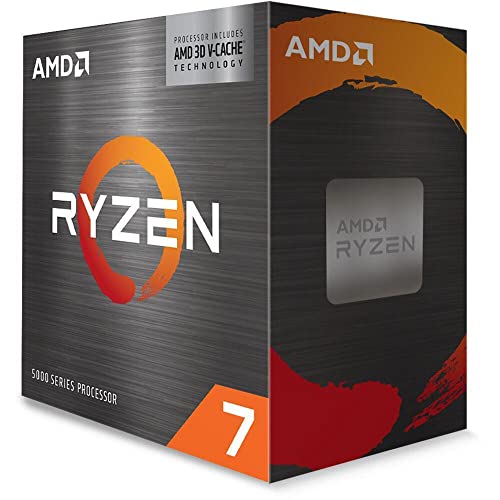
AMD Ryzen 7 5800X3D 8-Core Processor
Best for: high-cache Socket AM4 system upgrades
- Thread Count
- 16 Threads (what this guide is about)
- Core Count
- 8 Cores
- CPU Socket
- Socket AM4
- Max Boost Clock
- 4.5 GHz
- Cache Size
- 100 MB
- Series
- Ryzen 7
The AMD Ryzen 7 5800X3D provides 8 cores and 16 processing threads for Socket AM4 systems. It features 100 MB of total cache using AMD 3D V-Cache technology alongside a maximum boost clock of 4.5 GHz. With native DDR4-3200 memory support and PCIe 4.0 compatibility on B550 and X570 motherboards, this processor suits you if you want high-density cache on an established AM4 build.
Pros
- 100 MB cache with AMD 3D V-Cache technology
- Up to 4.5 GHz max boost clock
- Supports PCIe 4.0 on X570 and B550 motherboards
- 8 cores and 16 processing threads
Cons
- Does not include a CPU cooler
- Memory support capped at DDR4-3200
Good fit if
- You have an existing Socket AM4 motherboard such as an X570 or B550.
- You need 16 processing threads paired with a large 100 MB cache.
- You already own or plan to supply a separate high-performance cooler.
Skip if
- You need a bundled cooler included in the box.
- You require a platform that supports DDR5 system memory.
Verdict: AMD Ryzen 7 5800X3D 16-Thread Processor delivers 100 MB of cache and up to 4.5 GHz boost speeds on Socket AM4. It provides an efficient 16-thread option for existing DDR4 and PCIe 4.0 setups.
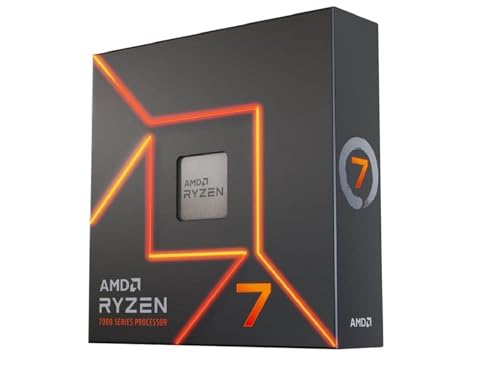
AMD Ryzen 7 8-Core AM5 Processor
Best for: AM5 builds needing 16 high-speed threads
- Thread Count
- 16 Threads (what this guide is about)
- Core Count
- 8 cores
- CPU Socket
- Socket AM5
- Max Boost Clock
- 5.4 GHz
- Base Clock
- 4.5GHz
- Cache Size
- 80 MB
The AMD Ryzen 7 7700X gives you 8 cores and 16 threads built on AMD Zen 4 architecture. You get a 4.5 GHz base clock, up to 5.4 GHz max boost, 80 MB of cache, and support for DDR5-5200 memory. Built for the Socket AM5 platform, it supports PCIe 5.0 on select motherboards. It suits you if you build an AM5 desktop for 16-thread multitasking.
Pros
- 5.4 GHz maximum boost clock and 4.5 GHz base clock
- 8 cores and 16 processing threads on Zen 4 architecture
- Supports DDR5-5200 memory and PCIe 5.0 on select boards
- 80 MB cache and unlocked for overclocking
Cons
- Cooler not included in package
- Requires Socket AM5 platform
Good fit if
- You want 16 threads with boost speeds up to 5.4 GHz.
- You build on the Socket AM5 platform with DDR5 memory.
Skip if
- You need a processor that includes a bundled cooler.
- You use an older socket or DDR4 memory setup.
Verdict: AMD Ryzen 7 7700X Desktop Processor delivers 16 threads with a 5.4 GHz boost clock on the Socket AM5 platform. It is a solid choice when you need unlocked Zen 4 performance and DDR5 support.

AMD Ryzen 7 7800X3D 8-Core Processor
Best for: cache-heavy workloads needing 16 threads
- Thread Count
- 16 Threads (what this guide is about)
- Core Count
- 8 cores
- Base Clock
- 4.20 GHz
- Cache Size
- 8 MB L2 plus 96 MB L3
- Integrated Graphics
- AMD Radeon Graphics
- Series
- Ryzen 7
The AMD Ryzen 7 7800X3D is an 8-core desktop processor built on a 5 nm process that handles 16 concurrent threads. It features a 4.20 GHz base clock speed and pairs 8 MB of L2 cache with 96 MB of L3 cache for fast data retrieval. You also get integrated AMD Radeon Graphics running at 2200 MHz, making it suitable if you need strong multi-threaded compute with substantial on-chip memory.
Pros
- 96 MB L3 cache plus 8 MB L2 cache
- Built on 5 nm process technology
- Integrated AMD Radeon Graphics at 2200 MHz
- 8 cores and 16 processing threads
Cons
- No CPU cooler listed in the package data
- 89°C maximum operating temperature threshold
Good fit if
- You want a 16-thread processor with 96 MB of L3 cache.
- You need integrated graphics clocked at 2200 MHz without a discrete card.
- You prefer a 5 nm octa-core platform with a 4.20 GHz clock speed.
Skip if
- You require more than 8 physical cores or 16 threads for your workload.
- You need a thermal cooling solution included in the box.
Verdict: AMD Ryzen 7 7800X3D 8-Core Processor delivers 16 threads backed by 96 MB of L3 cache and a 4.20 GHz clock speed. It is a solid pick if you need high cache capacity and integrated display capability on a 5 nm platform.

AMD Ryzen 7 5700 8-Core Processor
Best for: Socket AM4 upgrades requiring bundled cooling
- Thread Count
- 16 Threads (what this guide is about)
- Core Count
- 8 Cores
- CPU Socket
- Socket AM4
- Max Boost Clock
- 4.6 GHz
- Series
- Ryzen 7
- Length
- 1.57 inches
The AMD Ryzen 7 5700 brings 8 cores and 16 threads to your desktop setup using the Zen 3 architecture. It features a maximum boost clock of 4.6 GHz, DDR4 memory compatibility, and an unlocked multiplier for overclocking. Because it fits the Socket AM4 platform and includes a Wraith Spire cooler in the box, you can drop it directly into an existing motherboard without buying extra hardware.
Pros
- 8 cores and 16 threads for multithreaded workloads
- Up to 4.6 GHz maximum boost clock
- Bundled AMD Wraith Spire cooler in the box
- Unlocked multiplier for user overclocking
- Direct drop-in compatibility with Socket AM4 motherboards
Cons
- Limited to DDR4 memory without DDR5 support
- Tied to the older Socket AM4 socket rather than AM5
- No integrated graphics listed in specifications
Good fit if
- You want an upgrade for an existing Socket AM4 motherboard.
- You need 16 threads running on DDR4 memory.
- You prefer a processor that includes a cooling fan in the box.
Skip if
- You are building a new system on the Socket AM5 platform.
- You need integrated graphics to run a display without a discrete card.
Verdict: AMD Ryzen 7 5700 8-Core Processor delivers 16 threads of Zen 3 processing power with an included cooler for Socket AM4 systems. It provides dependable multithreaded performance and clock speeds up to 4.6 GHz for existing DDR4 desktop setups.

AMD Ryzen 7 8700G Desktop Processor
Best for: AM5 builds requiring integrated graphics
- Thread Count
- 16 Threads (what this guide is about)
- Core Count
- 8 Cores
- CPU Socket
- Socket AM5
- Max Boost Clock
- 5.1 GHz
- Series
- Ryzen 7
- Length
- 1.57 inches
The AMD Ryzen 7 8700G is an eight-core desktop CPU built on Zen 4 architecture. It provides 16 threads and boosts up to 5.1 GHz on the AM5 platform with DDR5 memory support. Integrated processor graphics handle display output directly, while an included AMD Wraith Spire cooler manages heat. This suits you if you need multithreaded desktop performance without installing a dedicated graphics card.
Pros
- 8 cores and 16 processing threads on Zen 4 architecture
- Integrated processor graphics built into the chip
- Up to 5.1 GHz maximum boost clock and unlocked for overclocking
- Includes AMD Wraith Spire cooler in the box
Cons
- Requires an AM5 socket motherboard, excluding older AM4 boards
- Requires DDR5 memory with no DDR4 support
Good fit if
- You want 16 threads for parallel workloads without buying a separate graphics card.
- You build on the modern AM5 socket with DDR5 memory.
- You want a bundled cooler included directly in the box.
Skip if
- You use an existing AM4 motherboard and need an in-place upgrade.
- You plan to reuse standard DDR4 system memory.
Verdict: AMD Ryzen 7 8700G Processor delivers 16 threads of Zen 4 computing alongside integrated graphics on the AM5 platform. It provides a complete out-of-the-box solution with its included Wraith Spire cooler.

AMD Ryzen 7 8-Core Desktop Processor
Best for: Socket AM5 DDR5 multithreaded desktop builds
- Thread Count
- 16 Threads (what this guide is about)
- Core Count
- 8 Cores
- CPU Socket
- Socket AM5
- Max Boost Clock
- 5.5 GHz
- Cache Size
- 40 MB
- Length
- 1.97 inches
The AMD Ryzen 7 9700X is an unlocked desktop processor built on the Zen 5 architecture. For your 16-thread setup, it delivers eight physical cores, up to 5.5 GHz max boost speeds, and a 40 MB total cache. It runs on Socket AM5 motherboards, offering DDR5-5600 memory compatibility and PCIe 5.0 lane support. This processor suits you if you want modern platform features and high clock speeds for multithreaded desktop workloads.
Pros
- Up to 5.5 GHz max boost clock speed
- Zen 5 architecture with 8 cores and 16 threads
- 40 MB cache with DDR5-5600 memory support
- Unlocked for overclocking on Socket AM5
Cons
- Cooler not included in the box
- Requires a Socket AM5 motherboard
Good fit if
- You need high single-core frequencies reaching up to 5.5 GHz.
- You are building on a Socket AM5 motherboard with DDR5-5600 RAM.
- You already own or plan to purchase a standalone CPU cooler.
Skip if
- You need a processor that comes packaged with a cooling fan.
- You are building with an older Socket AM4 motherboard.
Verdict: AMD Ryzen 7 9700X 16-Thread Processor offers cutting-edge Zen 5 performance with 5.5 GHz boost speeds and Socket AM5 connectivity. It delivers fast DDR5-5600 memory and PCIe 5.0 support for high-efficiency desktop setups.

AMD Ryzen 7 5800XT 8-Core Processor
Best for: AM4 platform upgrades needing an included cooler
- Thread Count
- 16 Threads (what this guide is about)
- Core Count
- 8 Cores
- CPU Socket
- Socket AM4
- Max Boost Clock
- 4.8 GHz
- Cache Size
- 36 MB
- Length
- 1.57 inches
AMD Ryzen 7 5800XT brings 8 cores and 16 processing threads on the AM4 socket using Zen 3 architecture. You get up to 4.8 GHz max boost clock speeds, 36 MB cache, and PCIe 4.0 connectivity. It includes an AMD Wraith Prism cooler with RGB LED lighting in the box. This suits you if you want an unlocked 16-thread upgrade for an AM4 platform without purchasing a separate cooler.
Pros
- Bundled AMD Wraith Prism cooler with RGB LED
- Up to 4.8 GHz max boost clock
- 36 MB cache on Zen 3 architecture
- Unlocked multiplier for overclocking
Cons
- Limited to DDR4 memory support instead of DDR5
- Built on legacy Socket AM4 platform
- No integrated graphics processor listed
Good fit if
- You have an existing AM4 motherboard and want 16 threads.
- You want an included RGB air cooler in the box.
- You run DDR4-3200 memory on your system.
Skip if
- You want a newer AM5 build that requires DDR5 memory.
- You need integrated graphics to run without a discrete video card.
Verdict: AMD Ryzen 7 5800XT 8-Core Processor gives you 16 unlocked threads up to 4.8 GHz along with an included Wraith Prism cooler for Socket AM4 builds.
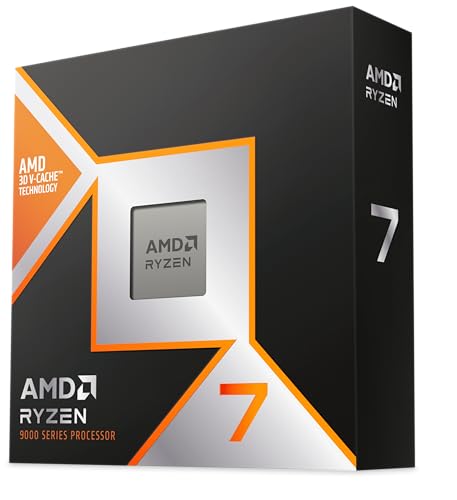
AMD Ryzen 7 9800X3D 8-Core Processor
Best for: high-clock AM5 desktop builds
- Thread Count
- 16 Threads (what this guide is about)
- Core Count
- 8-Core
- CPU Socket
- Socket AM5
- Max Boost Clock
- up to 5.2GHz
- Cache Size
- 96MB L3 cache
- Series
- Ryzen 7
The AMD Ryzen 7 9800X3D brings 8 cores and 16 threads to modern Socket AM5 systems. Built on Zen 5 architecture, it offers clock speeds up to 5.2GHz and features 96MB of L3 cache to handle demanding computing tasks efficiently. This processor fits you well if you are assembling an AM5 build and want high-speed multi-threaded performance, though you will need to provide your own dedicated cooling solution.
Pros
- 8 cores and 16 threads built on Zen 5 architecture
- 96MB L3 cache for cache-sensitive workloads
- Clock speeds reach up to 5.2GHz
- Compatible with Socket AM5 motherboards
Cons
- Cooler not included in the box
- Requires a Socket AM5 motherboard rather than AM4
Good fit if
- You need 16 threads on the Socket AM5 platform.
- You want high clock speeds up to 5.2GHz with 96MB of L3 cache.
- You already have a compatible aftermarket CPU cooler.
Skip if
- You use an existing Socket AM4 motherboard.
- You need a processor that comes bundled with a stock cooler.
Verdict: AMD Ryzen 7 9800X3D Processor delivers high-frequency 16-thread performance and 96MB of L3 cache for Socket AM5 setups. It requires your own cooling hardware to operate.

AMD Ryzen 7 5700 8-Core Desktop Processor
Best for: low-power 16-thread AM4 desktop upgrades
- Thread Count
- 16 Threads (what this guide is about)
- Core Count
- 8
- CPU Socket
- AM4
- Max Boost Clock
- 4.6 GHz
- Base Clock
- 3.7 GHz
- Cache Size
- 20MB
The AMD Ryzen 7 5700 is an eight-core, 16-thread desktop processor built for Socket AM4 motherboards. Operating at a 3.7 GHz base clock and up to 4.6 GHz boost clock, it handles multithreaded workloads within a 65W TDP. It features 20MB of cache and comes with an included Wraith Spire cooler. If you need a 16-thread AM4 processor with low power draw and unlocked cores for tuning, this model fits your setup.
Pros
- 16 threads across 8 unlocked cores
- Base clock of 3.7 GHz with up to 4.6 GHz boost
- Low 65W TDP rating
- Bundled AMD Wraith Spire cooler
Cons
- No integrated graphics included
- Total cache limited to 20MB
Good fit if
- You use a Socket AM4 motherboard.
- You need 16 threads with a 65W power target.
- You want an included cooler in the box.
Skip if
- You need integrated graphics for display output.
- You require a motherboard platform other than Socket AM4.
Verdict: AMD Ryzen 7 5700 8-Core AM4 Processor provides 16 threads and up to 4.6 GHz clock speeds within a 65W power envelope. It offers an efficient multithreaded drop-in option complete with a bundled cooler for AM4 systems.

AMD Ryzen 7 5800X3D Processor
Best for: Socket AM4 builds needing high cache capacity
- Thread Count
- 16 Threads (what this guide is about)
- Core Count
- 8 Cores
- CPU Socket
- Socket AM4
- Max Boost Clock
- 4.5 GHz
- Cache Size
- 100 MB
- Series
- Ryzen 7
This AMD desktop processor features 8 cores and 16 processing threads built for Socket AM4 motherboards. It delivers up to a 4.5 GHz max boost clock alongside 100 MB of total cache using AMD 3D V-Cache technology. It supports DDR4-3200 memory and PCIe 4.0 on compatible X570 and B550 boards. You get a dedicated multi-threaded component tailored for high-demand computing tasks on an established platform without needing to upgrade to a newer socket design.
Pros
- 100 MB cache with AMD 3D V-Cache technology
- 16 threads and 8 cores with up to 4.5 GHz boost
- PCIe 4.0 support on X570 and B550 motherboards
- Direct compatibility with Socket AM4 systems
Cons
- Cooler is not included in the package
- System memory support is capped at DDR4-3200
Good fit if
- You run a Socket AM4 motherboard such as an X570 or B550 model.
- You need 16 threads paired with 100 MB of cache.
- You already have a separate high-performance CPU cooler.
Skip if
- You need an included CPU cooler in the box.
- You require support for DDR5 system memory.
Verdict: AMD Ryzen 7 5800X3D Desktop Processor delivers 16 threads and 100 MB of cache to Socket AM4 systems. It provides up to 4.5 GHz boost speeds for builds with existing cooling solutions.
Specifications side by side
| Spec | Intel Xeon W-2245 8-Core Processor | AMD Ryzen Threadripper 1900X 8-Core Processor | AMD Ryzen 7 5800X Desktop Processor | AMD Ryzen 7 5700G 8-Core Processor | AMD Ryzen 7 5700X 8-Core Desktop Processor | AMD Ryzen 7 5800X3D 8-Core Processor | AMD Ryzen 7 8-Core AM5 Processor | AMD Ryzen 7 7800X3D 8-Core Processor | AMD Ryzen 7 5700 8-Core Processor | AMD Ryzen 7 8700G Desktop Processor | AMD Ryzen 7 8-Core Desktop Processor | AMD Ryzen 7 5800XT 8-Core Processor | AMD Ryzen 7 9800X3D 8-Core Processor | AMD Ryzen 7 5700 8-Core Desktop Processor | AMD Ryzen 7 5800X3D Processor |
|---|---|---|---|---|---|---|---|---|---|---|---|---|---|---|---|
| Core Count | 8 | 8 Cores | 8 cores | 8 cores | 8 cores | 8 Cores | 8 cores | 8 cores | 8 Cores | 8 Cores | 8 Cores | 8 Cores | 8-Core | 8 | 8 Cores |
| Thread Count | 16 | 16 Threads | 16 threads | 16 threads | 16 threads | 16 processing threads | 16 threads | 16 threads | 16 processing threads | 16 processing threads | 16 Threads | 16 Threads | 16-Thread | 16 | 16 threads |
| CPU Socket | FCLGA2066 | not specified | AM4 | Socket AM4 | Socket AM4 | Socket AM4 | Socket AM5 | not specified | Socket AM4 | Socket AM5 | Socket AM5 | Socket AM4 | Socket AM5 | AM4 | Socket AM4 |
| Max Boost Clock | 4.50 GHz | 4.0 GHz | 4.7 GHz | 4.6 GHz | 4.6 GHz | 4.5 GHz | 5.4 GHz | not specified | 4.6 GHz | 5.1 GHz | 5.5 GHz | 4.8 GHz | up to 5.2GHz | 4.6 GHz | 4.5 GHz |
| Base Clock | 3.90 GHz | not specified | not specified | not specified | not specified | not specified | 4.5GHz | 4.20 GHz | not specified | not specified | not specified | not specified | not specified | 3.7 GHz | not specified |
| Cache Size | 16.5 MB | 20MB | 36 MB | 20 MB | 36 MB | 100 MB | 80 MB | 8 MB L2 plus 96 MB L3 | not specified | not specified | 40 MB | 36 MB | 96MB L3 cache | 20MB | 100 MB |
| Base Power | 155 W | not specified | not specified | not specified | not specified | not specified | not specified | not specified | not specified | not specified | not specified | not specified | not specified | 65W | not specified |
| Integrated Graphics | not specified | not specified | not specified | Radeon Graphics | Discrete graphics card required | not specified | not specified | AMD Radeon Graphics | not specified | not specified | not specified | not specified | not specified | not specified | not specified |
| Series | not specified | Ryzen Threadripper | Ryzen 7 | not specified | Ryzen 7 | Ryzen 7 | Ryzen 7 | Ryzen 7 | Ryzen 7 | Ryzen 7 | not specified | not specified | Ryzen 7 | Ryzen 7 | Ryzen 7 |
| TDP | not specified | not specified | not specified | not specified | not specified | not specified | not specified | not specified | not specified | not specified | not specified | not specified | not specified | 65W | not specified |
| Weight | 1 pounds | 1.9 pounds | 2.8 ounces | 14.5 ounces | 4.2 ounces | 3.5 ounces | 2.8 ounces | 11.7 ounces | 1.76 ounces | 1.8 ounces | 3.2 ounces | 3.2 ounces | 1.8 ounces | 15.2 ounces | 3.5 ounces |
| Dimensions | not specified | 3.1 × 2.2 × 0.3 inches | 1.57 × 1.57 × 0.24 inches | 1.57 × 1.57 × 0.24 inches | 1.57 × 1.57 × 0.24 inches | 1.57 × 1.57 × 0.24 inches | 4.92 × 1.38 × 4.92 inches | 5.12 × 3.58 × 5.08 inches | not specified | not specified | not specified | not specified | not specified | not specified | 1.57 × 1.57 × 0.1 inches |
| Length | not specified | not specified | not specified | not specified | not specified | not specified | not specified | not specified | 1.57 inches | 1.57 inches | 1.97 inches | 1.57 inches | 1.97 inches | 5.28 inches | not specified |
| Width | not specified | not specified | not specified | not specified | not specified | not specified | not specified | not specified | 1.57 inches | 1.57 inches | 1.97 inches | 1.57 inches | 1.97 inches | 5.28 inches | not specified |
| Model | SRH02 | 116727 | AMD Ryzen 7 5800X | AMD Ryzen 7 5700G | AMD Ryzen 7 5700X | 730143313797 (or) 100-000000651 | RYZEN 7 7700X | AMD Ryzen 7 7800X3D | AMD Ryzen™ 5 5700 | AMD Ryzen™ 7 8700G | 9700X | AMD Ryzen™ 7 5800XT | AMD Ryzen 7 9800X3D | 100-100000743SBX | RYZEN 7 5800X3D |
| Size | not specified | Processor | XX-Large | not specified | not specified | XX | not specified | not specified | not specified | not specified | (Pack of 1) | not specified | not specified | not specified | XX |
| Color | not specified | not specified | Black | Model | Ceramic Gray | Ceramic Gray | AMD Ryzen 7 7700X | Classic | Gray | Gray | not specified | not specified | Information Not Available | Black | Ceramic Gray |
If you are looking for kitchen appliances instead of CPUs, compare specs for best food processors for chop.
Key Specs for Choosing 16-Thread Processors
-
Check Integrated Graphics Availability
Determine whether you need integrated visuals before buying a 16-thread chip. Processors like the AMD Ryzen 7 5700G feature built-in Radeon Graphics. This allows you to output display signals straight from motherboard video ports without installing a separate graphics card. If you choose a standard desktop chip without integrated graphics, your system will not display video until you add a dedicated graphics card. Check your setup to confirm whether you already own a discrete graphics card or need display hardware built directly into the processor package.
-
Verify Bundled Cooler Inclusion
Check the retail box contents to see if the processor includes a thermal solution. Certain models, such as the AMD Ryzen 7 5800XT, bundle a Wraith Prism cooler inside the package. Other chips ship as bare processors without any heatsink or fan. If you select a unit without a packaged cooler, you must allocate extra space and purchase a compatible aftermarket air cooler or liquid cooling loop. Review the product specifications to identify whether cooling hardware is provided or if you need to supply your own thermal hardware.
-
Evaluate L3 Cache Capacity
Examine total cache specifications if your applications process large datasets continuously. Standard 8-core desktop processors typically feature moderate cache pools, whereas specialized models like the AMD Ryzen 7 7800X3D offer 96 MB of L3 cache. Expanded cache pools reduce the frequency at which the CPU must fetch instructions from system RAM. This architectural difference accelerates cache-sensitive workloads significantly. If your daily computing tasks involve repetitive execution loops or heavy simulation data, prioritize processors that list larger overall cache pools in their hardware specifications.
-
Assess TDP and Cooling Needs
Thermal Design Power indicates the heat output a processor produces under standard operation. High-output workstation processors like the Intel Xeon W-2245 feature a 155 W TDP rating. This level of thermal output requires a substantial motherboard voltage regulator and a heavy-duty cooling system to prevent throttling. Conversely, desktop options with lower ratings around 65W generate less heat and work comfortably in compact chassis with modest thermal hardware. Compare the rated wattage against your case ventilation, power supply capacity, and cooling limits before making a selection.
-
Count Usable PCIe Lanes
Review the number of PCI Express lanes the processor provides to support add-in cards. Mainstream desktop chips generally supply enough lanes for one graphics card and one or two solid-state drives. In contrast, dedicated workstation processors such as the AMD Ryzen Threadripper 1900X deliver 64 PCIe lanes directly from the chip. If you plan to install multiple high-speed storage drives, capture cards, or secondary accelerators, check the lane count specification to ensure your motherboard slots run at full bandwidth without lane sharing or bus limitations.
-
Compare Peak Boost Frequencies
Look at the maximum boost clock speed when comparing processors with identical 16-thread layouts. While all 8-core, 16-thread chips share parallel compute capabilities, their peak burst speeds vary widely. For instance, the AMD Ryzen 7 9700X reaches boost frequencies up to 5.5 GHz for rapid single-core task execution. Lower-clocked models prioritize steady multi-threaded throughput instead. If your primary tasks rely on fast per-core responsiveness rather than sustained parallel saturation, check the published boost clock frequency and choose the highest-rated value within your platform requirements.
Frequently asked questions
Do all 16-thread processors have 8 cores?
Yes, all 16-thread processors on this list utilize an 8-core design. Each physical CPU core uses simultaneous multithreading technology to process two separate instruction threads at the same time. This hardware setup allows an 8-core chip like the AMD Ryzen 7 5700X to register as 16 logical cores inside your operating system, boosting overall task throughput.
Do 16-thread processors come with bundled CPU coolers?
Some 16-thread processors include coolers, while others require aftermarket solutions. The AMD Ryzen 7 5800XT bundles a Wraith Prism cooler, and the AMD Ryzen 7 8700G includes a Wraith Spire cooler in the box. High-performance models like the AMD Ryzen 7 9800X3D and the Intel Xeon W-2245 do not include cooling hardware, meaning you must purchase a compatible cooler separately.
What power draw should you expect from a 16-thread CPU?
Power envelopes vary depending on platform class and architectural design. Standard energy-efficient desktop models, such as the AMD Ryzen 7 5700, run within a 65W TDP envelope that keeps system power demands modest. In contrast, workstation-grade processors like the Intel Xeon W-2245 feature a 155 W TDP specification, which demands a heavier-duty power delivery setup and stronger case ventilation.
How does L3 cache capacity vary among 16-thread processors?
Cache capacity varies widely between standard processors and dedicated high-cache designs. Standard options like the AMD Ryzen 7 5800X feature 36 MB of total cache. In comparison, 3D V-Cache processors provide massive memory buffers on the chip die. The AMD Ryzen 7 7800X3D provides 96 MB of L3 cache, and the AMD Ryzen 7 5800X3D packs 100 MB of cache.
What clock speeds do modern 16-thread processors achieve?
Clock frequencies for 16-thread processors span from 3.90 GHz base speeds up to 5.5 GHz boost speeds. The Intel Xeon W-2245 operates with a fast 3.90 GHz base frequency. When looking at boost ceilings, the AMD Ryzen 7 5800XT reaches 4.8 GHz, the AMD Ryzen 7 7700X reaches 5.4 GHz, and the AMD Ryzen 7 9700X hits up to 5.5 GHz.
Can workstation 16-thread processors install into standard desktop motherboards?
No, workstation 16-thread processors require dedicated workstation motherboard sockets. The Intel Xeon W-2245 requires a motherboard equipped with an LGA 2066 socket rather than consumer platforms. Likewise, specialized hardware like the AMD Ryzen Threadripper 1900X utilizes dedicated workstation boards to support quad-channel memory and 64 PCIe lanes. Consumer 16-thread models use mainstream desktop sockets like Socket AM4 instead.
Is a 16-thread processor suitable for multitasking and background workloads?
Yes, 16 threads provide sufficient headroom for heavy multitasking and concurrent background processing. An 8-core, 16-thread architecture allows your operating system to distribute distinct threads across separate processing pipelines. Chips like the AMD Ryzen 7 5700 and AMD Ryzen 7 9700X process intensive compute jobs while simultaneously running audio software, system utilities, and web browsers without bottlenecks.