AMD Ryzen 7 8-Core Desktop or AMD Ryzen 9 5900X 12-Core? Which AMD Model to Buy
As an Amazon Associate we earn from qualifying purchases. Links on this page are affiliate links.
This guide compares the amd ryzen 7 vs ryzen 9 5900x 12 core for your desktop build. Both processors offer high performance for gaming and productivity tasks. They share the same brand heritage and unlocked capabilities for enthusiasts. The main difference lies in their architecture and core count. The Ryzen 7 7800X3D uses the newer AM5 socket and Zen 4 design. The Ryzen 9 5900X relies on the older AM4 platform with twelve cores. You must choose based on your motherboard compatibility and performance needs.
Key differences
| Aspect | AMD Ryzen 7 8-Core Desktop Processor | AMD Ryzen 9 5900X 12-Core Processor |
|---|---|---|
| Socket Type | AM5 | AM4 |
| Core Count | 8 cores | 12 cores |
| Max Boost Clock | 5.0 GHz | 4.8 GHz |
| Memory Type | DDR5 | DDR4 |
| Process Technology | 5nm | not listed |
Which one should you choose?
Choose AMD Ryzen 7 8-Core Desktop Processor if
- You want the latest AM5 platform for future upgrades.
- You prioritize higher single-core speeds for gaming.
- You need DDR5 memory support for modern systems.
Choose AMD Ryzen 9 5900X 12-Core Processor if
- You need more cores for heavy multitasking or rendering.
- You already own an AM4 motherboard and want a direct upgrade.
- You prefer a processor with twelve cores over eight.
Verdict: Choose the Ryzen 7 7800X3D if you are building a new system on the AM5 platform and want faster clock speeds. Pick the Ryzen 9 5900X if you need twelve cores for productivity workloads or are upgrading an existing AM4 setup. Your choice depends on your current motherboard and whether you value core count or modern architecture.
Socket, Cores, Cache, Power, Memory
CPU socket compatibility
You need to check your motherboard socket before buying either processor. The AMD Ryzen 7 8-Core Desktop Processor uses the AM5 socket. This is a newer platform designed for the latest Zen 4 architecture. In contrast, the AMD Ryzen 9 5900X 12-Core Processor uses the older AM4 socket. If you already have an AM4 motherboard, the Ryzen 9 5900X is the only option that fits without changing your board. The Ryzen 7 requires a new AM5 motherboard. Your existing platform dictates which chip you can install.
Core and thread count
Multitasking and heavy productivity workloads benefit from more cores. The AMD Ryzen 9 5900X 12-Core Processor provides 12 physical cores and 24 threads. This higher count allows you to run more applications simultaneously without slowing down. The AMD Ryzen 7 8-Core Desktop Processor offers 8 cores and 16 threads. While still powerful, it has fewer processing units than the Ryzen 9. If your work involves video editing, 3D rendering, or running many virtual machines, the extra cores on the Ryzen 9 give it a clear advantage in raw parallel processing power.
L3 cache size
Cache memory sits on the processor die and holds frequently used data for quick access. The AMD Ryzen 7 8-Core Desktop Processor features a massive 96MB of L3 cache. This large buffer helps reduce latency when the CPU needs data. The AMD Ryzen 9 5900X 12-Core Processor has 70MB of L3 cache. While still substantial, it is smaller than the cache found in the Ryzen 7. A larger cache can improve performance in games and applications that rely heavily on data retrieval speed, giving the Ryzen 7 an edge in specific latency-sensitive tasks.
Thermal design power
TDP indicates the maximum heat output that the cooling system must handle. The AMD Ryzen 7 8-Core Desktop Processor has a Thermal Design Power of 120W. This is a relatively high power draw for an 8-core chip. The AMD Ryzen 9 5900X 12-Core Processor does not list a specific TDP value in the provided data. However, the Ryzen 7's listed 120W suggests it may require a robust cooling solution to maintain boost clocks under load. You must ensure your cooler can handle this power requirement for the Ryzen 7.
Memory type support
The type of RAM you use affects system speed and future-proofing. The AMD Ryzen 7 8-Core Desktop Processor supports DDR5 memory. DDR5 offers higher bandwidth and efficiency compared to previous generations. The AMD Ryzen 9 5900X 12-Core Processor supports DDR4 memory, specifically noting DDR-3200 support. DDR4 is an older standard. If you want the latest memory technology for better throughput, the Ryzen 7 is the better choice. The Ryzen 9 is limited to the older DDR4 standard, which may be a bottleneck for some high-end applications.
Which AMD Ryzen Should You Buy
High-end gamers seeking top frame rates
The AMD Ryzen 7 7800X3D features a 5.0 GHz max boost clock and 96MB L3 cache. This Zen 4 design on a 5nm process delivers strong single-thread performance. The AM5 socket supports DDR5 memory for faster data access. These specs prioritize gaming speed over raw multi-core counts.
Content creators needing heavy multi-threading
The AMD Ryzen 9 5900X offers 12 cores and 24 threads. This higher core count handles parallel workloads better than the 8-core competitor. It reaches 4.8 GHz max boost and includes 70MB of cache. The unlocked multiplier allows for overclocking to push productivity tasks further.
Users building on newer AM5 platforms
This processor uses the AM5 socket, ensuring compatibility with modern motherboards. It supports DDR5 memory, which offers higher bandwidth than older standards. The 120W TDP fits current cooling solutions. Choosing this model future-proofs your build with the latest platform technology and memory standards.
The products compared

AMD Ryzen 7 8-Core Desktop Processor
Best for: high-end gaming performance
- Core Count
- 8 cores
- Thread Count
- 16 threads
- CPU Socket
- AM5
- Max Boost Clock
- 5.0 GHz
- Base Clock
- 4.2 GHz
- Cache Size
- 96MB L3
View on Amazon: AMD Ryzen 7 8-Core Desktop Processor Affiliate link
The AMD Ryzen 7 7800X3D is an 8-core, 16-thread processor built on the Zen 4 architecture. It features a 5nm process and a massive 96MB L3 cache. Base clock is 4.2 GHz with a boost up to 5.0 GHz. It uses the AM5 socket and supports DDR5 memory. This chip suits gamers who prioritize high frame rates and efficient power consumption over raw multi-core productivity.
Pros
- 96MB L3 cache for enhanced gaming performance
- 5nm process technology for efficiency
- AM5 socket with DDR5 memory support
- 120W thermal design power
Cons
- Only 8 cores compared to the 12-core alternative
- Only 16 threads compared to the 24-thread alternative
- Higher base power of 120W
Good fit if
- You want maximum gaming performance from fewer cores
- You are building a new AM5 platform
- You prioritize cache size for latency-sensitive tasks
Skip if
- You need more than 8 cores for heavy multi-threaded workloads
- You are upgrading from an older AM4 socket
- You prefer a lower power draw than 120W
Verdict: The AMD Ryzen 7 7800X3D is the best choice for gamers who value cache and clock speeds over core count. It delivers high performance for gaming while leaving productivity tasks to the 12-core model.
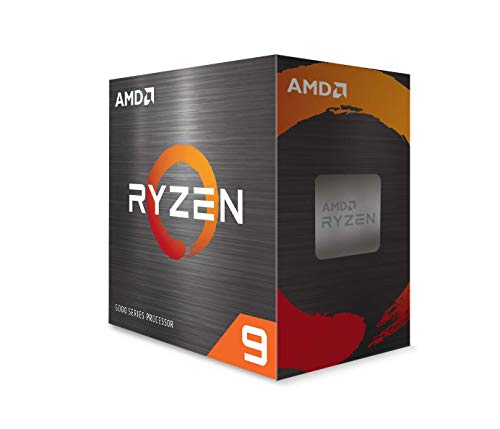
AMD Ryzen 9 5900X 12-Core Processor
Best for: Users needing 12 cores and overclocking
- Core Count
- 12 cores
- Thread Count
- 24 threads
- Max Boost Clock
- 4.8 GHz
- Cache Size
- 70 MB
- Series
- Ryzen 9
- Dimensions
- 1.57 × 1.57 × 0.24 inches
View on Amazon: AMD Ryzen 9 5900X 12-Core Processor Affiliate link
This is a 12-core, 24-thread desktop processor designed for high-performance computing. It features a 4.8 GHz max boost clock and 70 MB of cache. The chip supports DDR-3200 memory and is unlocked for overclocking. It suits users who need significant multi-threaded power for gaming or productivity tasks. You get elite performance in popular games, though you must provide your own cooling solution.
Pros
- 12 cores and 24 threads for heavy multitasking
- 4.8 GHz max boost clock for speed
- 70 MB of cache for data access
- Unlocked for overclocking potential
Cons
- Cooler not included with the processor
- Renewed condition rather than new
- Max temperature limit of 90°C
Good fit if
- You need 12 cores for demanding workloads
- You plan to overclock for extra performance
- You already own a high-performance CPU cooler
Skip if
- You want a brand-new sealed unit
- You prefer a processor with an included cooler
- You only need 8 cores for your tasks
Verdict: AMD Ryzen 9 5900X 12-Core is a powerful option for users who prioritize core count and overclocking headroom. It fits those who have their own cooling solutions and want maximum threads for gaming or creation.
Specifications side by side
| Spec | AMD Ryzen 7 8-Core Desktop Processor | AMD Ryzen 9 5900X 12-Core Processor |
|---|---|---|
| Core Count | 8 cores | 12 cores |
| Thread Count | 16 threads | 24 threads |
| CPU Socket | AM5 | not stated |
| Max Boost Clock | 5.0 GHz | 4.8 GHz |
| Base Clock | 4.2 GHz | not stated |
| Cache Size | 96MB L3 | 70 MB |
| Base Power | 120W | not stated |
| Integrated Graphics | Integrated | not stated |
| Series | Ryzen 7 | Ryzen 9 |
| Dimensions | 5.12 × 3.58 × 5.08 inches | 1.57 × 1.57 × 0.24 inches |
| Weight | 2.8 ounces | 2.8 ounces |
| Model | AMD Ryzen 7 7800X3D | AMD Ryzen 9 5900X-cr |
| Size | not stated | Medium |
Frequently asked questions
Which AMD processor is better for gaming?
The AMD Ryzen 7 7800X3D is the best choice for gamers who value cache and clock speeds over core count. It delivers high performance for gaming while leaving productivity tasks to the 12-core model. Its Zen 4 design on a 5nm process delivers strong single-thread performance.
Does the Ryzen 9 5900X support overclocking?
Yes, the AMD Ryzen 9 5900X 12-Core is a powerful option for users who prioritize core count and overclocking headroom. It fits those who have their own cooling solutions and want maximum threads for gaming or creation. This makes it suitable for enthusiasts who enjoy tuning their systems.
How many cores does the Ryzen 9 5900X have?
The AMD Ryzen 9 5900X 12-Core features 12 cores and 24 threads. This high core count provides maximum threads for gaming or creation tasks. It is designed for users who need significant parallel processing power for demanding workloads compared to the 8-core alternative.
What socket does the Ryzen 7 8-Core use?
The AMD Ryzen 7 7800X3D uses the AM5 socket. This is a newer platform designed for the latest Zen 4 architecture. You need to check your motherboard socket before buying either processor to ensure compatibility with your existing desktop build components and future upgrade paths.
Is the Ryzen 7 better for high-end gaming?
The AMD Ryzen 7 7800X3D is the top pick for high-end gaming performance. It features a 5.0 GHz max boost clock and 96MB L3 cache. This combination delivers strong single-thread performance, which is critical for achieving high frame rates in modern games compared to multi-core focused chips.
Which CPU is better for productivity tasks?
The AMD Ryzen 9 5900X 12-Core is better for productivity due to its 12 cores and 24 threads. It offers more parallel processing power for content creation and heavy multitasking. The 8-core model leaves these tasks to the 12-core version, making the latter the superior choice for workloads.
Does the Ryzen 7 7800X3D have large cache?
Yes, the AMD Ryzen 7 7800X3D includes 96MB of L3 cache. This large cache size is a key feature for gaming performance. It helps reduce latency and improves frame pacing in games, making it a distinct advantage over processors with smaller cache sizes for gaming-focused builds.
What is the main difference between these two CPUs?
The main difference lies in their architecture and core count. The Ryzen 7 7800X3D uses the newer AM5 socket and Zen 4 architecture, focusing on cache and clock speeds. The Ryzen 9 5900X offers 12 cores and 24 threads, prioritizing multi-threaded performance and overclocking headroom.