Looking Beyond the Supermicro Socket P LGA-3647 Server Motherboard? 6 Alternatives Worth a Look
As an Amazon Associate we earn from qualifying purchases. Links on this page are affiliate links.
The supermicro x11dpi nt server motherboard alternatives list helps you find options if the original does not fit your exact needs. This Supermicro board uses a Socket P LGA-3647 and measures 13 by 12 inches. It weighs 4.41 pounds and is designed for heavy-duty enterprise server workloads. You might want a different size or socket if your case is smaller or if you need newer CPU support. Some buyers prefer AMD EPYC processors or modern Intel Xeon chips that offer more memory channels. Others need compact Micro-ATX boards to save rack space. The alternatives were chosen because their specs overlap with the original in key areas like server use cases and connectivity. Each option provides a different path for building a stable server environment. You can compare form factors, CPU sockets, and networking speeds to find the right fit. This guide focuses on practical specifications rather than marketing claims. You will see how each board handles memory, expansion slots, and processor compatibility. The goal is to help you make an informed decision based on hard data. We avoid hype and focus on what each motherboard actually offers for your specific build requirements.
Our top pick: Supermicro Socket P LGA-3647 Server Motherboard.
How these boards differ from the original
ASRock Rack AMD EPYC Micro-ATX Server Motherboard
This ASRock Rack board uses a Micro-ATX form factor, making it significantly smaller than the 13 by 12 inch Supermicro option. It targets AMD EPYC 9004 processors instead of Intel’s LGA-3647 socket. The primary advantage is space efficiency for compact server builds. It also includes dedicated 10G networking, which the original does not specify. You should choose this if you need a smaller footprint or prefer the AMD EPYC ecosystem. It sacrifices the massive memory capacity of the LGA-3647 platform for a denser design. This board is ideal for users prioritizing network speed and physical size over raw core count scalability.
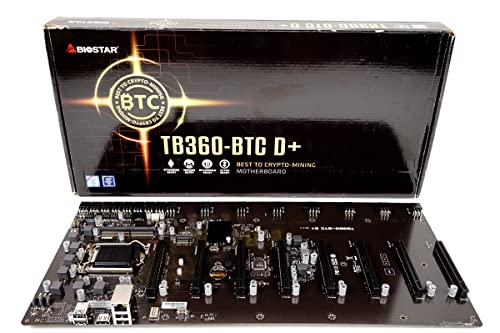
Biostar LGA 1151 8 GPU Server Board
The Biostar board uses an LGA 1151 socket and DDR4 memory, differing from the original’s LGA-3647 and likely higher-end memory support. It measures 20 by 10 inches, which is longer but narrower than the Supermicro board. Its main feature is eight GPU slots, designed specifically for mining rigs. This board lacks the enterprise stability and networking of the Supermicro X11DPI-NT. It is a specialized tool for cryptocurrency mining rather than general server workloads. You should pick this only if you need maximum GPU expansion for mining. It gives up modern server features for raw parallel processing capacity.
Supermicro LGA-4189 ATX Server Motherboard
This Supermicro model uses an ATX form factor and supports 3rd Gen Intel Xeon Scalable processors via the LGA-4189 socket. It features dual 10GbE ports, offering faster networking than the original board. The board is designed for professional server builds requiring high-speed connectivity. It sacrifices some physical size for enhanced network capabilities. You should choose this if you need robust 10GbE connectivity for your data center. It provides a modern alternative to the older LGA-3647 platform. The focus is on network speed and memory support rather than the specific legacy compatibility of the original.
MACHINIST Micro-ATX LGA 2011-3 Server Board
The MACHINIST board uses a Micro-ATX form factor, measuring 9.25 by 7.28 inches, which is much smaller than the original. It supports LGA 2011-3 sockets for Xeon E5 V3/V4 processors. This board includes ECC memory support and dual M.2 storage slots. It is designed for compact server builds in tight cases. You should pick this if you need a small footprint with reliable ECC memory. It gives up the extensive PCIe expansion of the original. This board prioritizes storage density and physical size over the high core counts of the LGA-3647 platform.
ASRock ATX Intel Xeon Server Motherboard
This ASRock Rack board uses an ATX form factor and supports 3rd Gen Intel Xeon processors. It features 10GbE networking for high-speed data transfer. The board is designed for single-socket enterprise servers. It offers ample memory slots and scalability. You should choose this if you need a modern Intel platform with strong networking. It differs from the original by using a newer socket generation. The board prioritizes single-socket efficiency and network speed. It is a solid choice for users requiring high-speed connectivity without the complexity of dual-socket setups.
ASRock Rack Micro-ATX AMD Ryzen 7000 Server Motherboard
This ASRock Rack board uses a Micro-ATX form factor, measuring 9.6 by 9.6 inches. It supports AMD Ryzen 7000 processors and PCIe 5.0. It includes ECC memory support and 10 GbE networking. The board is designed for compact servers needing modern connectivity. You should pick this if you want the latest PCIe standard in a small form factor. It differs from the original by using a consumer-derived socket with server features. The board sacrifices the massive memory capacity of the LGA-3647 for modern I/O speeds. It is ideal for users needing compact, high-speed server builds.
Quick picks
Our 7 picks

Supermicro Socket P LGA-3647 Server Motherboard
Best for: LGA-3647 server and workstation builds
- CPU Socket
- Socket P LGA-3647
- Use Case
- Server
- Dimensions
- 12 × 13 × 1 inches
- Weight
- 4.41 pounds
View on Amazon: Supermicro Socket P LGA-3647 Server Motherboard Affiliate link
This Supermicro server motherboard uses the Intel LGA-3647 socket, designed for high-end workstation and data center tasks. It measures 12 by 13 inches and weighs 4.41 pounds. The black PCB supports enterprise-grade workloads. You should choose this board if you need a dedicated platform for server applications requiring the specific LGA-3647 CPU interface.
Pros
- Intel Socket P LGA-3647 CPU support
- 12 by 13 inch ATX form factor
- 4.41 pound build weight
- Black color finish
Cons
- Limited to server use cases
- No consumer gaming features listed
- Heavy for standard desktop builds
Good fit if
- You need an LGA-3647 server platform
- You require a dedicated enterprise motherboard
- You are building a data center node
Skip if
- You want a consumer gaming board
- You need LGA-1700 or AM4 support
- You prefer a lighter desktop PC
Verdict: Supermicro X11DPI-NT LGA-3647 Server Board is a specialized tool for LGA-3647 server builds. It suits professionals who need a stable, heavy-duty platform for enterprise workloads rather than casual desktop use.

ASRock Rack AMD EPYC Micro-ATX Server Motherboard
Best for: compact AMD EPYC 9004 server builds
- CPU Socket
- Socket SP5 (LGA 6096)
- Form Factor
- Deep Micro-ATX
- Ethernet Speed
- 10G
- Use Case
- Server
View on Amazon: ASRock Rack AMD EPYC Micro-ATX Server Motherboard Affiliate link
This ASRock Rack board uses a single SP5 LGA 6096 socket for AMD EPYC 9004 processors. It uses a deep micro-ATX form factor, which saves space in your rack. You get dual 10G Ethernet ports for fast network connections. It is built for server tasks. This setup works well if you need a compact server with strong networking speeds.
Pros
- Single SP5 LGA 6096 socket for AMD EPYC 9004 CPUs
- Deep Micro-ATX form factor for space efficiency
- Dual 10G Ethernet ports for high-speed networking
Cons
- Deep Micro-ATX size may not fit standard ATX cases
- Limited to a single CPU socket
- No consumer-grade Wi-Fi or Bluetooth connectivity listed
Good fit if
- You need a compact server chassis
- You require dual 10G Ethernet for your network
- You are building an AMD EPYC 9004 system
Skip if
- You need an ATX-sized motherboard
- You want a consumer desktop experience
- You require multiple CPU sockets
Verdict: ASRock Rack Deep Micro-ATX Server Board offers a compact solution for AMD EPYC 9004 builds. It fits users who prioritize space savings and dedicated 10G networking in a server environment.
Biostar LGA 1151 8 GPU Server Board
Best for: 8-GPU mining rigs with DDR4
- CPU Socket
- LGA1151
- Chipset
- Intel 300 Series
- Memory Type
- DDR4
- Use Case
- Server
- Dimensions
- 20 × 10 × 2 inches
View on Amazon: Biostar LGA 1151 8 GPU Server Board Affiliate link
This Biostar motherboard targets server and mining workloads with an Intel 300 Series chipset and LGA1151 socket. It supports DDR4 memory and is designed to handle up to eight GPUs, making it a specialized tool for high-density compute tasks. The board measures 20 by 10 inches. It fits users who need dedicated hardware for cryptocurrency mining or similar GPU-intensive server applications rather than general desktop use.
Pros
- LGA1151 socket for Intel 8th and 9th Gen CPUs
- Supports up to eight GPUs for mining
- Intel 300 Series chipset compatibility
- DDR4 memory support
Cons
- Only supports DDR4 memory
- Uses older LGA1151 socket
- Large 20 by 10 inch form factor
Good fit if
- You need a board for an 8-GPU mining rig
- You are building a specialized server with DDR4
- You use Intel 8th or 9th Gen processors
Skip if
- You need modern DDR5 support
- You want a compact desktop build
- You require the latest Intel sockets
Verdict: Biostar TB360-BTC D+ LGA1151 Mining Board is a dedicated mining solution for users who need eight GPU slots and DDR4 support. It suits specialized server builds but lacks modern features for general computing.

Supermicro LGA-4189 ATX Server Motherboard
Best for: Dual 10GbE server networking
- CPU Socket
- LGA-4189
- Chipset
- Intel C621A
- Form Factor
- ATX
- Memory Type
- DDR4
- Ethernet Speed
- 10Gbase-T
- Use Case
- Server
View on Amazon: Supermicro LGA-4189 ATX Server Motherboard Affiliate link
The Supermicro X12SPI-TF is an ATX server motherboard built for 3rd Gen Intel Xeon Scalable processors in the LGA-4189 socket. It supports up to 2TB of DDR4-3200MHz memory and features dual 10Gbase-T Ethernet ports. This board suits users needing high-speed networking and substantial RAM capacity for virtualization or database workloads.
Pros
- Dual 10Gbase-T Ethernet ports
- Supports up to 2TB DDR4-3200MHz memory
- Compatible with 3rd Gen Intel Xeon Scalable CPUs
- ATX form factor for standard cases
Cons
- LGA-4189 socket requires specific server CPUs
- No consumer Wi-Fi or Bluetooth support
- Limited to single processor configuration
Good fit if
- You need dual 10GbE networking
- You use 3rd Gen Intel Xeon processors
- You require large memory capacity
Skip if
- You use consumer desktop CPUs
- You need built-in Wi-Fi
- You prefer micro-ATX form factors
Verdict: Supermicro X12SPI-TF ATX Server provides robust 10GbE connectivity and massive memory support for professional server builds. It fits users running 3rd Gen Intel Xeon Scalable processors who prioritize network speed over consumer features.

MACHINIST Micro-ATX LGA 2011-3 Server Board
Best for: Compact Xeon E5 V3/V4 server builds
- CPU Socket
- LGA 2011-3
- Chipset
- Intel X99
- Form Factor
- Micro ATX
- Memory Type
- DDR4
- PCIe Version
- PCIe 3.0
- M.2 Slots
- 2
View on Amazon: MACHINIST Micro-ATX LGA 2011-3 Server Board Affiliate link
This Micro ATX motherboard uses the Intel X99 chipset and LGA 2011-3 socket to support Xeon E5 V3/V4 processors. It features four DDR4 memory slots for up to 128GB of RAM and includes two M.2 slots for NVMe and SATA drives. The board offers three PCIe expansion slots and multiple USB and SATA ports. It suits users building compact server systems or workstation rigs that require ECC memory support and fast storage options within a smaller form factor.
Pros
- Supports Xeon E5 V3/V4 and Core i7 processors via LGA 2011-3 socket
- Includes two M.2 slots supporting NVMe and SATA SSDs
- Provides four DDR4 slots with support for ECC server memory up to 128GB
- Offers three PCIe expansion slots including one PCIe 3.0 x16 slot
Cons
- Only includes one NVMe M.2 slot, limiting high-speed storage expansion
- Micro ATX form factor restricts the number of available expansion slots
- Does not support LGA 2011 sockets or non-ECC desktop memory mixed with server memory
Good fit if
- You need a compact Micro ATX board for Xeon E5 V3/V4 processors
- You require ECC memory support for server or workstation stability
- You want dual M.2 storage options in a smaller chassis
Skip if
- You are building with modern LGA 1700 or AM4 sockets
- You need full ATX size for maximum expansion card support
- You plan to mix desktop and server memory simultaneously
Verdict: The MACHINIST E5 RS9 LGA 2011-V3 Micro ATX is a compact server board for users needing Xeon E5 V3/V4 support and ECC memory in a small footprint. It fits well in tight cases where dual M.2 storage is prioritized over extensive PCIe expansion.

ASRock ATX Intel Xeon Server Motherboard
Best for: single-socket servers needing 3rd Gen Xeon CPUs
- CPU Socket
- Socket P+ (LGA 4189)
- Chipset
- Intel C621A
- Form Factor
- ATX
- Memory Type
- DDR4
- Ethernet Speed
- Dual 1GbE+10GbE
- Use Case
- Server
View on Amazon: ASRock ATX Intel Xeon Server Motherboard Affiliate link
This AsRock Rack motherboard supports 3rd Gen Intel Xeon Scalable processors in a single LGA 4189 socket. It uses the Intel C621A chipset and includes eight DDR4 DIMM slots for RDIMM or LRDIMM modules. Network connectivity combines dual 1GbE ports with a single 10GbE interface. The ATX form factor fits standard server cases. You need this board if you require scalable processing power with dedicated high-speed networking for enterprise workloads.
Pros
- Supports 3rd Gen Intel Xeon Scalable CPUs
- Eight DDR4 DIMM slots for flexible memory configurations
- Integrated dual 10GbE networking capability
- Uses Intel C621A chipset for stability
Cons
- Only includes one 10GbE port while competitors offer dual
- ATX size is larger than micro-ATX alternatives
- Supports only single CPU configuration
Good fit if
- You need 3rd Gen Intel Xeon Scalable performance
- You require eight memory slots for large RAM capacities
- You want integrated 10GbE networking
Skip if
- You need dual 10GbE ports on the motherboard
- You are building a multi-socket server system
- You prefer compact micro-ATX form factors
Verdict: AsRock Rack SPC621D8-2L2T ATX Server Board suits users who prioritize 3rd Gen Xeon scalability and ample memory slots over dual 10GbE ports. It is a solid choice for single-socket enterprise servers requiring high-speed networking.

ASRock Rack Micro-ATX AMD Ryzen 7000 Server Motherboard
Best for: Compact servers needing PCIe 5.0 and ECC
- CPU Socket
- LGA 1718
- Chipset
- B650E
- Form Factor
- Micro-ATX
- Memory Type
- DDR5
- PCIe Version
- PCIe 5.0
- M.2 Slots
- 1
View on Amazon: ASRock Rack Micro-ATX AMD Ryzen 7000 Server Motherboard Affiliate link
This Micro-ATX server motherboard supports AMD Ryzen 7000 series processors via the LGA 1718 socket. It features a B650E chipset with four DDR5 ECC/Non-ECC UDIMM slots. You get one PCIe 5.0 x16 slot and one PCIe 5.0 x4 slot for high-speed expansion. The board includes a single M.2 slot supporting PCIe 5.0 x4. It also provides 10 GbE networking. This setup suits compact server builds requiring modern AMD Ryzen performance.
Pros
- Supports AMD Ryzen 7000 series processors
- Includes PCIe 5.0 x16 and x4 slots
- Features DDR5 ECC/Non-ECC memory support
- Provides 10 GbE networking capability
Cons
- Micro-ATX form factor limits expansion slots
- Only one M.2 slot available
- Single socket configuration restricts multi-CPU setups
Good fit if
- You need compact server hardware with PCIe 5.0
- You require ECC memory support for stability
- You plan to use AMD Ryzen 7000 CPUs
Skip if
- You need dual-socket CPU configurations
- You require multiple M.2 storage slots
- You prefer ATX form factors for more expansion
Verdict: ASRock Rack B650D4U Server offers PCIe 5.0 and Ryzen 7000 support in a small footprint. It fits users needing compact servers with ECC memory and 10 GbE networking.
Specifications side by side
| Spec | Supermicro Socket P LGA-3647 Server Motherboard | ASRock Rack AMD EPYC Micro-ATX Server Motherboard | Biostar LGA 1151 8 GPU Server Board | Supermicro LGA-4189 ATX Server Motherboard | MACHINIST Micro-ATX LGA 2011-3 Server Board | ASRock ATX Intel Xeon Server Motherboard | ASRock Rack Micro-ATX AMD Ryzen 7000 Server Motherboard |
|---|---|---|---|---|---|---|---|
| CPU Socket | Socket P LGA-3647 | Socket SP5 (LGA 6096) | LGA1151 | LGA-4189 | LGA 2011-3 | Socket P+ (LGA 4189) | LGA 1718 |
| Chipset | not stated | not stated | Intel 300 Series | Intel C621A | Intel X99 | Intel C621A | B650E |
| Form Factor | not stated | Deep Micro-ATX | not stated | ATX | Micro ATX | ATX | Micro-ATX |
| Memory Type | not stated | not stated | DDR4 | DDR4 | DDR4 | DDR4 | DDR5 |
| PCIe Version | not stated | not stated | not stated | not stated | PCIe 3.0 | not stated | PCIe 5.0 |
| M.2 Slots | not stated | not stated | not stated | not stated | 2 | not stated | 1 |
| Ethernet Speed | not stated | 10G | not stated | 10Gbase-T | Gigabit | Dual 1GbE+10GbE | 10 GbE |
| Use Case | Server | Server | Server | Server | Server | Server | Server |
| Series | not stated | not stated | not stated | not stated | Core i7 | not stated | not stated |
| Dimensions | 12 × 13 × 1 inches | not stated | 20 × 10 × 2 inches | 6.55 × 0.3 × 0.3 inches | 9.25 × 7.28 × 1.57 inches | 14 × 12 × 3 inches | 9.6 × 9.6 × 1 inches |
| Weight | 4.41 pounds | not stated | not stated | not stated | not stated | not stated | not stated |
| Size | 1 | not stated | not stated | not stated | 23.5*18.5 cm | not stated | not stated |
| Color | Black | not stated | not stated | not stated | x99-RS9 Red+M-ATX | White | not stated |
| Model | MBD-X11DPI-NT-O | GENOAD8UD-2T/X550 | TB360-BTC D+ | MBD-X12SPI-TF-O | MACHINIST X99 | SPC621D8-2L2T | B650D4U-2L2T/BCM |
You can pair this board layout with supermicro 4u active CPU heatsink alternatives to meet specific chassis thermal limits.
Frequently asked questions
Can I use these alternatives for home lab builds?
Yes, several options work for home labs. The ASRock Rack B650D4U supports Ryzen 7000 CPUs with PCIe 5.0, offering modern performance in a compact Micro-ATX frame. The Biostar TB360-BTC D+ provides eight GPU slots for specialized tasks. These boards prioritize server stability over consumer features, making them suitable for dedicated home server environments.
Which board offers the best network speed?
The Supermicro X12SPI-TF and ASRock Rack SPC621D8-2L2T both feature 10GbE connectivity. The Supermicro model supports 3rd Gen Intel Xeon Scalable processors, while the ASRock Rack option also targets 3rd Gen Xeon CPUs. Both boards prioritize high-speed networking for enterprise workloads, ensuring fast data transfer for server applications.
Are there compact options for small server cases?
Yes, several Micro-ATX boards fit smaller cases. The ASRock Rack Deep Micro-ATX board targets AMD EPYC 9004 builds. The MACHINIST E5 RS9 supports Xeon E5 V3/V4 processors in a small footprint. The ASRock Rack B650D4U also offers a compact design with PCIe 5.0 support, ideal for space-constrained server setups.
Do these boards support ECC memory?
Yes, server boards typically support ECC memory. The MACHINIST E5 RS9 explicitly supports ECC memory for Xeon E5 processors. The ASRock Rack B650D4U also lists ECC memory support alongside Ryzen 7000 compatibility. This feature ensures data integrity for critical server operations and professional workloads.
Which alternative is best for AMD processors?
The ASRock Rack Deep Micro-ATX board is designed for AMD EPYC 9004 processors. It provides a compact solution with dedicated 10G networking. The ASRock Rack B650D4U supports Ryzen 7000 CPUs with PCIe 5.0. These options allow you to build server systems using AMD architecture instead of Intel sockets.
Is the Biostar board suitable for general computing?
No, the Biostar TB360-BTC D+ is specialized for mining. It features eight GPU slots and DDR4 support but lacks modern features for general computing. It is best suited for dedicated mining rigs or specific server builds rather than everyday desktop use or standard enterprise server tasks.
What is the largest form factor available?
The Supermicro X11DPI-NT measures 13 by 12 inches, making it one of the larger options. The ASRock Rack SPC621D8-2L2T is an ATX board measuring 14 by 12 inches. These larger form factors provide extensive expansion capabilities for professional server builds requiring multiple components and robust connectivity.