15 Best Processors Under $500, Compared
As an Amazon Associate we earn from qualifying purchases. Links on this page are affiliate links.
Finding the best processors under $500 requires balancing core counts, clock speeds, and platform compatibility for your specific setup. This guide compares 15 different models based strictly on the specifications published on their listings. The HP Intel Xeon Gold 24-Core Processor leads the list by offering 24 cores and 75 MB of cache for demanding multithreaded computing.
Whether you need high boost clock speeds for gaming or expansive thread counts for workstation tasks, these spec breakdowns help you decide which socket, thermal profile, and processor architecture best fit your build.
Quick picks
The best fit for you
- You need maximum cores for heavy enterprise multithreaded workloads HP Intel Xeon Gold 24-Core Processor It provides 24 cores and 75 MB of cache designed for demanding multithreaded applications.
- You need massive PCIe expansion for workstation add-in cards AMD Ryzen Threadripper PRO 16-Core Processor It offers 128 PCIe 4.0 lanes alongside 16 cores and 32 threads for high-bandwidth workstations.
- You want a Socket AM5 chip with large cache AMD Ryzen 7 9800X3D 8-Core Processor It features a 96MB L3 cache and boost clocks reaching up to 5.2GHz on Socket AM5.
- You want an LGA 1700 processor bundled with motherboard Intel Core i5-14600K ATX Motherboard Bundle It includes an ATX motherboard with PCIe 5.0 support paired with a 14-core processor.
Our 15 picks

HP Intel Xeon Gold 24-Core Processor
Best for: heavily multithreaded enterprise and workstation computing
- Core Count
- 24 cores
- Base Clock
- 3 GHz
- Cache Size
- 75 MB
- Base Power
- 205 W
- Series
- Xeon Gold
- Dimensions
- 2.2 × 3 × 7.9 inches
This HP Intel Xeon Gold processor provides you with 24 cores and a 3 GHz base clock. It features a 75 MB cache size to manage large data sets directly on chip. Operating at a 205 W base power rating, it targets heavy multithreaded computing environments. It suits you if you require massive hardware cache and high physical core density.
Pros
- 24 physical processing cores
- 75 MB cache size
- 3 GHz base clock speed
Cons
- High 205 W base power consumption
- Heavier package weight at 4.41 pounds
Good fit if
- You need 24 physical cores for parallel multi-threaded workloads.
- You require 75 MB of on-chip cache for data-intensive processing.
Skip if
- You need a low-power build below the 205 W base power rating.
- You require base clock speeds higher than 3 GHz.
Verdict: HP Intel Xeon Gold 24-Core Processor delivers 24 cores and 75 MB of cache for demanding multithreaded applications. Its 205 W base power profile requires robust power and cooling hardware.

Intel Xeon W-2265 12-Core Processor
Best for: LGA 2066 workstation and server builds
- Core Count
- 12-Core
- Thread Count
- 24-Thread
- CPU Socket
- LGA 2066
- Base Clock
- 3.5GHz
- Cache Size
- 19.25MB
- Use Case
- Server
The Intel Xeon W-2265 is a renewed workstation and server processor designed for LGA 2066 motherboards. It provides you with 12 cores and 24 threads running at a 3.5GHz base clock, backed by 19.25MB of cache. This CPU suits you if you need multi-threaded workstation capacity for server builds or dedicated computing tasks without changing your existing socket.
Pros
- 12 cores and 24 threads for multi-threaded workloads
- 3.5GHz base clock speed
- 19.25MB cache
- LGA 2066 socket compatibility
Cons
- Renewed condition rather than factory new
- Restricted to LGA 2066 socket motherboards
Good fit if
- You need a 12-core, 24-thread CPU for an LGA 2066 system.
- You run server or workstation tasks utilizing 19.25MB of cache.
- You are satisfied deploying a renewed processor.
Skip if
- You use a motherboard with a socket other than LGA 2066.
- You require a brand-new factory-sealed processor.
Verdict: Intel Xeon W-2265 12-Core Processor delivers 24 threads and a 3.5GHz base clock for compatible LGA 2066 platforms. It serves as a focused workstation upgrade if you require multi-core compute capability on this specific socket.

Intel Core i9-9900K 8-Core Processor
Best for: Intel 300 series LGA1151 desktop builds
- Core Count
- 8 Cores
- Thread Count
- 16 Threads
- CPU Socket
- LGA1151
- Max Boost Clock
- 5.00 GHz
- Base Clock
- 3.60 GHz
- Cache Size
- 16 MB
This unlocked desktop processor features 8 cores and 16 threads with a 3.60 GHz base clock and up to 5.00 GHz turbo boost. It includes 16 MB of cache, integrated Intel UHD Graphics 630, and a 95W base power rating. If you run a compatible Intel 300 series motherboard and need dependable multi-thread speeds for daily work, this processor fits your setup.
Pros
- 8 cores and 16 threads
- Boost clock up to 5.00 GHz with 3.60 GHz base clock
- Integrated Intel UHD Graphics 630
- Supports Intel Optane Memory
Cons
- Compatible only with Intel 300 series chipset motherboards
- Limited to LGA1151 socket platforms
Good fit if
- You have an Intel 300 series chipset motherboard with an LGA1151 socket.
- You want built-in Intel UHD Graphics 630 without needing a discrete graphics card.
- You need up to 5.00 GHz turbo clock speeds across 16 threads.
Skip if
- You use a motherboard outside of the Intel 300 series platform.
- You require more than 8 cores and 16 threads for heavy workloads.
Verdict: Intel Core i9-9900K 8-Core Processor delivers up to 5.00 GHz speeds across 8 cores and 16 threads for LGA1151 motherboards. It provides integrated graphics and unlocked performance for users on 300-series chipsets.
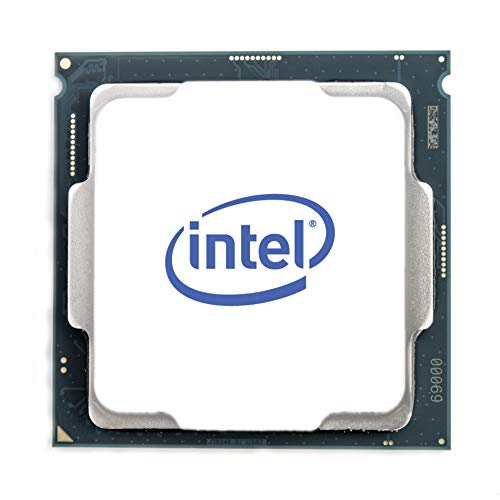
Intel Core i9 10-Core Desktop Processor
Best for: LGA 1200 systems with dedicated graphics
- Core Count
- 10 Cores
- Thread Count
- 20 Threads
- CPU Socket
- LGA 1200
- Max Boost Clock
- 5.3 GHz
- Base Power
- 125W
- Integrated Graphics
- Without Processor Graphics
This desktop processor fits LGA 1200 socket systems on Intel 400 series motherboards. You get 10 cores, 20 threads, and clock speeds up to 5.3 GHz unlocked for tuning. It runs at a 125W base power and supports Intel Turbo Boost Max Technology 3.0. You need a discrete graphics card because this unit lacks integrated graphics. It suits you if you want ten cores on a compatible LGA 1200 board.
Pros
- 10 cores and 20 threads
- Up to 5.3 GHz max boost clock with unlocked multiplier
- Intel Turbo Boost Max Technology 3.0 and Optane Memory support
- LGA 1200 socket compatibility
Cons
- No integrated processor graphics
- 125W base power requires capable cooling
- Restricted to Intel 400 series chipset motherboards
Good fit if
- You have a dedicated graphics card for your display output.
- You run an Intel 400 series chipset motherboard with socket LGA 1200.
- You want an unlocked 10-core processor reaching up to 5.3 GHz.
Skip if
- You need integrated graphics to operate without a separate video card.
- You use a motherboard that does not feature an LGA 1200 socket.
Verdict: Intel Core i9 10-Core Desktop Processor delivers 10 cores and clock speeds up to 5.3 GHz for LGA 1200 motherboards. It provides high clock rates but requires a discrete GPU and a thermal solution for 125W base power.

AMD Ryzen Threadripper PRO 16-Core Processor
Best for: workstation builds needing extensive PCIe expansion
- Core Count
- 16 Cores
- Thread Count
- 32 Threads
- Max Boost Clock
- 4.3 GHz
- Cache Size
- 72MB
- Base Power
- 280W
- Dimensions
- 3.07 × 2.2 × 0.3 inches
View on Amazon: AMD Ryzen Threadripper PRO 16-Core Processor
The AMD Ryzen Threadripper PRO 16-Core Processor delivers workstation-grade capabilities for professional workflows. You get 16 cores and 32 threads with a 4.3 GHz max boost clock and 72MB of cache. It supports eight-channel DDR4 memory alongside 128 total PCIe 4.0 lanes for high-bandwidth setups. This chip suits you if you build a dedicated workstation requiring massive I/O capacity and heavy multithreaded compute, provided you supply a dedicated cooling solution for its 280W base power.
Pros
- 16 cores and 32 threads for multithreaded workloads
- 128 PCIe 4.0 lanes and eight-channel DDR4 support
- 72MB cache with up to 4.3 GHz max boost frequency
- Built-in data protection and manageability features
Cons
- Cooler not included in the package
- High 280W base power consumption
Good fit if
- You need 128 PCIe 4.0 lanes for high-bandwidth add-in cards.
- You run workstation tasks that utilize 16 cores and 32 threads.
- You require eight-channel DDR4 memory architecture.
Skip if
- You want an included cooling fan out of the box.
- You need a low-power build below 280W TDP.
Verdict: AMD Ryzen Threadripper PRO 16-Core Processor provides expansive workstation connectivity with 128 PCIe 4.0 lanes and 32 threads. It gives you high bandwidth and multithreaded capability for demanding professional systems.

Intel Core i9 24-Core Unlocked Processor
Best for: high-end setups using dedicated graphics cards
- Core Count
- 24 cores
- Thread Count
- 32 threads
- Max Boost Clock
- 6.0 GHz
- Integrated Graphics
- Discrete graphics required
- Use Case
- Gaming
- Series
- Core i9
This unlocked desktop processor features 24 cores, split across 8 performance cores and 16 efficient cores, alongside 32 threads. It delivers a maximum boost clock speed of up to 6.0 GHz and supports both DDR4 and DDR5 memory on Intel 600- and 700-series motherboards. Because it lacks integrated graphics, you need a dedicated graphics card. It suits you if you build a high-performance system for multitasking and gaming.
Pros
- 24 cores and 32 threads for high multitasking capacity
- Max boost clock speed reaching up to 6.0 GHz
- Supports both DDR4 and DDR5 memory configurations
- Compatible with Intel 600-series and 700-series chipsets
- Unlocked design allows performance tuning
Cons
- Requires a discrete graphics card for video output
- May require a BIOS update on Intel 600-series motherboards
Good fit if
- You already have or plan to install a dedicated graphics card.
- You want up to a 6.0 GHz boost clock for gaming responsiveness.
- You plan to build on an Intel 600- or 700-series motherboard with DDR4 or DDR5 RAM.
Skip if
- You need built-in integrated graphics to display video without a dedicated card.
- You want to avoid potential BIOS updates when installing on a 600-series board.
Verdict: Intel Core i9 24-Core Desktop Processor delivers up to 6.0 GHz boost speeds and flexible DDR4 or DDR5 support for your build. It offers high multithreaded capacity whenever you pair it with a separate dedicated graphics card.
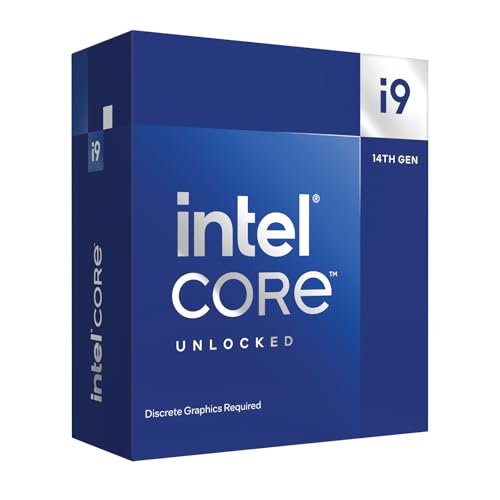
Intel Core i9 24-Core Desktop Processor
Best for: High-clock desktop builds with discrete graphics
- Core Count
- 24 cores
- Max Boost Clock
- 6.0 GHz
- Base Power
- 125 W
- Integrated Graphics
- Separate graphics card required
- Series
- Core i9
- Weight
- 2.82 ounces
The Intel Core i9-14900KF is a 14th-generation unlocked desktop processor featuring 24 cores, split across 8 performance cores and 16 efficient cores. It delivers boost clock speeds up to 6.0 GHz and operates at a 125 W base power. You get support for both DDR4 and DDR5 memory alongside PCIe 5.0 and 4.0 lanes. This CPU suits you if you need high clock speeds for demanding tasks and already own a dedicated graphics card.
Pros
- 24 total cores with 8 P-cores and 16 E-cores
- Up to 6.0 GHz max boost clock speed
- Supports both DDR5 and DDR4 memory types
- PCIe 5.0 and PCIe 4.0 interface support
Cons
- No integrated graphics, requiring a dedicated graphics card
- 125 W base power consumption
- Limited to Intel 600 and 700 series chipset motherboards
Good fit if
- You have a dedicated graphics card ready for your build.
- You plan to use an Intel 600 or 700 series motherboard.
- You want up to 6.0 GHz clock speeds across 24 processing cores.
Skip if
- You need integrated graphics to display video without an add-in card.
- You use an older motherboard outside the Intel 600 or 700 series.
Verdict: Intel Core i9-14900KF 24-Core Processor delivers clock speeds up to 6.0 GHz and 24 cores for builds with discrete graphics cards. It pairs flexible DDR4 and DDR5 memory compatibility with Intel 600 and 700 series chipsets.
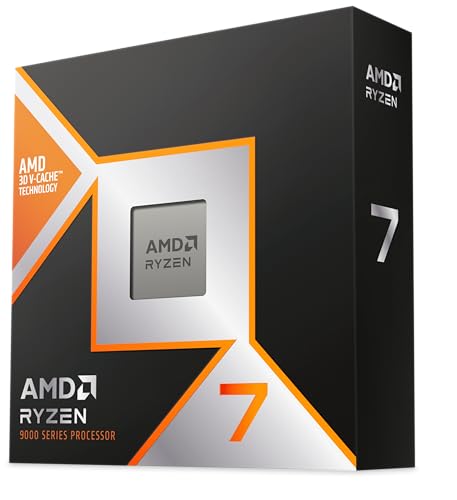
AMD Ryzen 7 9800X3D 8-Core Processor
Best for: high-clock 16-thread Socket AM5 systems
- Core Count
- 8 cores
- Thread Count
- 16 threads
- CPU Socket
- Socket AM5
- Max Boost Clock
- 5.2GHz
- Cache Size
- 96MB
- Series
- Ryzen 7
The AMD Ryzen 7 9800X3D is an eight-core, sixteen-thread desktop processor built on Socket AM5 infrastructure. It features 96MB of L3 cache, a maximum boost clock of 5.2GHz, and AMD Zen 5 technology. This processor suits you if you want high clock speeds and a large cache for demanding tasks. It drops directly into an AM5 motherboard, though you will need to supply your own dedicated CPU cooler.
Pros
- 96MB L3 cache
- Maximum boost clock of 5.2GHz
- 8 cores and 16 threads with Zen 5 technology
- Compatible with Socket AM5 motherboards
Cons
- Cooler is not included
- Requires a Socket AM5 motherboard
Good fit if
- You want 16 threads with a large 96MB L3 cache.
- You look for boost clock speeds up to 5.2GHz.
- You plan to use a separate dedicated CPU cooler.
Skip if
- You need a processor that comes bundled with a cooler.
- You require more than 8 cores for heavily threaded workstation tasks.
Verdict: AMD Ryzen 7 9800X3D Desktop Processor delivers 8 cores, 16 threads, and a 96MB L3 cache for Socket AM5 setups. It offers boost clocks up to 5.2GHz but requires you to provide a separate cooler.

Intel Core Ultra 7 265 20-Core Processor
Best for: low-power 20-core 800-series desktop builds
- Core Count
- 20 Cores (8 P-cores +12 E-cores)
- Max Boost Clock
- 5.3 GHz
- Base Power
- 65W
- Weight
- 15.5 ounces
The Intel Core Ultra 7 265 is a 20-core desktop processor built with 8 performance cores and 12 efficient cores. It reaches boost clock speeds up to 5.3 GHz while maintaining a 65W base power rating. If you build a modern system using an Intel 800 series motherboard, this processor pairs with DDR5 memory and PCIe 5.0 hardware. It suits your build if you need multi-threaded capacity for daily workloads and moderate power demands.
Pros
- 20 total cores split into 8 P-cores and 12 E-cores
- Modest 65W processor base power consumption
- Clock speeds reach up to 5.3 GHz max boost
- Comes bundled with an Intel Laminar RM2 cooler
Cons
- Requires a compatible Intel 800 series motherboard
- Included Intel Laminar RM2 is a standard compact air cooler
Good fit if
- You want 20 processing cores with an efficient 65W base power rating.
- You are building a setup on an Intel 800 series motherboard with DDR5 memory.
- You prefer a processor that includes a stock cooler in the box.
Skip if
- You intend to use an older motherboard from outside the Intel 800 series.
- You want a processor configured with higher default base power limits.
Verdict: Intel Core Ultra 7 265 20-Core Processor provides balanced multi-core throughput up to 5.3 GHz alongside a modest 65W base power profile. It is a capable foundation for systems built on Intel 800 series chipsets.

Micro Center Core i7-14700KF MSI Z790 Combo
Best for: High-core gaming and content creation builds
- Core Count
- 20
- Thread Count
- 28
- Max Boost Clock
- Up to 5.6 GHz
- Use Case
- Gaming
- Series
- Core i7
This bundle pairs an Intel Core i7-14700KF desktop processor with an MSI PRO Z790-P WIFI motherboard. You get 20 cores, 28 threads, and boost clock speeds reaching 5.6 GHz. The included motherboard features onboard PCIe 5.0, four PCIe 4.0 M.2 storage slots, and DDR5 support up to 7000+ MHz. This setup suits you if you want a high-thread-count base for gaming, video editing, and multitasking.
Pros
- 20 cores (8 Performance, 12 Efficient) and 28 threads
- Max boost clock speeds up to 5.6 GHz
- Motherboard includes PCIe 5.0 and four PCIe 4.0 M.2 slots
- Supports fast DDR5 memory up to 7000+(OC) MHz
Cons
- No CPU cooler included in the package
- M.2 storage slots max out at PCIe 4.0 speeds
Good fit if
- You need 20 cores and 28 threads for gaming and content creation.
- You want multiple PCIe 4.0 M.2 slots and DDR5 memory support.
- You are building a new system and need both a CPU and motherboard.
Skip if
- You already own a compatible LGA 1700 motherboard.
- You need integrated graphics rather than a discrete graphics card.
Verdict: Micro Center Intel Core i7-14700KF and MSI Z790 Combo delivers high multi-threaded performance and high boost clocks alongside a feature-rich DDR5 motherboard. It serves as a balanced platform for gaming and productivity setups.
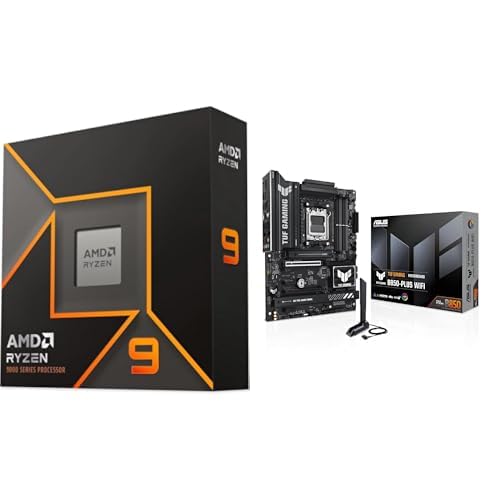
AMD Ryzen 5 7600X Motherboard Bundle
Best for: Socket AM5 gaming builds needing bundled hardware
- CPU Socket
- Socket AM5
- Use Case
- Gaming
- Series
- Ryzen 5
This bundle pairs an AMD Ryzen 5 7600X desktop processor with an AM5 motherboard. Built on a 5 nm process, the CPU targets gaming setups and AI PC computing. The included board features a 14+2+1 80A DrMOS power stage design, an 8-layer PCB, and dual 8-pin ProCool connectors to deliver stable power. It gives you a complete Socket AM5 foundation ready for Ryzen 7000, 8000, and 9000 series desktop processors.
Pros
- Built using 5 nm process technology
- Socket AM5 platform ready for Ryzen 7000, 8000, and 9000 series processors
- Robust power delivery with 14+2+1 80A DrMOS stages and an 8-layer PCB
- Dual 8-pin ProCool power connectors with alloy chokes
Cons
- Clock speeds and core counts omitted from published specs
- Processor comes bundled rather than as a standalone chip
Good fit if
- You need an AM5 motherboard and processor pairing for gaming.
- You want an 8-layer PCB motherboard with 14+2+1 80A power stages.
- You plan to maintain compatibility with Ryzen 7000, 8000, and 9000 series processors.
Skip if
- You only require a standalone CPU without a motherboard.
- You need detailed core counts and frequencies verified in the listing.
Verdict: AMD Ryzen 5 7600X Processor and Motherboard delivers a 5 nm gaming CPU alongside a robust 14+2+1 power phase Socket AM5 motherboard. It supplies a dependable foundation for current and future Ryzen desktop builds.

AMD Ryzen 7 7700X Motherboard Bundle
Best for: AM5 gaming builds needing bundled hardware
- Core Count
- 8 Cores
- Thread Count
- 16 processing threads
- CPU Socket
- AMD AM5 Socket
- Max Boost Clock
- 5.4 GHz
- Cache Size
- 80 MB
- Use Case
- Gaming
This bundle pairs an AMD Ryzen 7 7700X processor with an AM5 gaming motherboard. You get 8 cores, 16 processing threads, and a 5.4 GHz max boost clock built on Zen 4 architecture. The chip includes 80 MB of cache and supports DDR5-5200 system memory. It suits you if you want an unlocked platform ready for gaming workloads and modern AM5 desktop processors without sourcing the board separately.
Pros
- 8 cores and 16 threads with up to 5.4 GHz max boost
- 80 MB total cache
- Unlocked multiplier for overclocking
- AM5 socket supports Ryzen 7000, 8000, and 9000 series
Cons
- 8 cores limit throughput compared to higher-core alternatives
- Listed memory support caps at DDR5-5200
Good fit if
- You want an 8-core Zen 4 CPU paired directly with an AM5 motherboard.
- You plan to tune your processor via an unlocked multiplier.
Skip if
- You need high core counts for heavily threaded workstation workloads.
- You already own a compatible AM5 desktop motherboard.
Verdict: AMD Ryzen 7 7700X Motherboard Bundle delivers balanced 8-core Zen 4 performance, high boost clocks, and an AM5 foundation ready for multi-generational CPU upgrades.

INLAND AMD Ryzen 7 7700X and MSI B850 Motherboard
Best for: AM5 builds needing fast networking and storage
- Core Count
- 8-Core
- Thread Count
- 16-Thread
- CPU Socket
- Socket AM5
- Max Boost Clock
- 5.4 GHz
- Cache Size
- 40 MB
- Base Power
- 105W
View on Amazon: INLAND AMD Ryzen 7 7700X and MSI B850 Motherboard
This bundle pairs an 8-core, 16-thread AMD Ryzen 7 7700X desktop processor with an MSI B850 Gaming Plus WiFi ATX motherboard. You get boost clocks up to 5.4 GHz, 40 MB of cache, and a PCIe 5.0 M.2 slot alongside Wi-Fi 7 connectivity. It suits you if you want a modern AM5 foundation with high-speed networking and room for DDR5 memory without sourcing components separately.
Pros
- 8 cores and 16 threads with boost clocks up to 5.4 GHz
- Motherboard includes Wi-Fi 7 and 5G LAN networking
- Dedicated PCIe 5.0 x4 M.2 slot for high-speed storage
- Supports up to 256GB of DDR5 memory
Cons
- Cooler and thermal solution not included in the package
- 105W default TDP requires a separate cooling setup
Good fit if
- You want an 8-core AM5 processor and ATX motherboard bundled together.
- You need modern connectivity including Wi-Fi 7 and PCIe 5.0 storage.
- You plan to run high-capacity DDR5 system memory.
Skip if
- You want a processor that comes packaged with a stock cooler.
- You need a compact micro-ATX or Mini-ITX motherboard form factor.
Verdict: Inland AMD Ryzen 7 7700X with MSI B850 Motherboard delivers a capable 8-core AM5 setup equipped with PCIe 5.0 storage support and Wi-Fi 7. You only need to supply your own thermal solution to complete the core build.
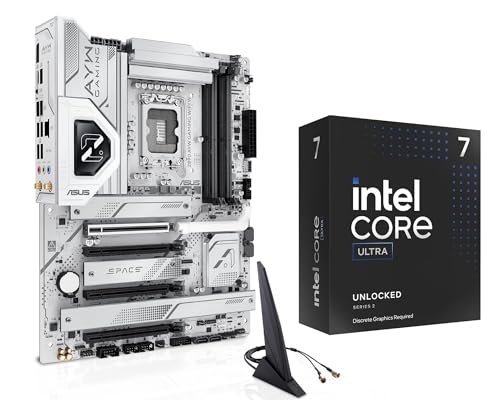
Micro Center Intel Ultra 7 265KF ASUS Z890 Bundle
Best for: Builders pairing high-core CPUs with discrete graphics
- Core Count
- 20 cores (8 P-cores + 12 E-cores)
- Thread Count
- 20 threads
- CPU Socket
- LGA 1851
- Max Boost Clock
- Up to 5.5 GHz
- Cache Size
- 36MB
- Base Power
- 125W
View on Amazon: Micro Center Intel Ultra 7 265KF ASUS Z890 Bundle
This bundle pairs an Intel Core Ultra 7 265KF processor with an ASUS Z890 AYW GAMING WIFI W motherboard. The CPU delivers 20 cores, 20 threads, and boost speeds up to 5.5 GHz on the LGA 1851 socket. The board features four M.2 slots, Wi-Fi 6, and DDR5 memory support. It suits you if you want a complete platform upgrade for desktop gaming and already own a dedicated graphics card.
Pros
- 20 cores and 20 threads with boost clocks up to 5.5 GHz
- Four M.2 slots including one PCIe 5.0 and three PCIe 4.0
- Front and rear 20Gbps USB Type-C ports with up to 30W fast charging
- Hardware assembly features like PCIe Slot Q-Release and M.2 Q-Latch
Cons
- Requires a discrete graphics card because the processor lacks integrated graphics
- Equipped with Wi-Fi 6 rather than Wi-Fi 6E or Wi-Fi 7
Good fit if
- You want an LGA 1851 processor bundled directly with a Z890 motherboard.
- You already have a dedicated graphics card for your setup.
- You plan to use DDR5 memory and PCIe 5.0 storage.
Skip if
- You need integrated graphics for video output without a standalone card.
- You require built-in Wi-Fi 6E or Wi-Fi 7 connectivity out of the box.
Verdict: Micro Center Intel Core Ultra 7 265KF ASUS Z890 Bundle delivers a 20-core setup with PCIe 5.0 storage support and robust power delivery. It provides a solid foundation for builders pairing it with dedicated graphics.

Intel Core i5-14600K ATX Motherboard Bundle
Best for: complete LGA 1700 DDR5 gaming builds
- Core Count
- 14 cores (6 P-cores + 8 E-cores)
- Thread Count
- 20 threads
- CPU Socket
- LGA 1700
- Max Boost Clock
- Up to 5.3 GHz
- Integrated Graphics
- Intel UHD Graphics 770
- Form Factor
- ATX
This bundle pairs an Intel Core i5 processor with an ATX motherboard on the LGA 1700 socket. You get 14 cores divided into 6 performance cores and 8 efficient cores, delivering 20 threads and clock speeds up to 5.3 GHz. Integrated Intel UHD Graphics 770 handles display output without a dedicated card. It suits you if you want a complete desktop foundation that supports DDR5 memory and PCIe 5.0 expansion cards.
Pros
- 14 cores and 20 threads reaching up to 5.3 GHz turbo frequency
- Motherboard supports DDR5 memory and PCIe 5.0 expansion
- Integrated Intel UHD Graphics 770 included
- 16+1 DrMOS power stages with dedicated VRM and M.2 heatsinks
Cons
- Full ATX form factor does not fit compact micro-ATX or Mini-ITX cases
- Processor core layout offers 6 performance cores alongside 8 efficient cores
Good fit if
- You need a matched CPU and ATX motherboard bundle with DDR5 support.
- You want integrated Intel UHD Graphics 770 for video output without a separate GPU.
- You have a chassis that accommodates a full-sized ATX motherboard.
Skip if
- You require a smaller micro-ATX or Mini-ITX motherboard layout.
- You want more than 6 dedicated performance cores for demanding multi-threaded workloads.
Verdict: Intel Core i5 and ASUS ATX Motherboard Bundle provides a balanced 14-core configuration with PCIe 5.0 support out of the box. It gives you a complete CPU and motherboard pairing ready for DDR5 desktop builds.
Specifications side by side
| Spec | HP Intel Xeon Gold 24-Core Processor | Intel Xeon W-2265 12-Core Processor | Intel Core i9-9900K 8-Core Processor | Intel Core i9 10-Core Desktop Processor | AMD Ryzen Threadripper PRO 16-Core Processor | Intel Core i9 24-Core Unlocked Processor | Intel Core i9 24-Core Desktop Processor | AMD Ryzen 7 9800X3D 8-Core Processor | Intel Core Ultra 7 265 20-Core Processor | Micro Center Core i7-14700KF MSI Z790 Combo | AMD Ryzen 5 7600X Motherboard Bundle | AMD Ryzen 7 7700X Motherboard Bundle | INLAND AMD Ryzen 7 7700X and MSI B850 Motherboard | Micro Center Intel Ultra 7 265KF ASUS Z890 Bundle | Intel Core i5-14600K ATX Motherboard Bundle |
|---|---|---|---|---|---|---|---|---|---|---|---|---|---|---|---|
| Core Count | 24 cores | 12-Core | 8 Cores | 10 Cores | 16 Cores | 24 cores | 24 cores | 8 cores | 20 Cores (8 P-cores +12 E-cores) | 20 | not specified | 8 Cores | 8-Core | 20 cores (8 P-cores + 12 E-cores) | 14 cores (6 P-cores + 8 E-cores) |
| Thread Count | not specified | 24-Thread | 16 Threads | 20 Threads | 32 Threads | 32 threads | not specified | 16 threads | not specified | 28 | not specified | 16 processing threads | 16-Thread | 20 threads | 20 threads |
| CPU Socket | not specified | LGA 2066 | LGA1151 | LGA 1200 | not specified | not specified | not specified | Socket AM5 | not specified | not specified | Socket AM5 | AMD AM5 Socket | Socket AM5 | LGA 1851 | LGA 1700 |
| Max Boost Clock | not specified | not specified | 5.00 GHz | 5.3 GHz | 4.3 GHz | 6.0 GHz | 6.0 GHz | 5.2GHz | 5.3 GHz | Up to 5.6 GHz | not specified | 5.4 GHz | 5.4 GHz | Up to 5.5 GHz | Up to 5.3 GHz |
| Base Clock | 3 GHz | 3.5GHz | 3.60 GHz | not specified | not specified | not specified | not specified | not specified | not specified | not specified | not specified | not specified | not specified | not specified | not specified |
| Cache Size | 75 MB | 19.25MB | 16 MB | not specified | 72MB | not specified | not specified | 96MB | not specified | not specified | not specified | 80 MB | 40 MB | 36MB | not specified |
| Base Power | 205 W | not specified | 95W | 125W | 280W | not specified | 125 W | not specified | 65W | not specified | not specified | not specified | 105W | 125W | not specified |
| Integrated Graphics | not specified | not specified | Intel UHD Graphics 630 | Without Processor Graphics | not specified | Discrete graphics required | Separate graphics card required | not specified | not specified | not specified | not specified | not specified | not specified | Discrete graphics required | Intel UHD Graphics 770 |
| Form Factor | not specified | not specified | not specified | not specified | not specified | not specified | not specified | not specified | not specified | not specified | not specified | not specified | not specified | not specified | ATX |
| Use Case | not specified | Server | not specified | not specified | not specified | Gaming | not specified | not specified | not specified | Gaming | Gaming | Gaming | not specified | Gaming | Gaming |
| Series | Xeon Gold | not specified | Core i9 | Core i9 | not specified | Core i9 | Core i9 | Ryzen 7 | not specified | Core i7 | Ryzen 5 | Ryzen 7 | Ryzen 7 | not specified | Core i5 |
| TDP | not specified | not specified | 95W | 125W | not specified | not specified | not specified | not specified | not specified | not specified | not specified | not specified | not specified | not specified | not specified |
| Dimensions | 2.2 × 3 × 7.9 inches | not specified | 2.91 × 4.41 × 4.61 inches | 5.91 × 5.91 × 3.94 inches | 3.07 × 2.2 × 0.3 inches | 4.6 × 1.9 × 3.9 inches | not specified | not specified | not specified | not specified | not specified | not specified | not specified | not specified | not specified |
| Weight | 4.41 pounds | 1 pounds | not specified | not specified | 12.3 ounces | 0.1 kilograms | 2.82 ounces | 3.2 ounces | 15.5 ounces | not specified | not specified | not specified | not specified | not specified | not specified |
| Length | not specified | not specified | not specified | not specified | not specified | not specified | not specified | 1.97 inches | not specified | not specified | not specified | not specified | not specified | not specified | not specified |
| Width | not specified | not specified | not specified | not specified | not specified | not specified | not specified | 1.97 inches | not specified | not specified | not specified | not specified | not specified | not specified | not specified |
| Model | SRGZG | SRGSQ | BX80684I99900K | i9-10900KF | AMD Ryzen Threadripper PRO 3955WX | Core™ i9-14900KF | BX8071514900KF | AMD Ryzen 7 9800X3D | BX80768265 | 14700KFPROZ790PWF | B850-PLUS | AMD Ryzen 7 7700X | 7700XB850GAMPLWF | 265KFZ890AYWWFW | not specified |
| Size | not specified | not specified | I9-9900K | not specified | not specified | 1.0 x 4.6 x 1.9 inches | not specified | not specified | Standard | not specified | not specified | not specified | not specified | not specified | not specified |
| Color | not specified | not specified | not specified | not specified | Black | not specified | Black | Information Not Available | original | i7-14700KF+msi Pro Z790-P WiFi D5 | not specified | not specified | AMD Ryzen 7 7700X + MSI B850 GAMING PLUS WIFI | Ultra7-265KF+Asus Z890 AYW Gaming WiFi W | not specified |
Key Factors When Choosing Your Processor
-
Match Cooling to Base Power
Check the thermal design power rating before you choose a CPU. Processors run across widely varying power tiers, from modest 65W chips up to demanding 205W hardware. Higher base wattage requires heavier heatsinks or liquid cooling units to prevent thermal throttling under sustained loads. For instance, the HP Intel Xeon Gold 24-Core Processor operates at 205W base power, demanding a heavy-duty thermal solution. Confirm your chassis airflow and cooler mounting hardware can manage the specific wattage rating listed on the product spec sheet.
-
Check for Integrated Graphics
Determine whether you need display output directly from the motherboard video ports. Processors without integrated graphics require you to install a dedicated graphics card before you can connect a monitor. Models carrying an F or KF designation, such as the Intel Core i9 10-Core Desktop Processor, lack built-in display logic. If you are building an office desktop or troubleshooting without a graphics card, look for processors with built-in graphics. If you already plan to run a high-performance add-in video card, a processor without display silicon works well.
-
Verify Memory Generation Compatibility
Inspect the supported RAM standard before deciding on a processor. Newer desktop architectures often mandate DDR5 memory, which uses unique physical slots and operates at higher bandwidths. However, certain options provide flexibility across memory generations. For example, the Intel Core i9 24-Core Unlocked Processor supports both DDR4 and DDR5 memory configurations depending on the motherboard you select. DDR4 lets you reuse existing memory kits, while DDR5 requires purchasing fresh modules. Check your motherboard RAM slots and the processor memory specification so that all your components work together properly.
-
Consider Motherboard Bundle Packages
Decide whether you want to buy a standalone chip or a packaged bundle. Bundles combine a processor with a pre-matched motherboard, eliminating any guesswork about socket fit and firmware compatibility. For example, the AMD Ryzen 5 7600X Motherboard Bundle includes a compatible Socket AM5 B850 board with a 14+2+1 power phase design. If you are assembling a full system from scratch, bundles simplify parts selection. If you already own a compatible motherboard or need a specialized form factor, buying a standalone CPU lets you keep your existing hardware.
-
Evaluate On-Chip Cache Size
Look at the size of the onboard cache when comparing processor architectures. Cache memory sits right on the processor die, holding critical data for swift retrieval without accessing system RAM. Larger pools of Level 3 cache can significantly improve performance in data-heavy tasks and gaming environments. For example, the AMD Ryzen 7 9800X3D 8-Core Processor features a massive 96MB L3 cache to feed instructions efficiently to its cores. Check the cache specifications across models to ensure the CPU can handle your software without unnecessary data stalls.
-
Review Next-Generation Platform Features
Examine the high-speed expansion and connectivity protocols supported by your processor and its platform. Modern motherboards pair with updated processor architectures to unlock faster peripheral interfaces, such as PCIe 5.0 bandwidth and modern networking. For example, the INLAND AMD Ryzen 7 7700X and MSI B850 Motherboard bundle incorporates PCIe 5.0 storage support alongside integrated Wi-Fi 7 wireless connectivity. If you plan to install high-speed solid-state storage drives or connect to fast wireless networks, verify that your processor platform explicitly supports these fast peripheral standards.
Frequently asked questions
What is the difference between Intel K and KF series processors?
Intel KF processors lack integrated graphics, requiring you to install a dedicated graphics card to output display signals. For example, the Core i9-14900K includes integrated Intel UHD 770 graphics, whereas the Core i9-14900KF requires a discrete GPU. Both models deliver boost speeds up to 6.0 GHz across 24 cores, so their core computing performance and unlocked multiplier capabilities remain identical.
Can you use DDR4 memory with 14th Gen Intel Core processors?
Yes, 14th Gen Intel processors support both DDR4 and DDR5 system memory. Models like the Core i9-14900K and Core i9-14900KF give you flexible memory controller support, but your actual RAM type depends strictly on your motherboard selection. A DDR4 motherboard will not accept DDR5 memory sticks, so you must confirm which memory generation your specific board slots physically support before buying components.
Why is L3 cache capacity important for gaming processors?
Large L3 cache keeps vital game instructions closer to the execution cores, cutting memory latency. The AMD Ryzen 7 9800X3D provides a generous 96MB L3 cache alongside 8 cores and 16 threads. This expansive pool allows the CPU to fetch critical assets instantly without waiting for system RAM, helping maintain consistent frame delivery during high-frequency compute loads up to its 5.2GHz boost clock.
What are the technical benefits of buying a processor and motherboard bundle?
A bundle guarantees hardware socket alignment and chip generation support right out of the box. For example, paired options like the AMD Ryzen 7 7700X with an MSI B850 board provide integrated PCIe 5.0 storage lanes and Wi-Fi 7 networking directly matched to the CPU. Bundles eliminate guesswork regarding platform firmware compatibility, though you must still supply your own dedicated thermal solution.
What platform requirements come with Intel Core Ultra 7 processors?
Intel Core Ultra processors run on Intel 800 series chipsets and utilize dedicated LGA platforms. For instance, the Core Ultra 7 265 delivers 20 cores with a modest 65W base power profile, making it thermally manageable for compact configurations. If you choose the 265KF model, you will also need to supply a discrete graphics card alongside a compatible Z890 motherboard featuring PCIe 5.0 lanes.
Can you install an Intel Xeon processor in a standard desktop motherboard?
No, Xeon processors require dedicated workstation or server sockets and matching chipset architecture. The Intel Xeon W-2265 requires an LGA 2066 socket motherboard, while the HP Intel Xeon Gold 24-Core relies on enterprise server hardware capable of delivering 205W base power. Standard consumer desktop motherboards will not fit these physical sockets or support the specialized microcode needed to boot enterprise processors.