125W vs 65W Processors in 2026: Key Differences
As an Amazon Associate we earn from qualifying purchases. Links on this page are affiliate links.
Choosing between a 125W vs 65W processor often comes down to cooling needs and performance goals. Both the Intel Core i5-11600K and the i5-10500 offer six cores and fit the LGA1200 socket. The main difference lies in their thermal design power. One model runs at 125W for higher boost speeds, while the other stays at 65W for efficiency. You need to weigh clock speeds against power consumption.
Key differences
| Aspect | Intel Core i5 6-Core Unlocked Processor | Intel Core i5-10500 6-Core Processor |
|---|---|---|
| TDP | 125W | 65W |
| Max Boost Clock | 4.9 GHz | 4.5 GHz |
| Socket | LGA1200 | LGA1200 |
| Core Count | 6 cores | 6 cores |
Which one should you choose?
Choose Intel Core i5 6-Core Unlocked Processor if
- You want higher single-core performance for gaming or heavy apps
- You have a robust cooling solution ready for higher heat output
- You prefer unlocked overclocking capabilities on compatible motherboards
Choose Intel Core i5-10500 6-Core Processor if
- You prioritize energy efficiency and lower heat generation
- You are building a compact system with limited airflow
- You need reliable performance without demanding extreme cooling
Verdict: The 125W i5-11600K suits users seeking maximum speed and overclocking potential. The 65W i5-10500 is better for efficient builds with simpler cooling requirements. Your choice depends on whether you value raw clock speed or thermal efficiency.
125W vs 65W Processor Comparison
Thermal Design Power
The Intel Core i5-11600K carries a 125W TDP, while the i5-10500 is rated at 65W. TDP indicates the maximum heat output the cooling system must handle under typical workloads. A higher TDP means the 11600K generates more heat, requiring a robust cooler to maintain stability. The 65W i5-10500 produces less heat, allowing for quieter or smaller cooling solutions. This difference is significant for system builders who prioritize thermal efficiency or have limited airflow in their cases. You must match your cooler to the chosen processor's power requirements to avoid throttling.
Performance Speed
Clock speeds directly impact how fast instructions are processed. The i5-11600K reaches a max boost clock of 4.9 GHz, whereas the i5-10500 tops out at 4.5 GHz. This 0.4 GHz difference allows the 11600K to handle single-threaded tasks more quickly. For gaming or applications that rely on high core speeds, the 11600K offers a tangible advantage. The i5-10500 remains capable for general use, but the higher frequency of the 11600K provides better responsiveness in speed-sensitive scenarios. This spec is crucial for users seeking maximum performance per clock cycle.
Core Count
Both processors feature six physical cores. This specification determines how many tasks can be processed simultaneously. Having identical core counts means both chips can handle multi-threaded workloads like video editing or rendering with similar parallel processing capabilities. The i5-11600K may still pull ahead in some multi-core tasks due to its higher clock speeds, but the fundamental ability to run six threads at once is equal. For users who rely on multi-core performance, this aspect offers no distinct advantage for either model, making it a neutral factor in your decision.
Motherboard Compatibility
Both the i5-11600K and i5-10500 use the LGA1200 socket. This means they fit into the same generation of motherboards. You can install either chip on compatible Intel 400 or 500 series boards, provided the BIOS is updated. This shared socket type offers flexibility if you plan to upgrade later within the same platform. However, the i5-11600K is an unlocked processor, allowing for manual overclocking on supported Z-series boards, while the i5-10500 is not. This socket compatibility simplifies hardware selection but does not guarantee identical performance features.
Physical Dimensions
The physical size of the processor packaging differs slightly. The i5-10500 has a width of 3.9 inches and a height of 2.8 inches, while the i5-11600K package measures 1.73 inches in width and 3.98 inches in height. These dimensions refer to the retail box or IHS packaging, not the silicon die itself. For installation, the socket interface is identical, so physical clearance inside the case is not affected by these outer measurements. However, the different packaging shapes might influence how they fit in storage or shipping containers. This aspect has no impact on actual system performance or cooling requirements.
Which Processor Suits Your Needs
Users needing maximum single-thread speed
The Intel Core i5-11600K reaches a max boost clock of 4.9 GHz. This higher frequency allows for faster processing in tasks that rely on fewer cores. If you prioritize raw speed for gaming or specific applications, this unlocked model delivers the performance edge you need.
Users prioritizing energy efficiency and heat
The Intel Core i5-10500 operates at a 65W TDP. This lower power draw generates less heat, reducing the burden on your cooling system. It is the better choice if you want to keep temperatures low and minimize power consumption while still maintaining six cores.
Users wanting flexibility with cooling
With a 125W TDP and unlocked multiplier, the i5-11600K offers more headroom for overclocking. You can push the processor beyond its stock speeds if you have adequate cooling. This makes it ideal for enthusiasts who want to tune their system for peak performance.
Users building compact or quiet systems
The 65W rating of the i5-10500 allows for simpler cooling solutions. You can use smaller fans or passive coolers more easily. This processor fits well in builds where space is limited or where quiet operation is a priority over maximum clock speeds.
Quick picks
| # | Product | Best for | Price |
|---|---|---|---|
| 1 | Intel Core i5 6-Core Unlocked Processor | High-performance desktop builds | Check price of Intel Core i5 6-Core Unlocked Processor on Amazon |
| 2 | Intel Core i5-10500 6-Core Processor | Efficient LGA1200 builds | Check price of Intel Core i5-10500 6-Core Processor on Amazon |
The products compared

Intel Core i5 6-Core Unlocked Processor
Best for: High-performance desktop builds
- TDP
- 125W (what this guide is about)
- Core Count
- 6 cores
- CPU Socket
- LGA1200
- Max Boost Clock
- 4.9 GHz
- Base Power
- 125W
- Series
- Core i5
View on Amazon: Intel Core i5 6-Core Unlocked Processor Affiliate link
The Intel Core i5-11600K is a 125W TDP processor with 6 cores and a max boost clock of 4.9 GHz. It uses the LGA1200 socket. This higher power class supports faster clock speeds compared to 65W options. It suits users who prioritize peak performance over strict power efficiency. You get unlocked multipliers for potential overclocking on compatible motherboards.
Pros
- 125W TDP for sustained performance
- 6 cores for multitasking
- 4.9 GHz max boost clock
- Unlocked for overclocking
Cons
- Higher 125W power draw
- Requires robust cooling solution
- Larger physical footprint than low-power chips
Good fit if
- You need high single-thread performance
- You plan to overclock your CPU
- You have a strong cooling system
Skip if
- You prioritize low power consumption
- You have limited case airflow
- You want a 65W TDP chip
Verdict: Intel Core i5-11600K 125W Desktop Processor delivers high speed for enthusiasts who can manage its thermal output. It fits builders seeking maximum clock speeds on LGA1200 platforms.
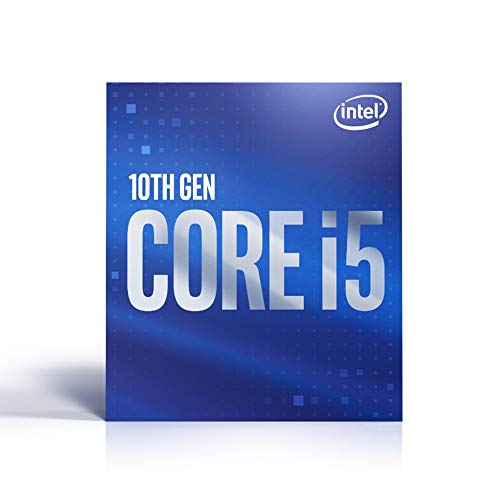
Intel Core i5-10500 6-Core Processor
Best for: Efficient LGA1200 builds
- TDP
- 65W (what this guide is about)
- Core Count
- 6 cores
- CPU Socket
- LGA1200
- Max Boost Clock
- 4.5 GHz
- Base Power
- 65W
- Series
- Core i5
View on Amazon: Intel Core i5-10500 6-Core Processor Affiliate link
The Intel Core i5-10500 is a 6-core processor designed for LGA1200 motherboards. It operates with a 65W thermal design power, which helps keep system temperatures and energy use lower than higher-wattage alternatives. The chip reaches a maximum boost clock of 4.5 GHz. This makes it a solid option for users who prioritize efficiency and standard performance over extreme overclocking capabilities.
Pros
- 65W TDP for efficient power consumption
- 6 cores for solid multitasking
- 4.5 GHz max boost clock
- Compatible with LGA1200 sockets
Cons
- Lower boost clock than unlocked 125W competitors
- Not unlocked for overclocking
- Fewer cores than high-end 125W options
Good fit if
- You need a power-efficient CPU for standard tasks
- You are building on an LGA1200 motherboard
- You want reliable performance without high heat output
Skip if
- You require unlocked overclocking capabilities
- You need higher clock speeds for heavy gaming
- You are building on a newer socket platform
Verdict: Intel Core i5-10500 65W Desktop Processor suits builders who value efficiency and stability on LGA1200 platforms over raw speed.
Specifications side by side
| Spec | Intel Core i5 6-Core Unlocked Processor | Intel Core i5-10500 6-Core Processor |
|---|---|---|
| Core Count | 6 cores | 6 cores |
| CPU Socket | LGA1200 | LGA1200 |
| Max Boost Clock | 4.9 GHz | 4.5 GHz |
| Base Power | 125W | 65W |
| Series | Core i5 | Core i5 |
| TDP | 125W | 65W |
| Dimensions | 4.57 × 1.73 × 3.98 inches | 4.7 × 3.9 × 2.8 inches |
| Weight | not stated | 4.8 ounces |
| Model | i5-11600K | SRH3A |
Frequently asked questions
Is a 125W processor always faster than a 65W model?
Not necessarily. While higher TDP often allows for higher sustained boost clocks, core count and architecture matter too. The i5-11600K offers 4.9 GHz boost speeds, beating the i5-10500. However, efficiency-focused chips can match performance in lighter workloads without the same thermal demands.
Do I need a better cooler for a 125W CPU?
Yes, you generally need stronger cooling. A 125W TDP like the i5-11600K generates more heat than a 65W part. You must ensure your case has adequate airflow and your cooler can dissipate that extra thermal output to maintain stable clock speeds during heavy tasks.
Can I use an LGA1200 motherboard for both options?
Yes, both listed processors use the LGA 1200 socket. This compatibility means you can swap between the i5-11600K and i5-10500 on the same board. Just verify your motherboard BIOS supports the specific generation of the chip you plan to install.
Which processor is better for gaming in 2026?
The 125W i5-11600K is better for gaming. Its unlocked nature and higher 4.9 GHz boost clock provide faster single-thread performance. Games often rely on fewer cores, so that extra frequency translates directly to smoother frame rates compared to the 65W i5-10500.
Does the 65W processor run cooler in a small case?
It runs significantly cooler. The i5-10500’s 65W TDP produces less heat than the 125W i5-11600K. This makes it ideal for compact builds where airflow is limited. You can achieve stable performance without needing bulky cooling solutions in smaller chassis.
What is the main physical difference between these CPUs?
The primary difference is power draw and thermal output, not physical size. Both fit the same LGA 1200 socket. The 125W model requires more power from your PSU and generates more heat, while the 65W model prioritizes efficiency and lower thermal generation.