15 Best DDR5 Motherboards, Compared
As an Amazon Associate we earn from qualifying purchases. Links on this page are affiliate links.
Selecting the right DDR5 motherboard requires matching your components to the correct socket, memory configuration, and expansion layout. This guide compares 15 products strictly using the specifications published on their listings to help you evaluate your hardware options.
The MSI PRO ATX DDR5 Motherboard takes the top position for Intel LGA 1700 builds because it combines PCIe 5.0 expansion with 2.5GbE networking and Wi-Fi 6E. Reviewing these verified specs helps you decide which socket platform, form factor, and connectivity standards fit your system requirements.
Quick picks
The best fit for you
- You want a balanced Intel LGA 1700 ATX build MSI PRO ATX DDR5 Motherboard It offers LGA 1700 socket support, PCIe 5.0 expansion, Wi-Fi 6E, and 2.5GbE networking in an ATX format.
- You want an AMD AM5 setup with Wi-Fi 7 MSI Tomahawk ATX AM5 Motherboard It pairs the AM5 socket with DDR5 memory support, PCIe 5.0 capability, and integrated Wi-Fi 7.
- You need a compact Intel LGA 1700 motherboard ASUS Prime Micro-ATX DDR5 Motherboard Its Micro-ATX form factor provides DDR5 support, dual M.2 slots, and 2.5GbE networking for smaller cases.
- You want high-bandwidth networking in an E-ATX case GIGABYTE AORUS Xtreme AM5 E-ATX Motherboard Its E-ATX layout features an AM5 socket, PCIe 5.0, Wi-Fi 7, and high-speed 10GbE Ethernet.
Our 15 picks

MSI PRO ATX DDR5 Motherboard
Best for: Intel LGA 1700 DDR5 desktop builds
- Memory Type
- DDR5
- CPU Socket
- LGA 1700
- Form Factor
- ATX
- PCIe Version
- PCIe 5.0
- Wi-Fi Standard
- Wi-Fi 6E
- Ethernet Speed
- 2.5Gbps
View on Amazon: MSI PRO ATX DDR5 Motherboard (paid link)
This MSI Pro Series ATX DDR5 Motherboard pairs an Intel LGA 1700 socket with four DDR5 slots supporting up to 128GB of system memory. You get high-speed expansion via a PCIe 5.0 interface alongside integrated 2.5Gbps Ethernet and Wi-Fi 6E wireless networking. It suits you if you plan to build an Intel-based desktop using 12th, 13th, or 14th Gen processors.
Pros
- Four DDR5 memory slots supporting up to 128GB
- PCIe 5.0 expansion support
- Wi-Fi 6E and Bluetooth 5.3 onboard
- High-speed 2.5Gbps Ethernet port
Cons
- Limited strictly to Intel LGA 1700 processors
- Full ATX form factor does not fit compact PC cases
Good fit if
- You build with a 12th, 13th, or 14th Gen Intel processor.
- You need four DDR5 slots supporting up to 128GB of memory.
- You want PCIe 5.0 and Wi-Fi 6E on a standard ATX board.
Skip if
- You plan to run an AMD socket processor.
- You need a smaller microATX or mini-ITX footprint.
Verdict: MSI Pro Series ATX DDR5 Motherboard delivers core DDR5 capabilities, PCIe 5.0 expansion, and 2.5GbE connectivity for Intel LGA 1700 builds. It serves as a balanced, spec-aligned platform for mainstream desktop configurations.

MSI MPG LGA 1700 DDR5 ATX Motherboard
Best for: Intel DDR5 builds needing PCIe 5.0 support
- Memory Type
- DDR5
- CPU Socket
- LGA 1700
- Form Factor
- ATX
- PCIe Version
- PCIe 5.0
- Wi-Fi Standard
- Wi-Fi 6E
- Ethernet Speed
- 2.5Gbps LAN
View on Amazon: MSI MPG LGA 1700 DDR5 ATX Motherboard (paid link)
The MSI MPG Z790 Edge WiFi Motherboard is an ATX gaming board built for DDR5 memory and LGA 1700 processors. It supports 12th and 13th Gen Intel CPUs alongside high-speed PCIe 5.0 expansion. You get integrated Wi-Fi 6E, 2.5GbE wired networking, and multiple M.2 storage slots for fast drives. This board suits you if you want modern DDR5 performance and high-bandwidth expansion for an Intel desktop build.
Pros
- Supports DDR5 system memory and LGA 1700 socket
- Features PCIe 5.0 expansion support
- Built-in Wi-Fi 6E and 2.5GbE wired network connectivity
- Includes multiple M.2 storage slots and USB 3.2 ports
Cons
- Comes as a renewed hardware unit
- Spec sheet lists support only through 12th and 13th Gen Intel CPUs
Good fit if
- You build an Intel desktop using DDR5 memory and a 12th or 13th Gen CPU.
- You want PCIe 5.0 expansion paired with multiple M.2 storage slots.
- You need both Wi-Fi 6E wireless and 2.5GbE wired networking.
Skip if
- You prefer factory-new retail packaging rather than a renewed component.
- You plan to build on an AMD AM5 processor platform.
Verdict: MSI MPG Z790 Edge WiFi Motherboard provides reliable DDR5 support, PCIe 5.0 capability, and Wi-Fi 6E for Intel LGA 1700 systems. It delivers solid high-speed connectivity if you accept a renewed hardware unit.

MSI Gaming Plus ATX DDR5 Motherboard
Best for: Intel LGA 1700 gaming builds with Wi-Fi 6E
- Memory Type
- DDR5
- CPU Socket
- LGA 1700
- Chipset
- Z790
- Form Factor
- ATX
- PCIe Version
- PCIe 5.0
- Wi-Fi Standard
- Wi-Fi 6E
View on Amazon: MSI Gaming Plus ATX DDR5 Motherboard (paid link)
The MSI Gaming Plus LGA 1700 ATX Motherboard pairs DDR5 memory support with an LGA 1700 socket for Intel 12th, 13th, and 14th Gen processors. It features PCIe 5.0 readiness for expansion cards, 2.5GbE wired networking, and onboard Wi-Fi 6E. You get standard ATX dimensions with black styling. This board suits you if you want a full-sized Intel gaming platform with current-generation wireless connectivity.
Pros
- Supports DDR5 memory
- PCIe 5.0 interface support
- Integrated Wi-Fi 6E and 2.5GbE LAN
- LGA 1700 socket compatible with 12th, 13th, and 14th Gen Intel CPUs
Cons
- ATX form factor does not fit compact Micro ATX or Mini-ITX cases
- LGA 1700 socket does not support AMD processors
Good fit if
- You use an Intel 12th, 13th, or 14th Gen processor on the LGA 1700 platform.
- You need high-speed connectivity via 2.5GbE Ethernet and Wi-Fi 6E.
- You build inside a mid-tower or full-tower case that supports ATX motherboards.
Skip if
- You plan to run an AMD AM5 processor.
- You require a smaller Micro ATX or Mini-ITX form factor.
Verdict: MSI Gaming Plus LGA 1700 ATX Motherboard delivers PCIe 5.0 capabilities, Wi-Fi 6E, and DDR5 support for modern Intel builds. It gives you balanced everyday expansion options within a standard ATX layout.

MSI Tomahawk ATX AM5 Motherboard
Best for: high-speed AMD AM5 desktop builds
- Memory Type
- DDR5
- CPU Socket
- AM5
- Chipset
- B850
- Form Factor
- ATX
- PCIe Version
- PCIe 5.0
- Wi-Fi Standard
- Wi-Fi 7
View on Amazon: MSI Tomahawk ATX AM5 Motherboard (paid link)
This ATX motherboard features the AMD AM5 socket and DDR5 memory support for your desktop build. You get PCIe 5.0 capability alongside Gen5 M.2 storage connectivity and built-in Wi-Fi 7 networking. It supports AMD Ryzen 9000, 8000, and 7000 series processors and includes 5G LAN for wired transfers. This board suits you if you want modern AM5 connectivity with high-speed wireless and wired networking on a standard ATX layout.
Pros
- Supports Wi-Fi 7 and 5G LAN wired networking
- Features PCIe 5.0 expansion and Gen5 M.2 storage support
- Compatible with AMD Ryzen 9000, 8000, and 7000 series processors
- Equipped with 80A Smart Power Stages (SPS)
Cons
- Full ATX form factor does not fit smaller microATX or mini-ITX cases
- Restricted to AMD AM5 socket processors without support for Intel CPUs
Good fit if
- You plan to build with an AMD Ryzen 9000, 8000, or 7000 series processor.
- You want native Wi-Fi 7 wireless and 5G LAN wired connectivity.
- You need PCIe 5.0 and Gen5 M.2 bandwidth on a standard ATX board.
Skip if
- You are building an Intel processor system requiring an LGA 1700 socket.
- You require a compact microATX or mini-ITX form factor for a smaller chassis.
Verdict: MSI MAG Tomahawk AM5 ATX Motherboard delivers PCIe 5.0, Wi-Fi 7, and 5G LAN for AMD Ryzen desktop builds. It provides modern AM5 platform features across a standard full-size layout.

ASUS TUF Gaming AM5 ATX Motherboard
Best for: Ryzen 7000 gaming builds needing DDR5
- Memory Type
- DDR5
- CPU Socket
- Socket AM5 (LGA 1718)
- Form Factor
- ATX
- PCIe Version
- PCIe 5.0
- Wi-Fi Standard
- WiFi 6
- Ethernet Speed
- 2.5 Gb
View on Amazon: ASUS TUF Gaming AM5 ATX Motherboard (paid link)
The ASUS TUF Gaming AM5 ATX Motherboard pairs AMD Socket AM5 architecture with DDR5 memory support for your desktop build. You get 14 power stages to deliver processor power alongside onboard Wi-Fi 6 connectivity for wireless networks. Its full ATX footprint provides standard expansion space across your chassis. This board suits you when building a dedicated Ryzen 7000 gaming computer that uses current memory standards.
Pros
- AM5 socket compatible with AMD Ryzen 7000 series processors
- DDR5 memory support for modern RAM configurations
- 14 power stages for CPU power delivery
- Integrated Wi-Fi 6 wireless connectivity
Cons
- Full ATX dimensions require a compatible mid-tower or full-tower chassis
- Lacks newer Wi-Fi 6E or Wi-Fi 7 wireless standards
Good fit if
- You build an AMD Ryzen 7000 desktop system using DDR5 memory.
- You require onboard Wi-Fi 6 networking directly on the board.
- You have a PC chassis that fits standard ATX motherboards.
Skip if
- You intend to use an Intel processor requiring LGA 1700.
- You need a smaller microATX or mini-ITX form factor.
Verdict: ASUS TUF Gaming AM5 ATX Motherboard provides dedicated AM5 socket hardware and DDR5 compatibility for Ryzen 7000 gaming desktop builds. Its 14 power stages and integrated Wi-Fi 6 meet core operational requirements in a full ATX form factor.

MSI PRO DDR5 ATX Motherboard
Best for: Entry-level Intel DDR5 desktop builds
- Memory Type
- DDR5
- CPU Socket
- LGA 1700
- Chipset
- Intel B760
- Form Factor
- ATX
- PCIe Version
- PCIe 4.0
- Wi-Fi Standard
- Wi-Fi 5
View on Amazon: MSI PRO DDR5 ATX Motherboard (paid link)
The MSI PRO ATX DDR5 Motherboard provides a full-size ATX foundation for 12th and 13th Gen Intel processors on the LGA 1700 socket. You get modern DDR5 memory support paired with PCIe 4.0 expansion for your components. Built-in networking includes 2.5GbE wired Ethernet alongside Wi-Fi 5 wireless connectivity. This board suits you if you want standard ATX dimensions and DDR5 memory support.
Pros
- DDR5 memory support
- 2.5GbE wired Ethernet
- PCIe 4.0 expansion support
- Standard ATX form factor measuring 12 by 9.6 inches
Cons
- Uses older Wi-Fi 5 standard instead of Wi-Fi 6
- Features PCIe 4.0 rather than PCIe 5.0
- Documented support limited to 12th and 13th Gen Intel processors
Good fit if
- You want an LGA 1700 Intel motherboard with DDR5 memory support.
- You plan to use a 2.5GbE wired network connection.
- You are building inside a standard ATX PC case.
Skip if
- You require high-speed Wi-Fi 6 or newer wireless connectivity.
- You need PCIe 5.0 bandwidth for future add-in cards.
- You are building an AMD-based system.
Verdict: MSI PRO ATX DDR5 Motherboard delivers core LGA 1700 functionality with DDR5 support and 2.5GbE networking for Intel builds. It handles standard setups that do not require PCIe 5.0 or newer Wi-Fi protocols.

MSI Tomahawk ATX DDR5 Motherboard
Best for: Intel LGA 1700 DDR5 gaming builds
- Memory Type
- DDR5
- CPU Socket
- LGA 1700
- Form Factor
- ATX
- PCIe Version
- PCIe 5.0
- Wi-Fi Standard
- Wi-Fi 6E
- Use Case
- Gaming
View on Amazon: MSI Tomahawk ATX DDR5 Motherboard (paid link)
The MSI MAG Z790 Tomahawk WiFi ATX Motherboard gives you a full-size platform built for DDR5 memory and Intel LGA 1700 processors. You get PCIe 5.0 expansion support alongside integrated Wi-Fi 6E wireless connectivity. It suits builders setting up a dedicated gaming system with 12th or 13th Gen Intel CPUs who need standard ATX spacing and high-bandwidth hardware support.
Pros
- PCIe 5.0 expansion support
- Integrated Wi-Fi 6E connectivity
- Standard ATX form factor with DDR5 support
- LGA 1700 socket for 12th and 13th Gen Intel CPUs
Cons
- ATX footprint does not fit smaller microATX or Mini-ITX cases
- Socket LGA 1700 excludes AMD processor compatibility
- Wi-Fi 6E rather than Wi-Fi 7
Good fit if
- You build with an Intel 12th or 13th Gen processor.
- You want DDR5 RAM paired with a PCIe 5.0 expansion slot.
- You have a standard ATX PC chassis.
Skip if
- You plan to use an AMD Ryzen CPU.
- You are assembling a compact small-form-factor system.
- You require the newer Wi-Fi 7 wireless standard.
Verdict: MSI MAG Z790 Tomahawk WiFi ATX Motherboard delivers PCIe 5.0 support, Wi-Fi 6E, and DDR5 capability for Intel LGA 1700 desktop builds.
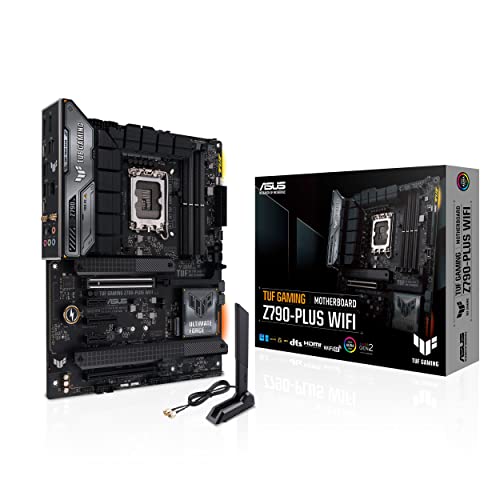
ASUS TUF Gaming PCIe 5.0 ATX Motherboard
Best for: Intel LGA 1700 builds needing four M.2 slots
- Memory Type
- DDR5
- CPU Socket
- LGA 1700
- Chipset
- Z790
- Form Factor
- ATX
- PCIe Version
- PCIe 5.0
- M.2 Slots
- 4
View on Amazon: ASUS TUF Gaming PCIe 5.0 ATX Motherboard (paid link)
This ASUS TUF Gaming ATX board pairs DDR5 memory support with an Intel LGA 1700 socket for 12th, 13th, and 14th Gen processors. You get a PCIe 5.0 slot alongside four M.2 slots for high-speed storage configurations. Networking includes 2.5GbE wired LAN and Wi-Fi 6 wireless connectivity. It suits you if you want a full-sized gaming foundation with multiple drive expansion options and fast baseline connectivity.
Pros
- PCIe 5.0 expansion support
- Four onboard M.2 storage slots
- Fast 2.5GbE LAN and built-in Wi-Fi 6
- Supports Intel 12th, 13th, and 14th Gen processors
Cons
- Uses Wi-Fi 6 instead of Wi-Fi 6E or Wi-Fi 7
- Full ATX footprint requires a larger PC case
Good fit if
- You plan to use an Intel 12th, 13th, or 14th Gen CPU.
- You need four dedicated M.2 slots for internal storage.
- You want PCIe 5.0 hardware compatibility on an ATX layout.
Skip if
- You build with an AMD AM5 processor.
- You need the newer Wi-Fi 6E or Wi-Fi 7 standard.
- You need a compact microATX or Mini-ITX motherboard.
Verdict: ASUS TUF Gaming Z790 ATX Motherboard provides a capable Intel LGA 1700 platform with DDR5 memory, PCIe 5.0, and four M.2 slots. It delivers an expansive setup for multi-drive gaming systems.

ASUS Prime Micro-ATX DDR5 Motherboard
Best for: compact Intel builds needing fast DDR5 memory
- Memory Type
- DDR5
- CPU Socket
- LGA 1700
- Form Factor
- microATX
- PCIe Version
- PCIe 4.0
- M.2 Slots
- 2
- Wi-Fi Standard
- Wi-Fi 6
View on Amazon: ASUS Prime Micro-ATX DDR5 Motherboard (paid link)
The ASUS Prime Micro-ATX DDR5 Motherboard provides a compact foundation for 12th and 13th Gen Intel Core processors on the LGA 1700 socket. You get dual M.2 slots, PCIe 4.0 support, and DDR5 memory headroom up to 64GB. Built-in Wi-Fi 6, 2.5 Gb Ethernet, and a front USB 3.2 Gen 1 Type-C header handle your networking and peripheral needs. It suits you if you want a space-saving build with modern data speeds.
Pros
- Supports Realtek 2.5 Gb Ethernet and Wi-Fi 6 connectivity
- Equipped with two M.2 storage slots and PCIe 4.0 support
- Features rear USB 3.2 Gen 2 and front USB 3.2 Gen 1 Type-C ports
- Accommodates up to 64GB of DDR5 memory
Cons
- Memory capacity is limited to 64GB of DDR5 RAM
- Provides only two M.2 slots for storage expansion
- Lists compatibility for Intel 12th and 13th Gen without newer gen support
Good fit if
- You want a compact Micro-ATX system powered by a 12th or 13th Gen Intel Core CPU.
- You need high-speed networking via integrated Wi-Fi 6 and 2.5 Gb LAN.
- You plan to install up to 64GB of DDR5 RAM across your slots.
Skip if
- You require more than 64GB of DDR5 memory for heavy workloads.
- You plan to install more than two M.2 NVMe drives.
- You want full-size ATX expansion slots.
Verdict: ASUS Prime Micro-ATX DDR5 Motherboard delivers core essentials, pairing 2.5 Gb LAN and Wi-Fi 6 with dual M.2 slots for compact Intel setups. It gives you capable PCIe 4.0 throughput without demanding a full-size ATX chassis.

ASUS TUF Gaming AM5 ATX Motherboard
Best for: AMD Ryzen 7000 DDR5 gaming builds
- Memory Type
- DDR5
- CPU Socket
- AM5
- Form Factor
- ATX
- PCIe Version
- PCIe 5.0
- M.2 Slots
- 4
- Wi-Fi Standard
- WiFi 6E
View on Amazon: ASUS TUF Gaming AM5 ATX Motherboard (paid link)
This ATX board pairs AMD Socket AM5 with DDR5 memory support for Ryzen 7000 processors. You get built-in Wi-Fi 6E alongside 2.5GbE wired networking for connectivity. The design incorporates 16 power stages across a standard ATX layout. It suits you if you plan an AMD build requiring high-speed networking and modern memory support.
Pros
- Socket AM5 support for AMD Ryzen 7000 processors
- Onboard Wi-Fi 6E and 2.5GbE Ethernet
- 16 power stages
- Full ATX expansion layout
Cons
- Incompatible with Intel LGA 1700 processors
- Too large for Micro ATX or Mini-ITX cases
Good fit if
- You are building an AMD Ryzen 7000 system with DDR5 memory.
- You require 2.5GbE Ethernet and Wi-Fi 6E connectivity.
- You use a standard ATX PC enclosure.
Skip if
- You plan to install an Intel processor.
- You need a compact form factor for a smaller chassis.
Verdict: ASUS TUF Gaming ATX AM5 Motherboard provides AMD Ryzen 7000 support with DDR5 memory, 16 power stages, and 2.5GbE connectivity. It delivers standard ATX specifications for modern desktop builds.

Gigabyte Micro-ATX DDR5 Gaming Motherboard
Best for: compact AMD DDR5 gaming PC builds
- Memory Type
- DDR5
- Chipset
- AMD A620
- Form Factor
- Micro ATX
- PCIe Version
- PCIe 4.0
- Use Case
- Gaming
- Dimensions
- 9.61 × 9.61 × 1.38 inches
View on Amazon: Gigabyte Micro-ATX DDR5 Gaming Motherboard (paid link)
The GIGABYTE Gaming X Micro-ATX Motherboard gives you DDR5 memory support on a compact Micro-ATX footprint. It features PCIe 4.0 support alongside a USB 3.2 Gen1x2 Type-C port for external connectivity. Built for gaming setups on the AMD A620 platform, this board suits you if you want modern DDR5 memory and a smaller build without the extra size of standard ATX boards found across 2026 guides.
Pros
- Micro-ATX form factor for smaller chassis builds
- Supports DDR5 system memory
- Includes USB 3.2 Gen1x2 Type-C connectivity
- PCIe 4.0 interface standard
Cons
- Limits expansion bandwidth to PCIe 4.0 rather than PCIe 5.0
- No integrated Wi-Fi listed in the specifications
- Micro-ATX layout provides less expansion room than ATX
Good fit if
- You want a compact gaming desktop using a Micro-ATX chassis.
- You plan to use DDR5 memory on the AMD A620 platform.
- You need a USB 3.2 Gen1x2 Type-C connection.
Skip if
- You require PCIe 5.0 support for future components.
- You need integrated wireless networking included directly on the board.
- You want the extra physical expansion slots of an ATX board.
Verdict: GIGABYTE Gaming X Micro-ATX Motherboard provides essential DDR5 memory and PCIe 4.0 support inside a space-conscious design. It gives you core connectivity without the footprint of larger desktop boards.
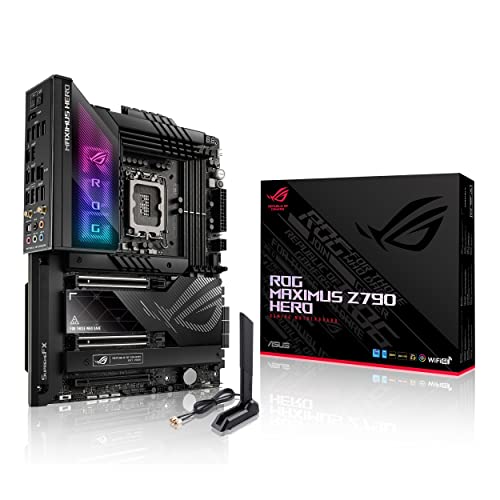
ASUS ROG Maximus DDR5 ATX Motherboard
Best for: high-end Intel LGA 1700 gaming rigs
- Memory Type
- DDR5
- CPU Socket
- LGA 1700
- Form Factor
- ATX
- PCIe Version
- PCIe 5.0
- M.2 Slots
- 5
- Wi-Fi Standard
- Wi-Fi 6E
View on Amazon: ASUS ROG Maximus DDR5 ATX Motherboard (paid link)
This ATX board pairs Intel LGA 1700 socket support with DDR5 memory. You get a 20+1 power solution rated at 90A, PCIe 5.0 expansion, and five M.2 slots. Onboard Wi-Fi 6E, Bluetooth 5.2, and 2.5Gb Ethernet cover networking needs. Built-in heatsinks and the water-cooling zone manage temperatures. It suits you if you run a 14th, 13th, or 12th Gen Intel Core processor.
Pros
- 20+1 teamed power stages rated for 90 A
- Five M.2 slots with dedicated heatsinks
- PCIe 5.0 and DDR5 system memory support
- Wi-Fi 6E and 2.5Gb Ethernet networking
Cons
- Uses Wi-Fi 6E instead of Wi-Fi 7
- Limited to Intel LGA 1700 socket processors
Good fit if
- You configure a system with a 12th, 13th, or 14th Gen Intel Core CPU.
- You require up to five onboard M.2 drives for storage.
- You plan to integrate a water-cooling loop with dedicated zones.
Skip if
- You build an AMD AM5 processor setup.
- You need Wi-Fi 7 wireless connectivity.
Verdict: ASUS ROG Maximus Z790 ATX Motherboard delivers robust 20+1 power stages, PCIe 5.0 support, and extensive M.2 storage for Intel LGA 1700 systems.

GIGABYTE AORUS ATX DDR5 Motherboard
Best for: Intel DDR5 builds needing Wi-Fi 7
- Memory Type
- DDR5
- CPU Socket
- LGA 1700
- Chipset
- Z790
- Form Factor
- ATX
- PCIe Version
- PCIe 5.0
- M.2 Slots
- 4
View on Amazon: GIGABYTE AORUS ATX DDR5 Motherboard (paid link)
The GIGABYTE AORUS Elite Wi-Fi 7 ATX Motherboard provides an Intel LGA 1700 socket for 12th, 13th, and 14th Gen processors. It features four DDR5 DIMM slots with XMP 3.0 memory support, four PCIe 4.0 x4 M.2 connectors, and a PCIe 5.0 expansion setup. Built-in Wi-Fi 7 and 2.5GbE wired networking handle your data connections. This board fits your build if you want high-bandwidth DDR5 RAM and multi-drive storage on an Intel platform.
Pros
- Four DDR5 DIMM slots with XMP 3.0 support
- Built-in Wi-Fi 7 wireless and 2.5GbE wired networking
- Four PCIe 4.0 x4 M.2 storage slots with thermal guards
- Twin 16+1+2 phases digital VRM power design
Cons
- M.2 storage slots limited to PCIe 4.0 speeds
- Restricted to Intel LGA 1700 processors
Good fit if
- You run an Intel 12th, 13th, or 14th Gen processor with DDR5 memory.
- You need Wi-Fi 7 connectivity and 2.5GbE networking.
- You plan to install up to four PCIe 4.0 M.2 solid-state drives.
Skip if
- You use an AMD AM5 processor.
- You require an onboard PCIe 5.0 M.2 storage slot.
Verdict: GIGABYTE AORUS Elite Wi-Fi 7 ATX Motherboard delivers fast wireless networking and four PCIe 4.0 M.2 slots for Intel LGA 1700 systems. It handles DDR5 memory with XMP 3.0 profiles and a 16+1+2 phase VRM design.

GIGABYTE Eagle ATX AM5 Motherboard
Best for: AM5 builds needing PCIe 5.0 storage and 1GbE
- Memory Type
- DDR5
- CPU Socket
- AM5, LGA 1718
- Chipset
- B650
- Form Factor
- ATX
- PCIe Version
- PCIe 5.0, PCIe 4.0
- M.2 Slots
- 3
View on Amazon: GIGABYTE Eagle ATX AM5 Motherboard (paid link)
This ATX motherboard provides an AMD AM5 socket built for AMD Ryzen 9000, 8000, and 7000 series processors. You get four DDR5 slots supporting AMD EXPO and Intel XMP, alongside one PCIe 5.0 M.2 slot and two PCIe 4.0 M.2 slots. Networking includes Wi-Fi 6E and a 1GbE wired port. It suits you if you want a standard ATX setup with fast storage and solid power delivery.
Pros
- One PCIe 5.0 M.2 slot and two PCIe 4.0 M.2 slots
- Supports AMD EXPO and Intel XMP on four DDR5 DIMM slots
- 12+2+2 phases digital VRM solution
- AMD Wi-Fi 6E and USB 3.2 Gen 2x2 Type-C connectivity
Cons
- Wired networking limited to 1GbE speed
- Only one of the three M.2 slots supports PCIe 5.0
Good fit if
- You need an AM5 motherboard with four DDR5 memory slots.
- You plan to use a fast PCIe 5.0 NVMe SSD alongside PCIe 4.0 drives.
- You connect over Wi-Fi 6E or a standard 1GbE wired network.
Skip if
- You require 2.5GbE or faster wired Ethernet.
- You need multiple PCIe 5.0 M.2 storage slots.
Verdict: GIGABYTE Eagle AX ATX Motherboard delivers dependable AM5 DDR5 performance with PCIe 5.0 SSD support and Wi-Fi 6E. It offers solid expansion if 1GbE Ethernet matches your network requirements.

GIGABYTE AORUS Xtreme AM5 E-ATX Motherboard
Best for: large-case AMD AM5 DDR5 builds
- Memory Type
- DDR5
- CPU Socket
- AM5, LGA 1718
- Chipset
- X870E
- Form Factor
- E-ATX
- PCIe Version
- PCIe 5.0
- M.2 Slots
- 4
View on Amazon: GIGABYTE AORUS Xtreme AM5 E-ATX Motherboard (paid link)
This GIGABYTE board provides an E-ATX foundation for AMD AM5 builds running DDR5 memory. You get four DDR5 DIMM slots with AMD EXPO support, paired with an 18+2+2 phase power design and PCIe 5.0 support. It also features four M.2 slots, dual USB4 ports, and Wi-Fi 7 connectivity. It suits you if you want a large-format AM5 board built for multi-gigabit networking and extensive expansion.
Pros
- Four DDR5 DIMM slots with AMD EXPO support
- 18+2+2 phase power design with 110A smart power stages
- Dual USB4 ports and four M.2 storage slots
- Wi-Fi 7 and PCIe 5.0 interface support
Cons
- E-ATX form factor requires a large PC case
- Board weight exceeds 8 pounds
- Limited to AMD AM5 socket processors
Good fit if
- You need four DDR5 slots on an AMD AM5 platform with EXPO support.
- You have an E-ATX compatible PC case that accommodates wide motherboards.
- You require high-bandwidth connections like dual USB4, Wi-Fi 7, and PCIe 5.0.
Skip if
- You plan to use an Intel processor rather than AMD AM5.
- You have a standard ATX or smaller case that cannot fit an E-ATX board.
Verdict: GIGABYTE AORUS Xtreme E-ATX Motherboard delivers top-tier AM5 expansion with four DDR5 slots, PCIe 5.0, and dual USB4 ports. It is a capable choice if your case can accommodate its large E-ATX footprint.
Specifications side by side
| Spec | MSI PRO ATX DDR5 Motherboard | MSI MPG LGA 1700 DDR5 ATX Motherboard | MSI Gaming Plus ATX DDR5 Motherboard | MSI Tomahawk ATX AM5 Motherboard | ASUS TUF Gaming AM5 ATX Motherboard | MSI PRO DDR5 ATX Motherboard | MSI Tomahawk ATX DDR5 Motherboard | ASUS TUF Gaming PCIe 5.0 ATX Motherboard | ASUS Prime Micro-ATX DDR5 Motherboard | ASUS TUF Gaming AM5 ATX Motherboard | Gigabyte Micro-ATX DDR5 Gaming Motherboard | ASUS ROG Maximus DDR5 ATX Motherboard | GIGABYTE AORUS ATX DDR5 Motherboard | GIGABYTE Eagle ATX AM5 Motherboard | GIGABYTE AORUS Xtreme AM5 E-ATX Motherboard |
|---|---|---|---|---|---|---|---|---|---|---|---|---|---|---|---|
| CPU Socket | LGA 1700 | LGA 1700 | LGA 1700 | AM5 | Socket AM5 (LGA 1718) | LGA 1700 | LGA 1700 | LGA 1700 | LGA 1700 | AM5 | not specified | LGA 1700 | LGA 1700 | AM5, LGA 1718 | AM5, LGA 1718 |
| Chipset | not specified | not specified | Z790 | B850 | not specified | Intel B760 | not specified | Z790 | not specified | not specified | AMD A620 | not specified | Z790 | B650 | X870E |
| Form Factor | ATX | ATX | ATX | ATX | ATX | ATX | ATX | ATX | microATX | ATX | Micro ATX | ATX | ATX | ATX | E-ATX |
| Memory Type | DDR5 | DDR5 | DDR5 | DDR5 | DDR5 | DDR5 | DDR5 | DDR5 | DDR5 | DDR5 | DDR5 | DDR5 | DDR5 | DDR5 | DDR5 |
| PCIe Version | PCIe 5.0 | PCIe 5.0 | PCIe 5.0 | PCIe 5.0 | PCIe 5.0 | PCIe 4.0 | PCIe 5.0 | PCIe 5.0 | PCIe 4.0 | PCIe 5.0 | PCIe 4.0 | PCIe 5.0 | PCIe 5.0 | PCIe 5.0, PCIe 4.0 | PCIe 5.0 |
| M.2 Slots | not specified | not specified | not specified | not specified | not specified | not specified | not specified | 4 | 2 | 4 | not specified | 5 | 4 | 3 | 4 |
| Wi-Fi Standard | Wi-Fi 6E | Wi-Fi 6E | Wi-Fi 6E | Wi-Fi 7 | WiFi 6 | Wi-Fi 5 | Wi-Fi 6E | not specified | Wi-Fi 6 | WiFi 6E | not specified | Wi-Fi 6E | Wi-Fi 7 | Wi-Fi 6E | Wi-Fi 7 |
| Ethernet Speed | 2.5Gbps | 2.5Gbps LAN | 2.5Gbps | 5G LAN | 2.5 Gb | 2.5 Gbps | not specified | not specified | 2.5 Gb | 2.5 Gb | not specified | 2.5 GbE | 2.5 GbE | GbE | 10 GbE, 5 GbE |
| Power Phases | not specified | not specified | not specified | not specified | 14 | not specified | not specified | 16+1 | not specified | 16 | not specified | 20+1 | 16+1+2 | 12+2+2 | 18+2+2 |
| Wi-Fi | Wi-Fi 6E | Wi-Fi 6E | Wi-Fi 6E | Wi-Fi 7 | Wi-Fi 6 | Wi-Fi 5 | Wi-Fi 6E | Wi-Fi 6 | Wi-Fi 6 | Wi-Fi 6E | not specified | Wi-Fi 6E | Wi-Fi 7 | Wi-Fi 6E | Wi-Fi 7 |
| Use Case | not specified | Gaming | Gaming | not specified | Gaming | not specified | Gaming | Gaming | not specified | Gaming | Gaming | Gaming | not specified | not specified | not specified |
| Dimensions | 5.91 × 1.57 × 5.91 inches | 2.76 × 1.97 × 0.39 inches | not specified | not specified | 10.8 × 2.9 × 13.3 inches | 12 × 9.6 × 2.5 inches | 12 × 9.6 × 2.5 inches | 10.7 × 2.75 × 14 inches | 10.8 × 10.4 × 2.58 inches | 10.8 × 2.9 × 13.3 inches | 9.61 × 9.61 × 1.38 inches | 12.2 × 4.5 × 14.6 inches | 13.2 × 10.6 × 3.14 inches | 3.23 × 10.7 × 13.4 inches | 12.6 × 4.37 × 15.2 inches |
| Weight | 1.25 pounds | 3.92 pounds | not specified | not specified | 1 pounds | not specified | not specified | 2.91 pounds | 3.11 pounds | 4.45 pounds | 1.96 pounds | 9.3 pounds | 4.89 pounds | 3.87 pounds | 8.14 pounds |
| Model | PRO Z790-P WiFi ProSeries | Z790 | MSI Z790 GAMING PLUS WIFI-AMZ | MAG B850 TOMAHAWK MAX WIFI | B650-PLUS | MSI PRO B760-VC WiFi | MAG Z790 Tomahawk WiFi | TUF GAMING Z790-PLUS WIFI | PRIME B760M-A AX | TUF GAMING X670E-PLUS WIFI | A620M GAMING X | ROG MAXIMUS Z790 HERO | Z790 AORUS ELITE X WIFI7 | B650 EAGLE AX | X870E AORUS XTREME AI TOP |
| Color | not specified | Black | Black | Black | not specified | not specified | not specified | BLACK | BLACK | not specified | not specified | BLACK | not specified | Black | XTREME-AITOP |
| Size | not specified | not specified | ATX | not specified | not specified | ATX | ATX | not specified | PRIME B760M-A AX | not specified | not specified | Z790 Hero|M.2 x5|WiFi 6E| | ATX | ATX | EATX |
Is a DDR5 Motherboard Worth It?
DDR5 motherboards establish the memory specification for AMD AM5 and Intel LGA 1700 desktop builds. Selecting DDR5 pairs your system with platforms built for Ryzen 7000 or Intel processors alongside PCIe 5.0 or PCIe 4.0 expansion lanes. Certain models also specify support for XMP 3.0 memory profiles to configure memory settings. In daily operation, DDR5 defines the memory architecture of your motherboard, aligning your build with updated networking standards like Wi-Fi 6E, Wi-Fi 7, and 2.5GbE LAN.
Worth it if
- You plan to configure an AMD AM5 setup with a Ryzen 7000 processor.
- You want an Intel LGA 1700 desktop build that supports XMP 3.0 memory profiles.
Skip it if
- You are using a processor socket other than AMD AM5 or Intel LGA 1700.
- You do not require DDR5 memory specifications for your desktop configuration.
You can pair these motherboards with 6000MHz ddr5 RAM to match the optimal memory controller specifications for your processor.
How We Picked DDR5 Motherboards
To select motherboards for this guide, we identify Amazon listings that support DDR5 memory. A board qualifies when its published title or feature list states DDR5 compatibility. Only one model variant from each product family appears on the list. All details come strictly from published specifications without physical handling.
You see the 15 products arranged with in-stock items first, then by Amazon sales rank, showing better-selling products first. These listings let you compare key hardware specs such as CPU socket type, PCIe version, and network speeds. Inventory levels and live pricing refresh at least daily on the page.
How to Choose a DDR5 Motherboard
-
Match the Form Factor
Check your desktop chassis clearance before choosing a motherboard layout. Full ATX boards measure larger and offer more expansion slots for secondary add-in cards. If you build inside a compact case, a Micro-ATX board fits smaller footprints while retaining core DDR5 memory support. For example, the ASUS Prime Micro-ATX DDR5 Motherboard provides dual M.2 slots and essential rear connectivity in a reduced frame. Verify your case specifications support standard ATX standoffs before buying a full-size board.
-
Verify PCIe Generation Support
Motherboard expansion slots rely on either PCIe 4.0 or newer PCIe 5.0 lanes. PCIe 5.0 doubles theoretical bandwidth per lane over PCIe 4.0, which benefits next-generation graphics cards and ultra-fast NVMe solid-state drives. If your build uses existing hardware or basic storage drives, a PCIe 4.0 board like the MSI PRO DDR5 ATX Motherboard covers standard bandwidth demands. Compare the listed PCIe revision on primary expansion slots to ensure it matches your planned graphics cards and SSD specifications.
-
Evaluate Ethernet Port Speeds
Compare the published local area network speed if you connect via a wired cable. Standard boards commonly offer 2.5GbE ports, which support fast local network transfers to compatible network-attached storage or multi-gigabit internet plans. Entry options might supply 1GbE connections, such as on the GIGABYTE Eagle ATX AM5 Motherboard, which suffices for typical gigabit broadband. Review your home router or switch capabilities before deciding whether a 2.5GbE or 5G LAN controller delivers a usable speed advantage for your setup.
-
Check Wi-Fi Protocol Standards
Review the wireless networking generation if your desktop setup relies on an untethered internet connection. Modern DDR5 motherboards range from older Wi-Fi 5 up to newer Wi-Fi 7 standards. Wi-Fi 6 and Wi-Fi 6E add access to 6 GHz wireless channels for less signal congestion in busy homes. The GIGABYTE AORUS ATX DDR5 Motherboard includes Wi-Fi 7, which supports wider channels and higher data rates when paired with a matching router. Choose the protocol that aligns with your wireless network equipment.
-
Count M.2 Storage Slots
Count the onboard M.2 connectors if you plan to install multiple high-speed NVMe drives without adding expansion cards. Compact boards often include two slots, whereas full ATX layouts can accommodate three, four, or more drives directly on the PCB. The ASUS TUF Gaming PCIe 5.0 ATX Motherboard provides four M.2 slots, making it suitable for multi-drive storage libraries or separating your operating system from heavy program libraries. Check your current and future storage drive count against the board specifications.
-
Assess VRM Power Stages
Inspect the motherboard power delivery configuration if you intend to run demanding multi-core desktop processors under prolonged workloads. Manufacturers list voltage regulator module phase counts, such as 14, 16, or 20+1 power stages. More power stages divide electrical current across more components, helping maintain stable voltage under load. The ASUS ROG Maximus DDR5 ATX Motherboard features 20+1 power stages to manage heavy power draws. Compare the stage count against your processor tier to ensure adequate power delivery.
Frequently asked questions
Can you put DDR4 memory modules into a DDR5 motherboard?
No, DDR4 modules cannot physically or electrically operate in DDR5 memory slots. DDR5 memory modules feature a distinct pinout and notch position compared to older DDR4 sticks. Motherboards across this list, such as the MSI PRO ATX DDR5 Motherboard, require dedicated DDR5 RAM kits. Attempting to insert DDR4 memory will prevent physical installation and risk damaging the slots or modules.
What wired networking speeds do modern DDR5 motherboards support?
Most modern DDR5 motherboards include 2.5GbE Ethernet ports, while specific boards feature 1GbE or 10GbE controllers. For example, standard boards like the ASUS Prime Micro-ATX DDR5 Motherboard provide 2.5GbE connectivity. In contrast, the GIGABYTE Eagle ATX AM5 Motherboard features a 1GbE port, and the high-end GIGABYTE AORUS Xtreme AM5 E-ATX Motherboard steps up to high-speed 10GbE networking for specialized home or office networks.
Do all DDR5 motherboards support PCIe 5.0 expansion?
Not every DDR5 motherboard includes PCIe 5.0 lanes. Some models stick to PCIe 4.0 specifications to support standard graphics cards and solid-state storage. For instance, the MSI PRO DDR5 ATX Motherboard and Gigabyte Micro-ATX DDR5 Gaming Motherboard use PCIe 4.0 connectivity. Higher-tier options like the ASUS TUF Gaming PCIe 5.0 ATX Motherboard feature PCIe 5.0 lanes to handle newer hardware and higher transfer bandwidth.
Which wireless networking standards are available on DDR5 motherboards?
DDR5 motherboards span multiple wireless generations, ranging from Wi-Fi 5 up to Wi-Fi 7. Entry options like the MSI PRO DDR5 ATX Motherboard provide Wi-Fi 5 support, whereas models like the ASUS TUF Gaming AM5 ATX Motherboard offer Wi-Fi 6. For faster wireless connections, boards such as the MSI Tomahawk ATX DDR5 Motherboard incorporate Wi-Fi 6E, while the GIGABYTE AORUS ATX DDR5 Motherboard delivers Wi-Fi 7.
What is the difference between ATX, Micro-ATX, and E-ATX DDR5 boards?
Physical board dimensions determine the form factor and dictate the available expansion space inside your PC chassis. Standard ATX boards offer balanced slots for desktop builds. The ASUS Prime Micro-ATX DDR5 Motherboard uses a smaller footprint designed for compact enclosures. Conversely, the GIGABYTE AORUS Xtreme AM5 E-ATX Motherboard features an extended footprint that requires a larger computer case capable of fitting oversized hardware configurations.
How many M.2 storage slots do DDR5 motherboards provide?
M.2 slot counts vary depending on the motherboard layout and chipset tier. Compact boards like the ASUS Prime Micro-ATX DDR5 Motherboard include dual M.2 slots for storage drives. In contrast, full-size ATX boards expand storage capability substantially. For instance, the ASUS TUF Gaming PCIe 5.0 ATX Motherboard provides four M.2 slots, while the ASUS ROG Maximus DDR5 ATX Motherboard accommodates up to five high-speed M.2 solid-state drives.
How do power stages differ among DDR5 motherboards?
Power stage counts indicate how motherboards distribute electrical power across the processor socket. Entry and mainstream motherboards generally feature modest power delivery. Moving up the product tier, the ASUS TUF Gaming AM5 ATX Motherboard features 14 power stages, and the ASUS TUF Gaming X670E-PLUS model includes 16 stages. Premium options like the ASUS ROG Maximus DDR5 ATX Motherboard supply a robust 20+1 power stage design.