15 Best ATX Motherboards, Compared
As an Amazon Associate we earn from qualifying purchases. Links on this page are affiliate links.
Choosing the right ATX motherboard depends on your processor socket, memory standard, and expansion needs. This guide compares 15 models based on the specifications published on their listings. The MSI PRO ATX DDR5 Motherboard takes the top spot because it combines an LGA 1700 socket with PCIe 5.0 support, DDR5 memory, and 2.5GbE networking.
You can evaluate options across different chipsets, Wi-Fi standards, and PCIe bandwidth allocations. This comparison helps you decide which board provides the exact connectivity and hardware compatibility for your build.
Quick picks
The best fit for you
- You need a balanced Intel LGA 1700 DDR5 build MSI PRO ATX DDR5 Motherboard It pairs an Intel LGA 1700 socket with DDR5 memory support, PCIe 5.0 expansion, and 2.5GbE networking.
- You want cutting-edge Wi-Fi 7 on an AMD socket MSI Tomahawk ATX AM5 Motherboard It features an AMD AM5 socket alongside Wi-Fi 7 wireless connectivity and PCIe 5.0 support.
- You want an entry-level DDR5 Intel ATX setup MSI PRO DDR5 ATX Motherboard It includes an Intel LGA 1700 socket with DDR5 support, PCIe 4.0, and integrated 2.5GbE networking.
- You are building an AMD system using DDR4 memory MSI MPG X570 Gaming Edge ATX Motherboard It provides an AMD AM4 socket with DDR4 memory support and PCIe 4.0 expansion.
Our 15 picks

MSI PRO ATX DDR5 Motherboard
Best for: balanced Intel LGA 1700 DDR5 builds
- Form Factor
- ATX
- CPU Socket
- LGA 1700
- Memory Type
- DDR5
- PCIe Version
- PCIe 5.0
- Wi-Fi Standard
- Wi-Fi 6E
- Ethernet Speed
- 2.5Gbps
View on Amazon: MSI PRO ATX DDR5 Motherboard (paid link)
The MSI Pro Z790 Wi-Fi ATX Motherboard gives you an LGA 1700 socket designed for 12th, 13th, and 14th Gen Intel processors. It pairs an ATX form factor with high-speed PCIe 5.0 expansion and four DDR5 memory slots handling up to 128GB of system RAM. Networking includes built-in Wi-Fi 6E and a 2.5GbE Ethernet port. It suits builders assembling a modern Intel desktop with current-generation connectivity.
Pros
- Supports 12th, 13th, and 14th Gen Intel processors on LGA 1700
- PCIe 5.0 interface support for high-speed add-in cards
- Four DDR5 slots accommodating up to 128GB RAM
- Built-in Wi-Fi 6E, Bluetooth 5.3, and 2.5GbE LAN
Cons
- Incompatible with AMD AM4 and AM5 processors
- Does not support DDR4 memory
Good fit if
- You plan to build with a 12th, 13th, or 14th Gen Intel processor.
- You want DDR5 RAM and PCIe 5.0 expansion capabilities.
- You require integrated Wi-Fi 6E alongside 2.5GbE wired networking.
Skip if
- You are building around an AMD Ryzen processor.
- You plan to reuse an existing DDR4 memory kit.
Verdict: MSI Pro Z790 Wi-Fi ATX Motherboard provides a solid foundation with PCIe 5.0 and DDR5 memory support for LGA 1700 processors. It offers reliable wired and wireless connectivity for any modern Intel setup.

MSI MPG LGA 1700 DDR5 ATX Motherboard
Best for: 12th and 13th Gen Intel gaming builds
- Form Factor
- ATX
- CPU Socket
- LGA 1700
- Memory Type
- DDR5
- PCIe Version
- PCIe 5.0
- Wi-Fi Standard
- Wi-Fi 6E
- Ethernet Speed
- 2.5Gbps LAN
View on Amazon: MSI MPG LGA 1700 DDR5 ATX Motherboard (paid link)
This MSI MPG Z790 Edge ATX Motherboard delivers modern connectivity for your desktop build. It features an LGA 1700 socket compatible with 12th and 13th Generation Intel Core processors, alongside high-speed DDR5 memory slots. You get PCIe 5.0 expansion support, multiple M.2 slots for storage drives, Wi-Fi 6E, and 2.5GbE LAN. It suits you if you assemble a standard ATX gaming setup needing fast wired and wireless networking.
Pros
- PCIe 5.0 expansion slot support
- Integrated Wi-Fi 6E and 2.5GbE LAN
- Compatible with DDR5 system memory
- Multiple M.2 storage slots
Cons
- Renewed product condition
- Intel 14th Gen support not specified in listing
Good fit if
- You use a 12th or 13th Gen Intel Core processor.
- You plan to run DDR5 memory and PCIe 5.0 hardware.
- You need both 2.5GbE wired Ethernet and Wi-Fi 6E.
Skip if
- You are building an AMD processor platform.
- You prefer brand-new components over renewed hardware.
Verdict: MSI MPG Z790 Edge ATX Motherboard provides solid LGA 1700 support with PCIe 5.0 and Wi-Fi 6E for modern desktop configurations. It offers capable DDR5 memory handling and multi-gigabit networking in a standard ATX layout.

MSI Gaming Plus ATX DDR5 Motherboard
Best for: Intel gaming builds needing DDR5 and PCIe 5.0
- Form Factor
- ATX
- CPU Socket
- LGA 1700
- Chipset
- Z790
- Memory Type
- DDR5
- PCIe Version
- PCIe 5.0
- Wi-Fi Standard
- Wi-Fi 6E
View on Amazon: MSI Gaming Plus ATX DDR5 Motherboard (paid link)
This ATX motherboard runs Intel 12th, 13th, and 14th Gen processors on the LGA 1700 socket. You get modern platform standards including DDR5 memory support and a PCIe 5.0 expansion slot. Network connectivity features onboard 2.5GbE Ethernet and Wi-Fi 6E wireless capability. The full-size black board suits you if you want a dedicated gaming base with updated expansion interfaces and fast local network throughput.
Pros
- PCIe 5.0 expansion capability
- Wi-Fi 6E and 2.5GbE networking
- DDR5 memory platform
- LGA 1700 socket compatible with three Intel processor generations
Cons
- Incompatible with DDR4 memory kits
- Socket LGA 1700 excludes AMD processors
Good fit if
- You build with an Intel 12th, 13th, or 14th Gen LGA 1700 CPU.
- You plan to install high-speed DDR5 memory.
- You need 2.5GbE wired networking or Wi-Fi 6E wireless connectivity.
Skip if
- You plan to build an AMD-based system.
- You want to reuse existing DDR4 memory modules.
Verdict: MSI Gaming Plus WiFi ATX Motherboard provides a balanced LGA 1700 foundation with PCIe 5.0 and Wi-Fi 6E. It delivers DDR5 support and 2.5GbE networking in a standard full-size layout.

MSI Tomahawk ATX AM5 Motherboard
Best for: high-speed AMD AM5 desktop configurations
- Form Factor
- ATX
- CPU Socket
- AM5
- Chipset
- B850
- Memory Type
- DDR5
- PCIe Version
- PCIe 5.0
- Wi-Fi Standard
- Wi-Fi 7
View on Amazon: MSI Tomahawk ATX AM5 Motherboard (paid link)
This ATX motherboard features the AMD AM5 socket and is built to support Ryzen 9000, 8000, and 7000 series processors. You get modern connectivity options, including PCIe 5.0, DDR5 memory compatibility, integrated Wi-Fi 7, and a 5G LAN port. With an 80A SPS power delivery design and Gen5 M.2 support, it suits you if you want a forward-looking foundation for an AMD desktop build without sacrificing high-speed networking or storage bandwidth.
Pros
- Supports AMD AM5 Ryzen 9000, 8000, and 7000 series processors
- Equipped with integrated Wi-Fi 7 and 5G wired LAN
- Provides PCIe 5.0 expansion and Gen5 M.2 compatibility
- Features 80A Smart Power Stages (SPS)
Cons
- Incompatible with DDR4 memory modules
- Does not support older AMD AM4 processors
Good fit if
- You plan to build with an AMD Ryzen 7000, 8000, or 9000 processor.
- You want high-speed networking using Wi-Fi 7 or 5G LAN.
- You need PCIe 5.0 support for compatible graphics cards and M.2 drives.
Skip if
- You intend to use an Intel CPU or an older AMD AM4 socket chip.
- You want to carry over an existing DDR4 RAM kit.
Verdict: MSI Tomahawk AM5 ATX Motherboard delivers PCIe 5.0 support, Wi-Fi 7, and 80A SPS power stages for AM5 processors. It serves as a fully featured ATX foundation for modern AMD systems.

ASUS TUF Gaming AM5 ATX Motherboard
Best for: AMD Ryzen 7000 ATX gaming builds
- Form Factor
- ATX
- CPU Socket
- Socket AM5 (LGA 1718)
- Memory Type
- DDR5
- PCIe Version
- PCIe 5.0
- Wi-Fi Standard
- WiFi 6
- Ethernet Speed
- 2.5 Gb
View on Amazon: ASUS TUF Gaming AM5 ATX Motherboard (paid link)
The ASUS TUF Gaming AM5 ATX Motherboard is a full-size ATX board built for gaming builds using AMD Ryzen 7000 processors. It features the AMD Socket AM5 layout with 14 power stages to deliver power to your components. You get support for DDR5 memory modules and integrated Wi-Fi 6 connectivity for wireless networks. It suits builders seeking a standard ATX foundation with current-generation AMD socket and memory specifications.
Pros
- Socket AM5 for AMD Ryzen 7000 series processors
- 14 power stages
- DDR5 memory compatibility
- Integrated Wi-Fi 6 connectivity
Cons
- Incompatible with older AM4 processors
- Wi-Fi 6 rather than newer Wi-Fi 6E
Good fit if
- You build an ATX PC with an AMD Ryzen 7000 series processor.
- You plan to run DDR5 system memory.
- You need integrated Wi-Fi 6 on your motherboard.
Skip if
- You use an Intel processor or older AMD AM4 CPU.
- You need a smaller Micro-ATX or Mini-ITX build.
Verdict: ASUS TUF Gaming AM5 ATX Motherboard provides Socket AM5 support, DDR5 compatibility, and 14 power stages for ATX setups. It offers a solid foundation for AMD Ryzen 7000 gaming systems requiring Wi-Fi 6.

MSI PRO DDR5 ATX Motherboard
Best for: budget-conscious 12th and 13th Gen Intel builds
- Form Factor
- ATX
- CPU Socket
- LGA 1700
- Chipset
- Intel B760
- Memory Type
- DDR5
- PCIe Version
- PCIe 4.0
- Wi-Fi Standard
- Wi-Fi 5
View on Amazon: MSI PRO DDR5 ATX Motherboard (paid link)
The MSI PRO ATX DDR5 Motherboard is a full-size ATX board built for 12th and 13th Gen Intel processors on the LGA 1700 socket. You get modern DDR5 memory support, a PCIe 4.0 expansion slot, and fast 2.5GbE wired networking alongside integrated Wi-Fi 5. This board suits you if you want modern DDR5 platform essentials in a standard ATX layout without extra features you do not need.
Pros
- Standard ATX form factor measuring 12 by 9.6 inches
- Onboard 2.5GbE wired Ethernet connection
- DDR5 system memory architecture
- LGA 1700 socket supporting 12th and 13th Gen Intel CPUs
Cons
- Wireless connectivity limited to Wi-Fi 5
- Expansion bus tops out at PCIe 4.0 speeds
- Processor support specified up to 13th Gen Intel only
Good fit if
- You plan to run a 12th or 13th Gen Intel desktop CPU on LGA 1700.
- You want DDR5 RAM and 2.5GbE networking in a standard ATX case.
Skip if
- You require faster Wi-Fi 6 or Wi-Fi 6E connectivity out of the box.
- You need PCIe 5.0 support for future high-bandwidth add-in cards.
Verdict: MSI PRO ATX DDR5 Motherboard provides core LGA 1700 functionality with DDR5 support and 2.5GbE networking for standard ATX enclosures. It delivers essential connectivity without extra frills.

MSI Tomahawk ATX DDR5 Motherboard
Best for: Intel LGA 1700 DDR5 gaming builds
- Form Factor
- ATX
- CPU Socket
- LGA 1700
- Memory Type
- DDR5
- PCIe Version
- PCIe 5.0
- Wi-Fi Standard
- Wi-Fi 6E
- Use Case
- Gaming
View on Amazon: MSI Tomahawk ATX DDR5 Motherboard (paid link)
This MSI ATX motherboard pairs an LGA 1700 socket with DDR5 memory support for 12th and 13th Gen Intel processors. It gives you a standard 12 by 9.6-inch footprint, high-speed PCIe 5.0 expansion, and built-in Wi-Fi 6E connectivity. If you plan a dedicated Intel gaming desktop that requires modern memory bandwidth alongside fast wireless networking, this ATX configuration fits standard mid-tower and full-tower PC cases.
Pros
- PCIe 5.0 expansion support
- Integrated Wi-Fi 6E networking
- DDR5 memory support
- Standard 12 x 9.6-inch ATX dimensions
Cons
- Limited to Intel 12th and 13th Gen LGA 1700 processors
- Incompatible with DDR4 memory kits
Good fit if
- You build with a 12th or 13th Gen Intel LGA 1700 CPU.
- You need integrated Wi-Fi 6E connectivity.
- You use DDR5 memory and PCIe 5.0 components.
Skip if
- You build around an AMD processor platform.
- You plan to reuse existing DDR4 memory.
Verdict: MSI MAG ATX DDR5 Motherboard delivers PCIe 5.0 connectivity and Wi-Fi 6E support for Intel LGA 1700 gaming desktop builds.
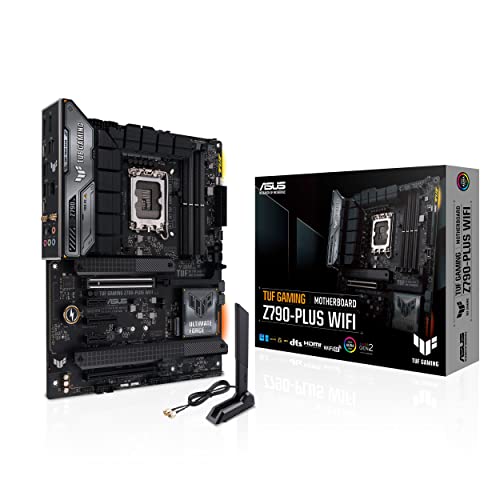
ASUS TUF Gaming PCIe 5.0 ATX Motherboard
Best for: Intel LGA 1700 gaming builds with DDR5
- Form Factor
- ATX
- CPU Socket
- LGA 1700
- Chipset
- Z790
- Memory Type
- DDR5
- PCIe Version
- PCIe 5.0
- M.2 Slots
- 4
View on Amazon: ASUS TUF Gaming PCIe 5.0 ATX Motherboard (paid link)
The ASUS TUF Gaming Z790-Plus WiFi Motherboard gives you a full-size ATX platform built for Intel 12th, 13th, and 14th Gen processors on the LGA 1700 socket. You get modern performance standards, including high-speed DDR5 memory support, a PCIe 5.0 expansion slot, and four M.2 storage slots. With built-in Wi-Fi 6 and 2.5GbE networking, it suits you if you need a dependable, gaming-focused foundation for a modern Intel desktop build.
Pros
- Supports Intel 12th, 13th, and 14th Gen CPUs on socket LGA 1700
- Equipped with a PCIe 5.0 expansion slot
- Provides four onboard M.2 storage slots
- Includes DDR5 system memory support
- Features 2.5GbE Ethernet and integrated Wi-Fi 6
Cons
- Features Wi-Fi 6 rather than newer Wi-Fi 6E
- Not compatible with AMD AM4 or AM5 processors
- Requires DDR5 memory and does not accept DDR4
Good fit if
- You plan to build with an Intel LGA 1700 processor.
- You want DDR5 RAM and PCIe 5.0 hardware support.
- You need four M.2 slots for storage expansion.
Skip if
- You are assembling an AMD Ryzen system.
- You plan to reuse an existing kit of DDR4 RAM.
- You require Wi-Fi 6E or Wi-Fi 7 wireless connectivity.
Verdict: ASUS TUF Gaming Z790-Plus WiFi Motherboard delivers essential modern features including PCIe 5.0, DDR5, and four M.2 slots for Intel systems. It serves as a well-equipped ATX base for multi-drive gaming builds.

ASUS TUF Gaming AM5 ATX Motherboard
Best for: Ryzen 7000 DDR5 gaming builds
- Form Factor
- ATX
- CPU Socket
- AM5
- Memory Type
- DDR5
- PCIe Version
- PCIe 5.0
- M.2 Slots
- 4
- Wi-Fi Standard
- WiFi 6E
View on Amazon: ASUS TUF Gaming AM5 ATX Motherboard (paid link)
This ASUS TUF Gaming board provides an ATX layout designed for AMD AM5 Ryzen 7000 processors. You get support for DDR5 memory alongside 16 power stages for power delivery. High-speed networking is integrated directly, featuring Wi-Fi 6E and a 2.5GbE Ethernet port. It suits you if you want a reliable foundation for an AMD gaming build that prioritizes modern memory and fast wired or wireless data connections.
Pros
- Socket AM5 compatible with AMD Ryzen 7000 series CPUs
- Onboard Wi-Fi 6E and 2.5GbE Ethernet
- 16 power stages for power delivery
- DDR5 memory compatibility
Cons
- Incompatible with DDR4 memory modules
- Heavier physical board weight at 4.45 pounds
Good fit if
- You are building with an AMD Ryzen 7000 series CPU.
- You plan to run DDR5 system memory.
- You need both Wi-Fi 6E and 2.5GbE wired network support.
Skip if
- You are using an Intel processor.
- You want to reuse DDR4 memory modules.
Verdict: ASUS TUF Gaming AM5 ATX Motherboard delivers a dedicated platform for Ryzen 7000 setups with DDR5 memory, 16 power stages, and Wi-Fi 6E. It provides modern AM5 connectivity in a standard ATX form factor.

NZXT N7 Z790 ATX Gaming Motherboard
Best for: 12th and 13th Gen Intel gaming builds
- Form Factor
- ATX
- Chipset
- Intel Z790
- Wi-Fi Standard
- WiFi 6E
- Use Case
- Gaming
- Dimensions
- 15.1 × 12.1 × 3.9 inches
View on Amazon: NZXT N7 Z790 ATX Gaming Motherboard (paid link)
The NZXT N7 Z790 Wi-Fi 6E ATX Motherboard is a full-size gaming board built around the Intel Z790 chipset. You get standard ATX compatibility alongside built-in Wi-Fi 6E connectivity for wireless networking. It supports 12th and 13th Generation Intel processors for your build. If you want a black motherboard for an Intel gaming desktop that uses modern wireless networking, this board provides the core foundation you need.
Pros
- Intel Z790 chipset
- Integrated Wi-Fi 6E support
- Supports 12th and 13th Gen Intel processors
- Standard ATX form factor
Cons
- Published specs list support only through 13th Gen Intel CPUs
- Listed only in a black color finish
Good fit if
- You build around a 12th or 13th Gen Intel processor.
- You want built-in Wi-Fi 6E wireless connectivity.
- You need a standard ATX gaming motherboard in black.
Skip if
- You plan to build with an AMD processor.
- You require stated out-of-the-box support for 14th Gen Intel CPUs.
Verdict: NZXT N7 Z790 Wi-Fi 6E ATX Motherboard pairs the Intel Z790 chipset with built-in Wi-Fi 6E connectivity. It offers a solid ATX foundation for 12th and 13th Gen Intel gaming rigs.

MSI MPG X570 Gaming Edge ATX Motherboard
Best for: AM4 gaming builds using DDR4 memory
- Form Factor
- ATX
- CPU Socket
- AM4
- Chipset
- X570
- Memory Type
- DDR4
- PCIe Version
- PCIe 4.0
- Wi-Fi
- Wi-Fi 5
View on Amazon: MSI MPG X570 Gaming Edge ATX Motherboard (paid link)
This ATX motherboard features the AMD X570 chipset and AM4 socket. It supports 2nd and 3rd Gen AMD Ryzen processors with DDR4 memory. You get PCIe 4.0 support, onboard Wi-Fi 5, and an active FROZR chipset heatsink fan. Storage includes M.2 and SATA 6Gb/s interfaces. It suits you if you build an AM4 gaming desktop using proven DDR4 components.
Pros
- Supports PCIe 4.0 and DDR4 memory on the AMD X570 chipset
- Integrated Wi-Fi 5 (802.11ac) with MU-MIMO support
- FROZR heatsink with propeller blade fan and ball bearings
- Pre-installed I/O shielding protects against electrostatic discharge
Cons
- Uses older Wi-Fi 5 standard instead of Wi-Fi 6
- Limited to DDR4 memory and AM4 socket platforms
- CPU support specifies 2nd and 3rd Gen AMD Ryzen processors
Good fit if
- You use a 2nd or 3rd Gen AMD Ryzen AM4 processor.
- You need an ATX board with DDR4 memory and PCIe 4.0 support.
- You want built-in Wi-Fi 5 and pre-installed I/O shielding.
Skip if
- You plan to build on the AM5 socket with DDR5 memory.
- You require Wi-Fi 6 or newer wireless connectivity.
Verdict: MSI MPG X570 Gaming Edge WiFi Motherboard delivers reliable AM4 performance with PCIe 4.0 expansion, DDR4 memory, and active chipset cooling. It provides a solid ATX foundation for systems running compatible AMD Ryzen CPUs.
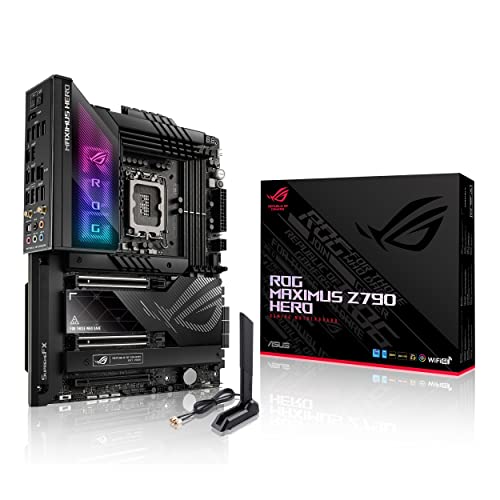
ASUS ROG Maximus DDR5 ATX Motherboard
Best for: demanding Intel LGA 1700 gaming builds
- Form Factor
- ATX
- CPU Socket
- LGA 1700
- Memory Type
- DDR5
- PCIe Version
- PCIe 5.0
- M.2 Slots
- 5
- Wi-Fi Standard
- Wi-Fi 6E
View on Amazon: ASUS ROG Maximus DDR5 ATX Motherboard (paid link)
The ASUS ROG Maximus Z790 Hero ATX Motherboard is an Intel board built for LGA 1700 processors. It features a 20+1 power stage delivery, DDR5 memory support, and PCIe 5.0 readiness for expansion cards. You also get Wi-Fi 6E, Bluetooth 5.2, and 2.5Gb Ethernet connectivity. It suits you if you need a high-power ATX foundation with extensive heatsinks and multiple M.2 drive slots for high-end gaming or production setups.
Pros
- 20+1 teamed power stages rated for 90 A
- Supports PCIe 5.0 and DDR5 memory
- Wi-Fi 6E, Bluetooth 5.2, and 2.5Gb Ethernet onboard
- Integrated VRM heatsinks and triple M.2 heatsinks with backplates
Cons
- Equipped with Wi-Fi 6E instead of Wi-Fi 7
- LGA 1700 socket limits CPU upgrades to 12th, 13th, and 14th Gen Intel chips
- Heavier physical profile at 9.3 pounds
Good fit if
- You plan to run a 12th, 13th, or 14th Gen Intel Core processor with DDR5 memory.
- You want high-capacity 20+1 power delivery for system stability.
- You require multiple cooled M.2 storage drive slots.
Skip if
- You want an AMD CPU build or an Intel Core Ultra processor using LGA 1851.
- You need native Wi-Fi 7 wireless networking.
- You want a lightweight ATX motherboard.
Verdict: ASUS ROG Maximus Z790 Hero ATX Motherboard provides heavy-duty power delivery and DDR5 performance for 12th through 14th Gen Intel processors. It delivers a solid ATX platform if you require comprehensive cooling hardware and PCIe 5.0 capabilities.

Biostar LGA 1151 DDR4 ATX Motherboard
Best for: legacy LGA 1151 DDR4 desktop builds
- Form Factor
- ATX
- CPU Socket
- LGA1151
- Chipset
- B250
- Memory Type
- DDR4
- Series
- Core i7
- Dimensions
- 13.2 × 10.2 × 2.5 inches
View on Amazon: Biostar LGA 1151 DDR4 ATX Motherboard (paid link)
This ATX motherboard from Biostar features an Intel B250 chipset and an LGA 1151 socket designed for Intel Core i7, i5, and i3 processors. It provides standard ATX dimensions with support for DDR4 memory, PCI Express expansion, SATA drives, and USB connectivity. If you plan to build or maintain a system using compatible LGA 1151 hardware, this board gives you standard ATX spacing and baseline compatibility.
Pros
- Standard ATX form factor
- Supports LGA 1151 Core i7, i5, and i3 processors
- DDR4 memory support
- PCI Express, SATA, and USB connectivity
Cons
- Limited to older LGA 1151 socket processors
- No integrated Wi-Fi listed in specifications
Good fit if
- You need a full-size ATX board for an LGA 1151 processor.
- You are building a system with DDR4 memory.
Skip if
- You require a newer socket such as LGA 1700 or AM5.
- You need built-in Wi-Fi connectivity.
Verdict: Biostar LGA 1151 DDR4 ATX Motherboard provides a standard ATX layout and DDR4 compatibility for LGA 1151 desktop configurations. It delivers essential PCI Express, SATA, and USB support for compatible hardware.

Biostar B250 LGA 1151 ATX Motherboard
Best for: multi-GPU LGA 1151 systems
- Form Factor
- ATX
- CPU Socket
- LGA1151
- Chipset
- Intel B250
- Memory Type
- DDR4
- Series
- Core i7
- Dimensions
- 8.27 × 1.57 × 11.6 inches
View on Amazon: Biostar B250 LGA 1151 ATX Motherboard (paid link)
This ATX motherboard from Biostar features an Intel B250 chipset with an LGA 1151 socket. It supports Intel Core i7, i5, and i3 processors alongside DDR4 memory. Designed with support for up to 12 GPUs via PCI Express slots, it provides multi-card capability on a standard ATX layout. It suits you if you need a dedicated platform for high-density graphics card configurations, SATA storage drives, and standard USB connectivity.
Pros
- Supports up to 12 GPUs
- Compatible with Intel LGA 1151 Core i7, i5, and i3 processors
- Uses DDR4 memory
- Standard ATX form factor
Cons
- Restricted to older LGA 1151 socket processors
- Limited to DDR4 memory without DDR5 support
- No integrated Wi-Fi listed in specifications
Good fit if
- You need support for up to 12 graphics cards on a single board
- You build with an Intel LGA 1151 Core processor and DDR4 memory
Skip if
- You require newer platform sockets such as LGA 1700 or AM5
- You want DDR5 memory compatibility
- You need built-in Wi-Fi connectivity
Verdict: Biostar B250 LGA 1151 ATX Motherboard delivers specialized multi-card expansion with support for up to 12 GPUs. It is built strictly for users running LGA 1151 processors and DDR4 memory in multi-card setups.

GIGABYTE AORUS LGA 1151 ATX Motherboard
Best for: 8th Gen Intel Core gaming builds
- Form Factor
- ATX
- CPU Socket
- LGA1151
- Chipset
- Z370
- M.2 Slots
- 3
- Ethernet Speed
- Gigabit LAN
- Use Case
- Gaming
View on Amazon: GIGABYTE AORUS LGA 1151 ATX Motherboard (paid link)
This Gigabyte board is an ATX gaming motherboard built around the Intel LGA 1151 socket. It supports 8th Generation Intel Core processors and provides dual Ethernet via Killer E2500 and Intel Gigabit LAN controllers. You also get three M.2 slots with an M.2 Thermal Guard, onboard ESS Sabre DAC audio, and front-panel USB 3.1 Gen 2 Type-C connectivity. It suits you if you are building an 8th Gen Intel desktop system.
Pros
- Three M.2 slots with M.2 Thermal Guard heatsink
- Dual wired networking with Killer E2500 and Intel Gigabit LAN
- Front and rear USB 3.1 Gen 2 Type-C support
- Integrated ESS Sabre DAC audio hardware
Cons
- Processor compatibility limited to 8th Generation Intel Core chips
- No integrated Wi-Fi networking included
- Operating system support specified only for Windows 10 64-bit
Good fit if
- You use an 8th Gen Intel Core processor for an ATX build
- You want dual LAN ports with Killer and Intel network chips
- You require three M.2 storage slots on the motherboard
Skip if
- You plan to run 9th Gen, 12th Gen, or newer Intel processors
- You need integrated Wi-Fi connectivity out of the box
Verdict: Gigabyte AORUS Gaming 7 ATX Motherboard delivers triple M.2 storage and dual wired LAN for 8th Gen Intel Core gaming configurations. It offers solid hardware connectivity if you do not require built-in wireless networking.
Specifications side by side
| Spec | MSI PRO ATX DDR5 Motherboard | MSI MPG LGA 1700 DDR5 ATX Motherboard | MSI Gaming Plus ATX DDR5 Motherboard | MSI Tomahawk ATX AM5 Motherboard | ASUS TUF Gaming AM5 ATX Motherboard | MSI PRO DDR5 ATX Motherboard | MSI Tomahawk ATX DDR5 Motherboard | ASUS TUF Gaming PCIe 5.0 ATX Motherboard | ASUS TUF Gaming AM5 ATX Motherboard | NZXT N7 Z790 ATX Gaming Motherboard | MSI MPG X570 Gaming Edge ATX Motherboard | ASUS ROG Maximus DDR5 ATX Motherboard | Biostar LGA 1151 DDR4 ATX Motherboard | Biostar B250 LGA 1151 ATX Motherboard | GIGABYTE AORUS LGA 1151 ATX Motherboard |
|---|---|---|---|---|---|---|---|---|---|---|---|---|---|---|---|
| CPU Socket | LGA 1700 | LGA 1700 | LGA 1700 | AM5 | Socket AM5 (LGA 1718) | LGA 1700 | LGA 1700 | LGA 1700 | AM5 | not specified | AM4 | LGA 1700 | LGA1151 | LGA1151 | LGA1151 |
| Chipset | not specified | not specified | Z790 | B850 | not specified | Intel B760 | not specified | Z790 | not specified | Intel Z790 | X570 | not specified | B250 | Intel B250 | Z370 |
| Form Factor | ATX | ATX | ATX | ATX | ATX | ATX | ATX | ATX | ATX | ATX | ATX | ATX | ATX | ATX | ATX |
| Memory Type | DDR5 | DDR5 | DDR5 | DDR5 | DDR5 | DDR5 | DDR5 | DDR5 | DDR5 | not specified | DDR4 | DDR5 | DDR4 | DDR4 | not specified |
| PCIe Version | PCIe 5.0 | PCIe 5.0 | PCIe 5.0 | PCIe 5.0 | PCIe 5.0 | PCIe 4.0 | PCIe 5.0 | PCIe 5.0 | PCIe 5.0 | not specified | PCIe 4.0 | PCIe 5.0 | not specified | not specified | not specified |
| M.2 Slots | not specified | not specified | not specified | not specified | not specified | not specified | not specified | 4 | 4 | not specified | not specified | 5 | not specified | not specified | 3 |
| Wi-Fi Standard | Wi-Fi 6E | Wi-Fi 6E | Wi-Fi 6E | Wi-Fi 7 | WiFi 6 | Wi-Fi 5 | Wi-Fi 6E | not specified | WiFi 6E | WiFi 6E | not specified | Wi-Fi 6E | not specified | not specified | not specified |
| Ethernet Speed | 2.5Gbps | 2.5Gbps LAN | 2.5Gbps | 5G LAN | 2.5 Gb | 2.5 Gbps | not specified | not specified | 2.5 Gb | not specified | not specified | 2.5 GbE | not specified | not specified | Gigabit LAN |
| Power Phases | not specified | not specified | not specified | not specified | 14 | not specified | not specified | 16+1 | 16 | not specified | not specified | 20+1 | not specified | not specified | not specified |
| Wi-Fi | Wi-Fi 6E | Wi-Fi 6E | Wi-Fi 6E | Wi-Fi 7 | Wi-Fi 6 | Wi-Fi 5 | Wi-Fi 6E | Wi-Fi 6 | Wi-Fi 6E | Wi-Fi 6E | Wi-Fi 5 | Wi-Fi 6E | not specified | not specified | not specified |
| Use Case | not specified | Gaming | Gaming | not specified | Gaming | not specified | Gaming | Gaming | Gaming | Gaming | Gaming | Gaming | not specified | not specified | Gaming |
| Series | not specified | not specified | not specified | not specified | not specified | not specified | not specified | not specified | not specified | not specified | not specified | not specified | Core i7 | Core i7 | not specified |
| Dimensions | 5.91 × 1.57 × 5.91 inches | 2.76 × 1.97 × 0.39 inches | not specified | not specified | 10.8 × 2.9 × 13.3 inches | 12 × 9.6 × 2.5 inches | 12 × 9.6 × 2.5 inches | 10.7 × 2.75 × 14 inches | 10.8 × 2.9 × 13.3 inches | 15.1 × 12.1 × 3.9 inches | 12 × 9.6 × 2.5 inches | 12.2 × 4.5 × 14.6 inches | 13.2 × 10.2 × 2.5 inches | 8.27 × 1.57 × 11.6 inches | 13.2 × 10.6 × 3.14 inches |
| Weight | 1.25 pounds | 3.92 pounds | not specified | not specified | 1 pounds | not specified | not specified | 2.91 pounds | 4.45 pounds | not specified | 4.1 pounds | 9.3 pounds | 1.98 pounds | not specified | 4.15 pounds |
| Model | PRO Z790-P WiFi ProSeries | Z790 | MSI Z790 GAMING PLUS WIFI-AMZ | MAG B850 TOMAHAWK MAX WIFI | B650-PLUS | MSI PRO B760-VC WiFi | MAG Z790 Tomahawk WiFi | TUF GAMING Z790-PLUS WIFI | TUF GAMING X670E-PLUS WIFI | N7-Z79XT-B1 | MSI MPG X570 Gaming Edge WiFi | ROG MAXIMUS Z790 HERO | FBA_TB250-BTC | TB250-BTC Pro | Z370 AORUS Gaming 7 |
| Color | not specified | Black | Black | Black | not specified | not specified | not specified | BLACK | not specified | Black | not specified | BLACK | not specified | not specified | not specified |
| Size | not specified | not specified | ATX | not specified | not specified | ATX | ATX | not specified | not specified | not specified | 1 | Z790 Hero|M.2 x5|WiFi 6E| | not specified | not specified | not specified |
Is an ATX Motherboard Worth It?
An ATX motherboard uses a standard 12 by 9.6-inch layout designed for mid-tower and full-tower enclosures. This larger physical footprint provides extra PCB space for components. You get multiple expansion options, including space for up to four M.2 solid-state drives, full-size PCIe 5.0 lanes, and specialized multi-card expansion setups. The broader spacing leaves room for substantial heatsinks and power stages. If you build in a standard enclosure, ATX gives you the most hardware connectivity.
Worth it if
- You assemble your system inside a standard mid-tower or full-size PC enclosure.
- You require extensive expansion, such as four M.2 storage slots or multiple PCIe cards.
- You want a full-size board layout supporting high-stage power delivery and PCIe 5.0 hardware.
Skip it if
- You plan to assemble an ultra-compact or small-form-factor desktop.
- You only require a single PCIe slot and a minimal drive setup.
If you decide that standard ATX dimensions exceed your space requirements, a Micro-ATX PC case accommodates smaller builds with fewer expansion slots.
How We Chose ATX Motherboards
You find the top 15 ATX motherboards for 2026 based strictly on published manufacturer specifications. A board enters this list only when its title or feature list confirms the standard ATX form factor. Each entry includes one model per product family to prevent redundant options. Specifications come directly from official technical data sheets without physical testing.
The guide arranges options by placing products in stock first, then by Amazon sales rank (better-selling products first). This layout highlights readily available boards for your system assembly. Details stay current because listing data and stock refresh at least daily on the page.
How to Choose the Right ATX Motherboard
-
Compare PCIe Lane Generations
Check whether an ATX motherboard supports PCIe 4.0 or PCIe 5.0. PCIe 5.0 delivers higher expansion bandwidth for add-in cards and graphics hardware. If you use standard graphics cards, PCIe 4.0 provides adequate bandwidth for everyday operation. For example, the MSI PRO DDR5 ATX Motherboard features PCIe 4.0 expansion for users with standard expansion needs. When you plan to install modern high-bandwidth hardware, prioritize boards specifying PCIe 5.0 connectivity. Reviewing the PCIe version ensures your expansion cards run without interface bandwidth bottlenecks.
-
Select Your Wireless Standard
Review the integrated wireless standard to ensure local network compatibility. Basic boards supply Wi-Fi 5, which handles routine connectivity. Upgraded models feature Wi-Fi 6 or Wi-Fi 6E for lower latency and wider frequency bands in crowded wireless environments. If you want the fastest wireless spec listed, the MSI Tomahawk ATX AM5 Motherboard includes built-in Wi-Fi 7. Choosing the right wireless standard allows you to match your motherboard to your home router without needing an external USB adapter or add-in card later.
-
Verify Wired Networking Speed
Check the published Ethernet speed if you rely on a wired local area network. Many contemporary ATX models, such as the MSI Gaming Plus ATX DDR5 Motherboard, include a 2.5GbE network interface. A 2.5GbE port provides greater data throughput than traditional gigabit ports when connected to compatible switches, routers, or network-attached storage devices. If you transfer large files over a local network or have multi-gigabit internet service, selecting a board with 2.5GbE wired networking ensures your connection functions at full speed.
-
Check Power Stage Counts
Examine the power delivery specifications when matching a motherboard to demanding processors. Manufacturers publish the number of power stages used to supply clean voltage to your CPU. Higher stage counts distribute thermal loads more effectively across the circuit board. For example, the ASUS TUF Gaming AM5 ATX Motherboard provides 16 power stages to maintain steady power delivery under sustained processor workloads. Checking this spec helps you determine if the motherboard has sufficient electrical hardware to handle heavy processing tasks without overheating.
-
Inspect Dedicated Cooling Features
Inspect the cooling features built onto the motherboard layout. Certain performance platforms generate significant heat around the chipset and power delivery components during extended use. The MSI MPG X570 Gaming Edge ATX Motherboard includes active chipset cooling to dissipate thermal buildup from fast interfaces. When selecting an ATX motherboard, look at whether the specifications list dedicated fans or large heatsinks. Proper onboard cooling hardware helps prevent thermal throttling and protects sensitive circuitry during prolonged desktop gaming sessions.
-
Count Expansion Slot Capacities
Review the total number and spacing of expansion slots if your build requires specialized add-in cards. While typical gaming systems utilize a single primary slot for a graphics card, specialized setups need additional physical lanes. The Biostar B250 LGA 1151 ATX Motherboard offers expansion support for up to 12 GPUs on its full-sized ATX circuit board. Evaluating the published expansion capacity ensures the motherboard physically accommodates all your secondary controller cards, capture cards, or processing units before assembly.
Frequently asked questions
Which Wi-Fi standards do modern ATX motherboards include?
Modern ATX motherboards feature varying Wi-Fi revisions depending on their generation and chipset. For example, the MSI Tomahawk ATX AM5 Motherboard includes cutting-edge Wi-Fi 7, while boards like the MSI MPG LGA 1700 offer Wi-Fi 6E. Budget options such as the MSI PRO DDR5 ATX Motherboard provide Wi-Fi 5, and specialized options like the GIGABYTE AORUS LGA 1151 omit wireless entirely in favor of dual wired connections.
What wired networking speeds can you expect on an ATX motherboard?
Most modern ATX motherboards feature 2.5GbE Ethernet ports for fast local networking and broadband connections. Models such as the MSI PRO Z790-P WiFi ProSeries and ASUS ROG Maximus Z790 Hero include standard 2.5GbE controllers. This provides more than double the theoretical bandwidth of legacy Gigabit Ethernet ports found on older hardware, improving data transfer speeds across local storage arrays whenever your router supports it.
Can you run multiple graphics cards on an ATX motherboard?
Yes, certain ATX motherboards support multi-card configurations across multiple physical PCIe expansion slots. Specialized platforms like the Biostar B250 LGA 1151 ATX Motherboard are engineered specifically for multi-card operations, supporting up to 12 GPUs. Standard gaming ATX designs allocate most of their PCIe bandwidth and board space to a primary graphics slot alongside multiple high-speed M.2 storage slots for solid-state drives.
What power delivery specs matter when comparing ATX motherboards?
Power delivery relies on the arrangement and amperage rating of the voltage regulator power stages. Higher ratings deliver consistent voltage to demanding multi-core processors. For instance, the MSI Tomahawk ATX AM5 Motherboard features 80A Smart Power Stages, while ASUS TUF Gaming AM5 models offer 14 to 16 power stages. Higher stage counts spread thermal dissipation over more surface area, helping your system maintain stability under heavy processing loads.
How many M.2 solid-state drives can an ATX motherboard hold?
Drive capacity varies by model, but ATX motherboards offer ample physical layout space for multiple drives. The ASUS TUF Gaming PCIe 5.0 ATX Motherboard includes four onboard M.2 slots, while the ASUS ROG Maximus Z790 Hero accommodates up to five M.2 drives. This layout lets you expand high-speed NVMe storage capacity directly on the board without needing supplementary PCIe expansion cards.
Do all ATX motherboards support DDR5 memory?
No, memory generation support depends strictly on the motherboard chipset and processor socket. Modern motherboards built around AM5 or current LGA 1700 configurations use DDR5 memory modules. However, AM4 options like the MSI MPG X570 Gaming Edge and older LGA 1151 options like the Biostar TB250-BTC run exclusively on DDR4 memory. You cannot interchange DDR4 and DDR5 memory modules because their pin layouts and physical notches differ.
What does active chipset cooling do on an ATX motherboard?
Active chipset cooling uses a dedicated onboard fan to manage thermal levels on high-throughput platform hubs. Workloads utilizing high PCIe lane counts generate noticeable heat that passive heatsinks may struggle to dissipate. For example, the MSI MPG X570 Gaming Edge ATX Motherboard incorporates an active fan over the AMD X570 chipset to keep operating temperatures controlled and prevent system instability during sustained input-output operations.